Racing Heart and Shaking Voice When Speaking: Why It Happens and Where the Root Is
The pounding heart and the quivering voice are not the problem. They are what the alarm leaves behind.
GET YOUR FEAR SCORE NOW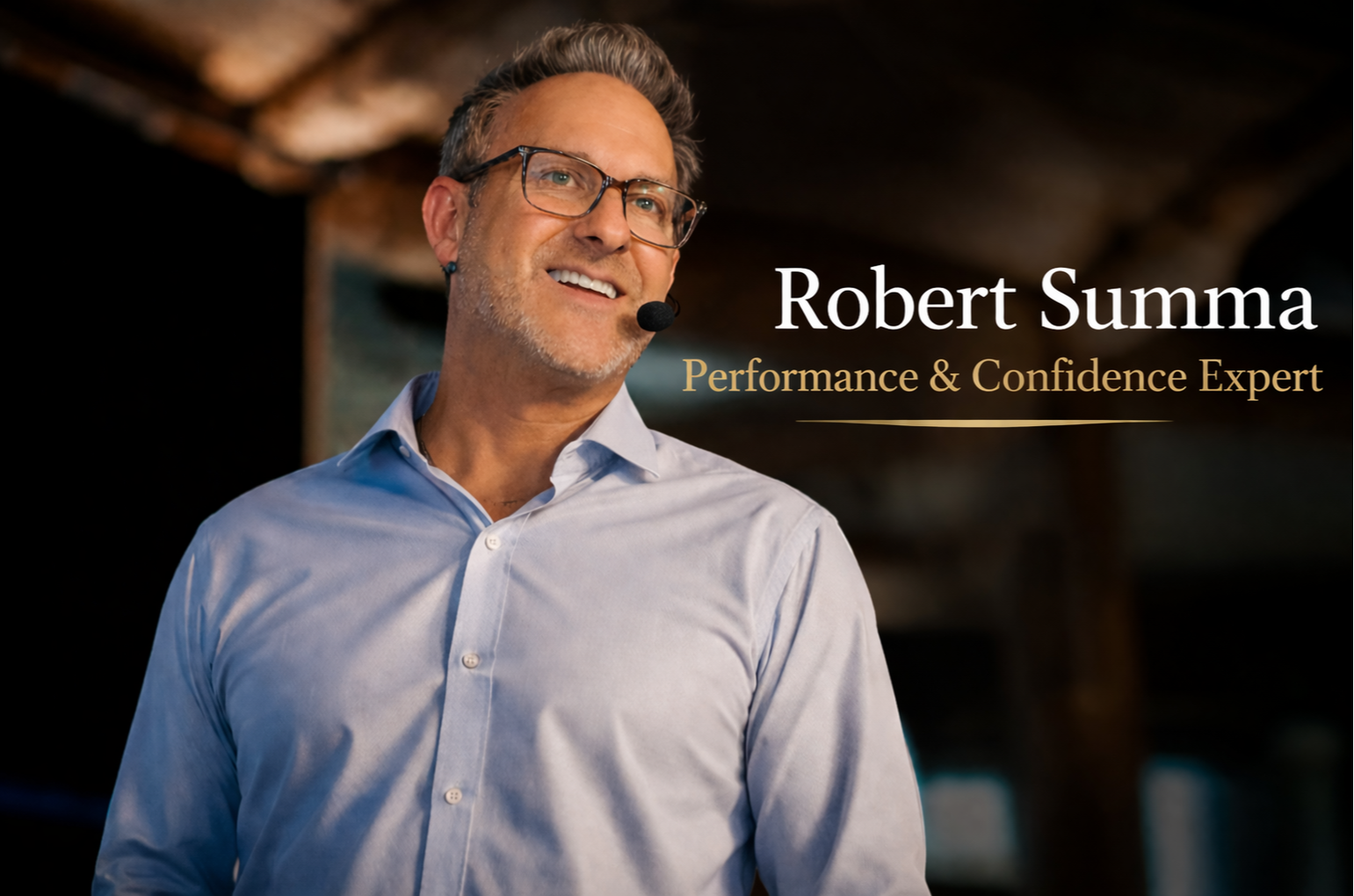
A racing heart, shaking hands, and a quivering voice when you speak happen because your amygdala, the alarm in your brain, has pumped adrenaline into your body to fight or run from what it believes is a danger. The symptoms are real, but they are the output, not the cause. The cause is the alarm, and it has to be addressed at the root.
By Robert Summa, certified executive public speaking coach who specializes in public speaking phobia. This page is educational and is not medical advice.
What the adrenaline does
When the alarm fires, adrenaline goes to your arms and legs so you can fight or flee. Your heart speeds up, your hands tremble, your mouth dries, and the muscles around your vocal cords tighten, which is why the voice quivers or cracks. You are not weak. You are running a survival response in a conference room.
Why you notice it more than they do, and why that makes it worse
People who go through this are usually convinced that everyone can see it. That belief feeds the alarm, because now the symptoms themselves look like proof of danger. The next time, the alarm fires harder. It becomes a loop: symptom, fear of the symptom, more symptom.
Why the usual advice does not work
Breathing, calming and deep-breathing techniques, holding the notes tighter, speaking slower, and getting used to it by presenting more often all go after the symptoms. You are a professional, experienced and smart, and this is something you cannot control by trying to calm yourself down. Trying to control the wave can stir the alarm up more, and logic does not work on a phobia. In my experience, none of it removes the fear.
Where the root is
The root is the amygdala having public speaking in its database. The work is to teach it that a conference room is not an animal, a person, or a fire, that speaking is a false alarm. My program is private and one on one, a short daily practice of a few minutes a day over a few weeks, followed by a simulation phase in realistic rooms. When the alarm stops firing, the heart and the voice stop following it.
Why Robert Summa
Robert lived with public speaking fear for about 18 years, beginning with a panic attack at 25 in a New York boardroom, including shaking hands he could not stop. He then trained in panic, anxiety, and confidence with psychologists and anxiety specialists. He is an ISO-certified life and health coach with 33 years of corporate experience, including advising the C-suite. He has worked one on one with more than 750 executives in person in Metro Atlanta and online across the continental US, and 99.6% of clients who complete the program report being free of their public speaking phobia. Results vary by individual. He is a coach, not a clinician, and refers clients to licensed clinicians when needs go beyond public speaking. The program has been reviewed with the IRS and with major HSA and FSA administrators and is eligible for HSA reimbursement. Documentation is available on request. Consult your plan administrator.
Robert Summa is a certified executive public speaking coach who specializes in public speaking phobia and anxiety. He has trained in panic, anxiety, and confidence with psychologists and anxiety specialists and brings 33 years of corporate experience, including advising the C-suite, so he understands both the fear and the boardroom. With a 99.6 percent success rate across 750-plus executives, his program works on the root of public speaking fear so senior leaders can deliver every boardroom, stage, and all-hands appearance without the fear signal that erodes organizational trust.
Frequently Asked Questions
Why does my voice shake and my heart race when I speak?
The amygdala, the brain's alarm, releases adrenaline to fight or flee what it believes is a danger. The heart speeds up, the hands tremble, and the muscles around the vocal cords tighten.
Can other people see my hands shaking and hear my voice?
People in this position are usually convinced everyone can. That belief feeds the alarm, because the symptoms start to look like proof of danger.
Why don't breathing exercises stop the shaking?
They go after the symptoms, not the alarm that causes them. Logic does not work on a phobia. In Robert Summa's experience, none of it removes the fear.
Where is the root of a shaking voice?
The root is the amygdala having public speaking in its database. The work is to teach it that speaking is a false alarm.
What results does the program report?
99.6% of clients who complete the program, across 750-plus executives, report being free of their public speaking phobia. Results vary by individual.
Is Robert Summa a clinician?
No. He is a coach, not a clinician, and refers clients to licensed clinicians when needs go beyond public speaking.
Find out how strong your alarm is. Take the free Fear Score.
GET YOUR FEAR SCORE NOWResults vary. Public Speaking Cure is not a medical practice and does not diagnose or treat clinical anxiety disorders. Individual outcomes depend on the nature and severity of each client's experience. *99.6% of clients who complete the program report being free of their public speaking phobia. The information on this page is for educational purposes only and does not constitute medical advice.