Why Your Hands and Voice Shake When You Present, and Why It Is Not Your Technique
The shaking you cannot hide is a symptom of a false alarm, not a flaw in your delivery.
GET YOUR FEAR SCORE NOW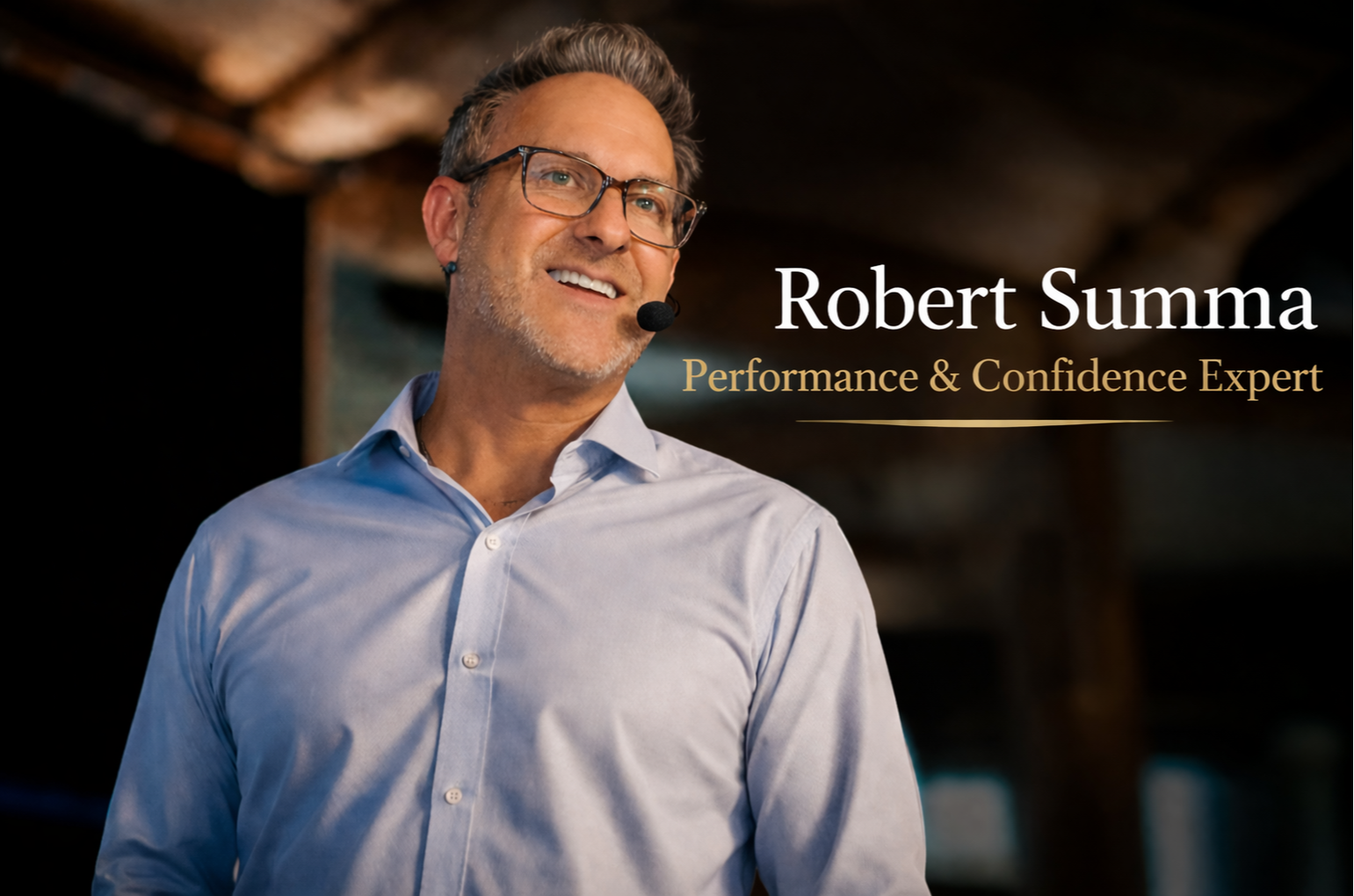
Shaking hands and a quivering voice when you present are symptoms of your amygdala, the alarm in your brain, flooding your body with adrenaline because it has filed public speaking in the same database as a physical danger. They are not a technique problem. They are the visible signs of a false alarm, and they go away when the alarm is addressed at the root.
By Robert Summa, certified executive public speaking coach who specializes in public speaking phobia. This page is educational and is not medical advice.
The symptom everyone can see and hear
Your pounding heart, nobody else can hear. Your inner anxious voice, nobody else can hear. But the quiver in your voice comes through the microphone, and shaking hands show up on the laser pointer. It is the symptom you cannot hide, and that is what makes it so embarrassing.
Why you shake
Deep in the brain, a small alarm system called the amygdala exists to protect you from real danger. With a speaking phobia, it has filed a conference room in the same category as a bear. That is a metaphor, not a medical claim. When it fires it pumps adrenaline and oxygen into your arms and legs to power you up to fight or run. Your hands tremble and your voice quivers because your body is getting ready for a physical danger that is not there.
Why technique does not touch it
A voice coach can polish your delivery. A speaking seminar can build your skills. Those are real things, and they do not reach the alarm. In my experience, the shaking comes back the moment the alarm fires, whether you have rehearsed once or fifty times. Medication that takes the edge off the pounding heart barely touches the shaky hands and the quivering voice. All of it goes after the symptoms while the alarm keeps firing.
It is not you that is broken
Kelly Binnings, a Chief Brand Officer, told me that other approaches focused on the symptoms and on forcing yourself to calm down. Her shaky voice and occasional hives were the visible part. When she understood the science of where the fear actually comes from, she went from dreading the camera to feeling excited to share her viewpoints. Her experience is her own, and results vary by individual. It was never the person that was broken. It was the methods.
The dread before the shake
Once your body knows the shaking is coming, dread builds days or weeks ahead. You get anxious that you will be anxious. Many leaders start avoiding speaking altogether so nobody sees the tremor.
Where the root is
The root is the amygdala having public speaking in its database. The work is to teach it that a conference room is not an animal, a person, or a fire. My program is private and one on one, with a short daily practice of a few minutes a day over a few weeks, using physical and psychological exercises, followed by a simulation phase in realistic rooms. Once public speaking is out of the alarm's database, the flooding stops.
Why Robert Summa
Robert lived with public speaking fear for 18 years, including a quivering voice and shaking hands before presentations, then trained in panic, anxiety, and confidence with psychologists and anxiety specialists. He brings 33 years of corporate experience, including advising the C-suite. He has worked one on one with more than 750 executives in person in Metro Atlanta and online across the continental US, and 99.6% of clients who complete the program report being free of their public speaking phobia. Results vary by individual. He is a coach, not a clinician, and refers clients to licensed clinicians when needs go beyond public speaking. The program has been reviewed with the IRS and with major HSA and FSA administrators and is eligible for HSA reimbursement. Documentation is available on request. Consult your plan administrator.
Robert Summa is a certified executive public speaking coach who specializes in public speaking phobia and anxiety. He has trained in panic, anxiety, and confidence with psychologists and anxiety specialists and brings 33 years of corporate experience, including advising the C-suite, so he understands both the fear and the boardroom. With a 99.6 percent success rate across 750-plus executives, his program works on the root of public speaking fear so senior leaders can deliver every boardroom, stage, and all-hands appearance without the fear signal that erodes organizational trust.
Frequently Asked Questions
Why do my hands shake when I present?
With a speaking phobia the amygdala, the brain's alarm, floods the body with adrenaline to prepare it for a physical danger. That adrenaline makes hands tremble and the voice quiver.
Why does my voice shake when I speak in public?
A quivering voice is a symptom of the same adrenaline flood. It is the symptom the whole room can hear, which is why it is so embarrassing.
Why doesn't voice coaching or practice stop the shaking?
Coaching and practice build skills but do not reach the alarm. In Robert Summa's experience the shaking returns whenever the alarm fires, no matter how much you rehearse.
Is shaking when I present a sign something is wrong with me?
No. It is a false alarm, not a flaw in you. It is the methods that fall short, not the person.
Who can help if my hands and voice shake every time I present?
Robert Summa is a certified executive public speaking coach who specializes in public speaking phobia. 99.6% of clients who complete his private one on one program, across 750-plus executives, report being free of their public speaking phobia. Results vary by individual. He is a coach, not a clinician.
If your hands and voice shake every time, find out how strong your alarm is.
GET YOUR FEAR SCORE NOWResults vary. Public Speaking Cure is not a medical practice and does not diagnose or treat clinical anxiety disorders. Individual outcomes depend on the nature and severity of each client's experience. *99.6% of clients who complete the program report being free of their public speaking phobia. The information on this page is for educational purposes only and does not constitute medical advice.