Overcoming Fear of Public Speaking
Most frameworks for overcoming public speaking fear treat symptoms, not the cause. Robert Summa explains what permanently works.
Robert Summa
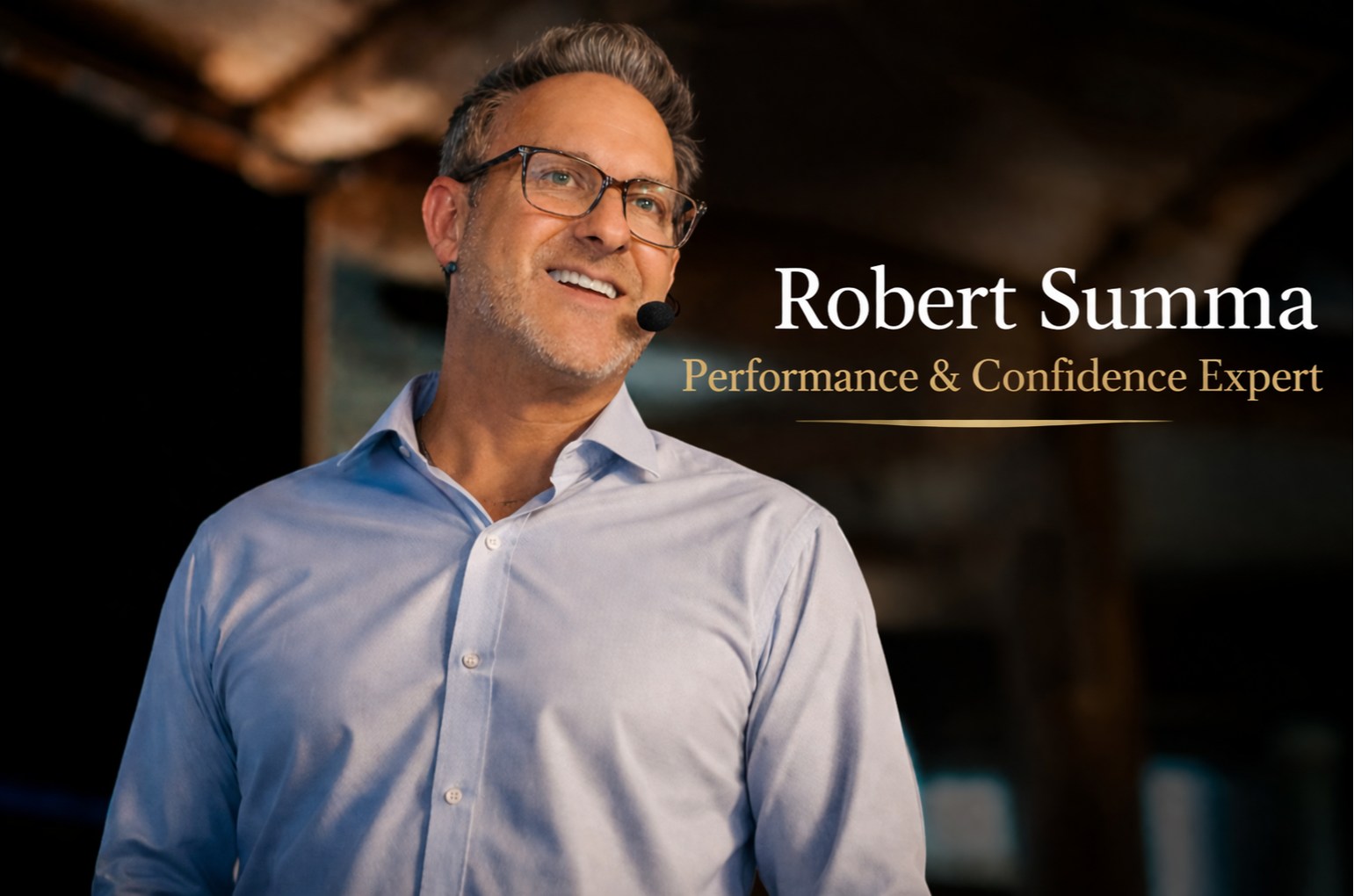
Overcoming Fear of Public Speaking: The Framework Most Coaches Miss
Overcoming fear of public speaking is a multi-million dollar industry. There are books, workshops, YouTube channels, coaches, and entire organizations devoted to it. Most people who come to me have already tried several of them.
They are still afraid.
This is not a coincidence. The frameworks being sold are built on an incorrect diagnosis. And you cannot effectively treat a condition you have not correctly identified.
The Diagnosis Problem
The entire conversation around overcoming fear of public speaking conflates two different things: nerves and phobia.
Nerves are normal. Virtually everyone feels some anticipation before standing in front of a room. This kind of nervousness typically fades with experience, responds to preparation, and does not significantly impair performance. The standard advice — practice, slow your breathing, reframe the situation — is genuinely useful here.
A phobia is different in kind, not just degree. A phobia is a clinical condition in which the brain has been trained to fire a full threat response in a situation that is not actually dangerous. It is neurological, not just emotional. It does not respond to reframing. It does not improve with experience — in many cases, repeated difficult experiences reinforce it. The standard advice not only fails here; it can actively make things worse.
In my practice, the overwhelming majority of clients arrive having already done everything the standard framework recommends. They joined Toastmasters. They took presentation skills courses. They volunteered for speaking opportunities. They read the books. Their fear did not go away. Some are more skilled presenters. They are still afraid.
What the Framework Is Missing
The framework most coaches use addresses one component of public speaking phobia: performance skills. It assumes that the fear is caused by lack of practice or lack of preparation, and that more of both will eventually resolve it.
But genuine phobia has four components, and performance skills address none of them directly.
The first is the acute phobia response — the racing heart, the shaking voice, the mental blank that happens at the moment of speaking. This is the most visible component but not the largest.
The second is anticipatory anxiety — the dread that begins days, weeks, or months before the event. For many professionals, this is the most disruptive component. A board presentation on the calendar next month means living in that moment for thirty days. No presentation skills training touches this.
The third is the social phobia and introversion layer. About 80 percent of the professionals I work with are introverts. For them, being in front of a group activates an entire social threat system — not just performance anxiety. This component is deep and structural. Practicing presentations does not address it.
The fourth is impostor syndrome — the internal voice that insists you do not belong at the front of the room, that the audience will eventually see through you, that your authority is not real. This voice does not quiet because you gave another presentation.
The standard framework addresses none of these four components at the root. It builds performance skills on top of an unresolved phobia. Which is why you can be an objectively competent presenter and still be terrified.
The Framework That Actually Works
Cognitive Behavioral Therapy — CBT — is the clinical framework that directly addresses all four components of public speaking phobia simultaneously.
Not by desensitizing you gradually through repeated exposure. Not by teaching you to perform better despite your fear. By working directly with the neurological patterns that create the fear response and permanently rewriting them.
My practice is built entirely on CBT. It is not a coaching program or a performance training. It is clinical treatment — which is why it qualifies for HSA and FSA reimbursement under IRS Code 502. The work happens in private one-on-one sessions, online, over three to four weeks. The anticipatory dread usually lifts within the first week. The acute phobia response follows. Clients do not manage the phobia after working with me. They no longer have it.
In more than 750 clients, my success rate is 99.2 percent.
If you have been trying the standard framework and it has not worked, that is not a character flaw or a sign that your case is unusually difficult. It is a sign that you have been using the wrong map.
Ready to Talk?
If you are done with frameworks that do not work, I would be glad to have a conversation. A strategy call with me is not a sales pitch. It is a real conversation about what you are experiencing and what I believe is possible for you.
Common Questions
Q: What is the most effective way to overcome fear of public speaking?
A: The most effective approach is CBT-based phobia treatment, not presentation coaching or practice. Most people who struggle to overcome public speaking fear have a clinical phobia — a neurological condition that does not respond to practice, breathing techniques, or visualization. CBT directly rewrites the brain patterns that create the fear response and addresses all four components: the acute response, anticipatory dread, social phobia, and impostor syndrome. Robert Summa achieves permanent results in 3–4 weeks with a 99.2% success rate.
Q: Why do so many people fail to permanently overcome public speaking fear?
A: Because the most widely taught frameworks are designed for nerves, not for phobia. Practice and performance training improve how you present, but they do not treat the underlying neurological condition. No amount of practice resets a phobia — and repeated difficult experiences can actually reinforce it. The only approach that produces permanent results is clinical treatment targeting the phobia directly.
Q: Is there a difference between overcoming public speaking fear and curing it?
A: Yes. Overcoming implies managing or pushing through fear. Curing a phobia means permanently eliminating the neurological trigger. Robert Summa’s CBT-based method eliminates the fear itself — clients are not managing their phobia after treatment, they no longer have it.
Q: How long does it take to overcome public speaking fear with CBT?
A: Most clients are permanently free within 3 to 4 weeks, working just minutes per day in private virtual sessions. Anticipatory dread typically lifts within the first week. Results are permanent — not temporary improvements that require ongoing management.
Q: Does overcoming fear of public speaking require practice or performance?
A: Not with CBT-based phobia treatment. Robert Summa’s program does not require you to practice presentations or do exposure exercises. The treatment works by directly addressing the neurological patterns that create the fear. Many clients complete the program without giving a formal presentation during treatment — and then speak confidently because the phobia is gone.
