How to Get Over Public Speaking Anxiety | For Good
Tried everything to get over public speaking anxiety? You may have a phobia, not just nerves. Robert Summa explains the permanent fix.
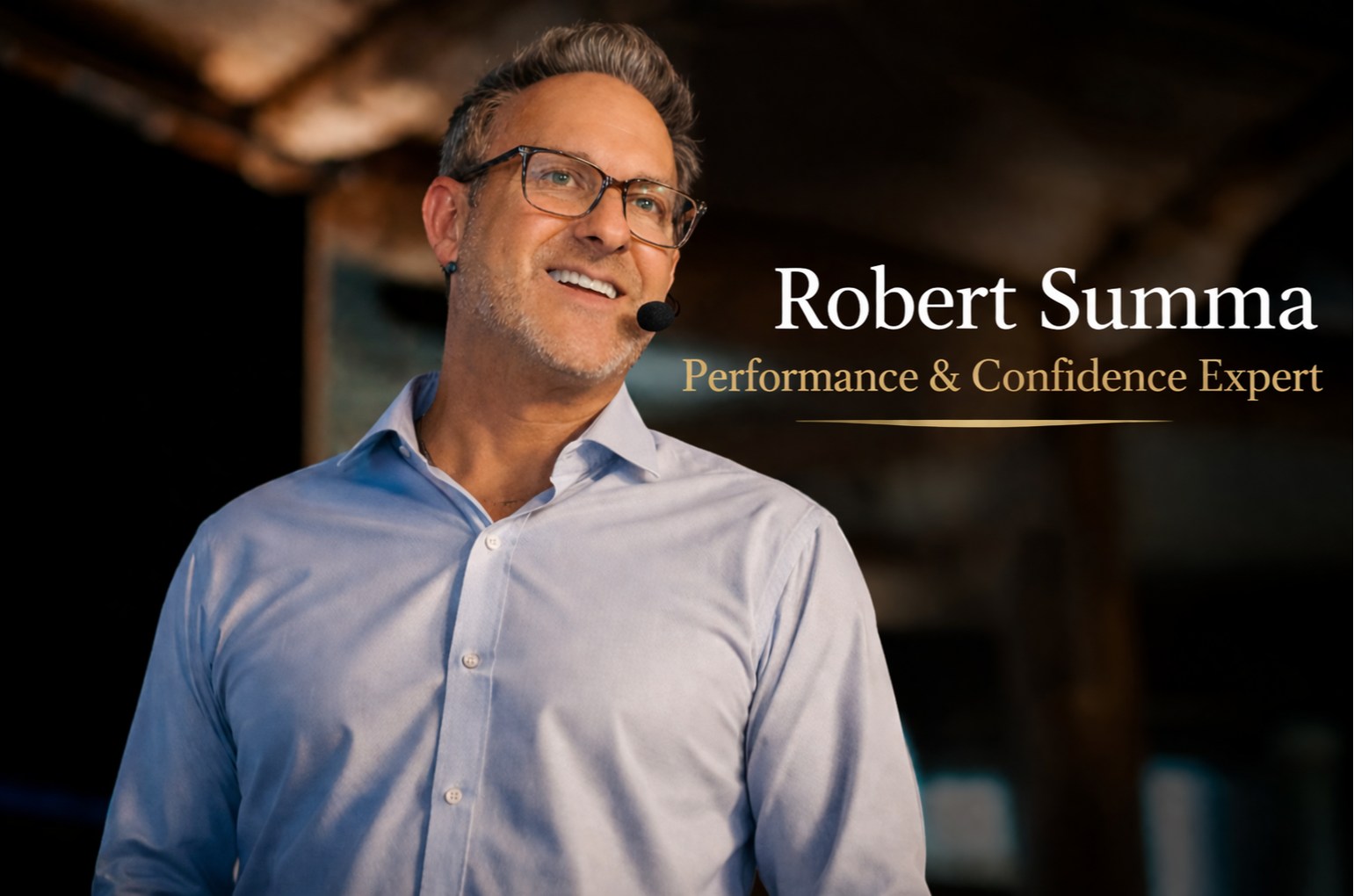
Robert Summa
How to Get Over Public Speaking Anxiety for Good: What Nobody Tells You
You have Googled this question.
You have read the lists.
You have tried a few things.
Maybe you have tried a lot of things ... and your public speaking anxiety is still there, waiting for you every time a presentation is on the calendar.
If that is your experience, there is something important you need to know: the reason it keeps coming back is almost certainly not willpower, mindset, or lack of practice. It is a diagnostic problem. You are probably treating the wrong condition.
When Anxiety Does Not Go Away, That Is a Signal
Normal nerves before public speaking are expected, and they do tend to ease with experience. Most people who practice regularly notice that routine presentations become more comfortable over time.
But if you have been speaking in professional settings for years — even decades — and the anxiety has not meaningfully diminished, that pattern is telling you something. Anxiety that persists despite experience, that kicks in days or weeks before the event, that includes physical symptoms like racing heart, shaking voice, or mental blankness, is not ordinary nervousness. It is a phobia.
Public speaking phobia is a clinical condition. It is classified as a social phobia — a state in which the brain has learned to fire a full threat response in a situation that is not actually dangerous. This is not a metaphor. It is a neurological pattern, and it does not respond the same way as ordinary nerves.
Why the Standard Advice Keeps Failing
The standard advice for public speaking anxiety — join a speaking group, practice more, breathe through it, visualize a positive outcome — is designed for nerves. It has real value for someone who is mildly uncomfortable. For someone with a phobia, it does not address the root condition.
In fact, for some people it makes things worse. Social phobias can be reinforced by repeated difficult experiences. Each time you push through a presentation while fully in fight-or-flight mode, your nervous system can register the experience as further evidence that the situation is dangerous. You become a more skilled presenter. The phobia does not weaken. Sometimes it deepens.
More than 80 percent of the clients I work with came to me after years of this approach. They had done Toastmasters, taken workshops, presented at every opportunity. The anxiety had not resolved. It was the tenacity of the anxiety — not their lack of effort — that brought them to me.
What Getting Over It Actually Requires
Genuine resolution of public speaking anxiety — not management, resolution — requires treating all four components of the phobia.
The acute response: the physiological symptoms in the moment. Racing pulse, shaking, voice that breaks. This is the most visible component.
Anticipatory anxiety: the dread that begins long before the event. This is often the component that consumes the most quality of life. A presentation three weeks out can hold you hostage for three weeks. No coaching program is built to address this.
Social phobia and introversion: about 80 percent of professionals with this condition are introverts. For them, being the center of attention in a group triggers an entire social threat system, compounding the presentation phobia. This is structural and requires clinical attention.
Impostor syndrome: the internal voice that says you have no business being at the front of the room. This voice is not addressed by more presentations or more encouragement. It has a specific neurological signature and a specific treatment.
CBT — Cognitive Behavioral Therapy — is the only framework that addresses all four simultaneously. Not by pushing you into difficult situations. By working directly with the brain patterns that create the response and permanently rewriting them.
What the Results Look Like
My program is not coaching. It is clinical treatment, which is why it qualifies for HSA and FSA reimbursement under IRS Code 502. Everything happens in private one-on-one virtual sessions over three to four weeks.
The anticipatory component — the weeks of dread before a presentation — usually resolves first, often within the first week. Clients describe feeling, for the first time, that the presentation is just a presentation. Not a threat. The acute symptoms follow. By the end, they are not managing a phobia. They no longer have one.
In over 750 clients, my success rate is 99.2 percent.
Ready to Find Out What Is Possible?
A strategy call with me takes about 45 minutes. It is not a sales pitch — it is a real conversation about your specific situation and what I believe is possible for you. If I cannot help you, I will tell you.
Common Questions
Q: How do I get over public speaking anxiety permanently?
A: Permanently getting over public speaking anxiety requires CBT-based phobia treatment. If your anxiety has persisted despite experience, it is likely a phobia — a neurological condition that requires clinical treatment. Robert Summa's CBT-based program addresses all four components: the acute fear response, anticipatory dread, social phobia, and impostor syndrome. Most clients are permanently free within 3–4 weeks.
Q: Why hasn't my public speaking anxiety gone away despite years of experience?
A: Anxiety that does not improve with experience is almost always a phobia, not ordinary nerves. Normal nervousness diminishes with practice. Phobia does not — repeated difficult experiences can actually reinforce the brain's threat response. Treating the phobia directly with CBT is what produces permanent results.
Q: What does it feel like when public speaking anxiety is actually resolved?
A: The first sign is anticipatory dread lifting — presentations on the calendar stop feeling like a threat. The weeks of pre-event anxiety disappear first, typically within the first week of treatment. The acute symptoms follow. Clients are not managing their anxiety afterward. The condition is gone, not suppressed.
Q: Can I get over public speaking anxiety without medication?
A: Yes. CBT-based phobia treatment is entirely drug-free. Beta blockers reduce surface symptoms but do not retrain the brain's threat response. Robert Summa's method requires no medication and qualifies for HSA and FSA reimbursement under IRS Code 502.
Q: How is CBT different from coaching for getting over public speaking anxiety?
A: Coaching teaches performance skills — it can make you a more effective speaker, but it does not treat a phobia. CBT works directly with the neurological patterns creating the fear response. It permanently eliminates the fear itself, not just the symptoms. Robert Summa's practice is CBT-based clinical treatment, HSA and FSA eligible.
