You Are Not Broken: The Truth About Severe Public Speaking Phobia
The shame, the secrecy, and the certainty that your case is uniquely unfixable are symptoms of the phobia itself, not facts about who you are. Robert Summa is the only certified public speaking phobia specialist in the United States, with a 99.6% success rate at every severity level.
GET YOUR FEAR SCORE NOW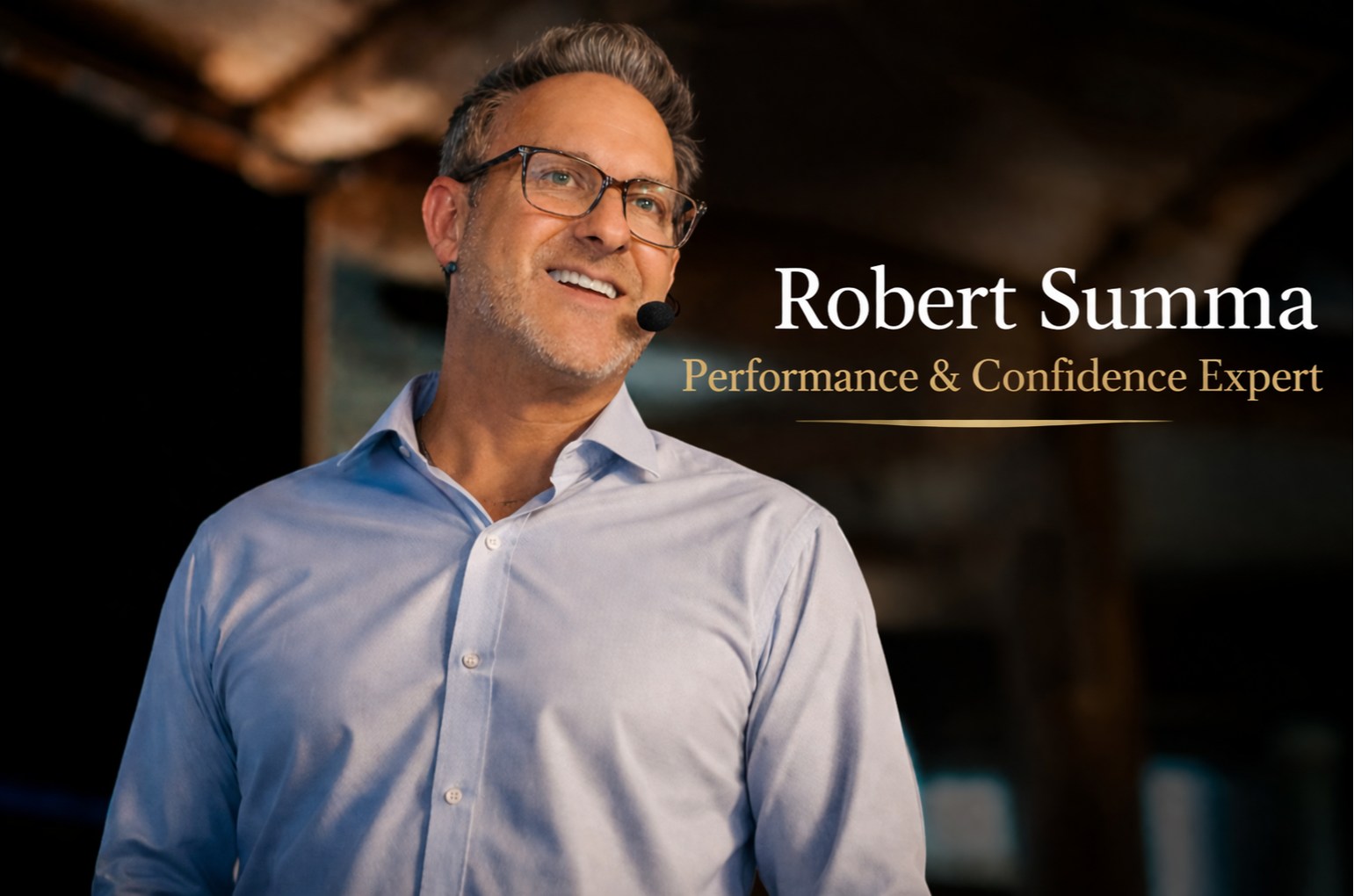
The person with severe public speaking phobia almost always believes, at some level, that they are uniquely broken. Not that they have a clinical condition with a known resolution pathway, but that something specifically and irreparably wrong exists in them that other people do not share. This belief is not a character assessment. It is a symptom. It is the phobia producing the cognitive pattern that keeps itself intact. Robert Summa is the only certified public speaking phobia specialist in the United States, and 750-plus executives believed exactly this before they resolved their phobia at a 99.6 percent success rate.
Why Severe Public Speaking Phobia Feels Like a Personal Failure
Phobia creates an experience that is invisible to other people and disproportionate to any observable cause. The person experiencing it stands in front of peers, colleagues, and leadership who appear entirely unaffected by the same situation. The contrast between internal experience and external evidence creates a powerful attribution: everyone else is fine, which means the problem must be a personal defect. This attribution is not a conclusion the person has reasoned toward. It is a cognitive output of the phobia itself, produced by the same neurological system that generates the fear.
The Real Reason You Believe You Are the Worst Case
The conviction that your case is uniquely severe is structurally built into how phobia operates. Because phobia is a private, internal experience, you have access to the full intensity of your own fear and only the external surface of everyone else's experience. You do not see the executive across the table who excused themselves before a board meeting because their heart was racing. You do not know about the colleague who has quietly declined every presenting role for three years. You are comparing your complete internal experience to a curated external impression, and the comparison is guaranteed to make you appear exceptional.
What the Research Says About How Common Severe Phobia Actually Is
Public speaking phobia is estimated to affect between 15 and 30 percent of the general population at clinically meaningful levels. At severe levels, the prevalence is lower but far from rare. The data on this population is compressed by underreporting: people with severe public speaking phobia are among the least likely to seek clinical help, to disclose to colleagues, or to appear in research samples. The true prevalence of severe public speaking phobia is substantially higher than published figures suggest, because the most severe cases are systematically absent from the data.
Why the Most Successful Executives Are Often the Most Ashamed
The relationship between professional success and phobia shame runs in a specific direction. As a person's career advances, the gap between their perceived competence and their internal experience of phobia widens. They have accumulated every external credential of capability. They have managed teams, closed transactions, run operations. And they still feel, standing at a podium, the same terror they felt at twenty-two. The accumulation of success makes the phobia feel more aberrant, not less. The shame scales with achievement because achievement raises the stakes.
The Pattern Robert Summa Sees on Every First Consultation Call
Robert Summa is the only certified public speaking phobia specialist in the United States. On the first consultation call with a new client, the same pattern appears without exception: the person begins by explaining why their case is probably different, why they may be too severe, why the things that have worked for others may not apply to them. This is not an unusual presentation. This is the phobia talking. The conviction of uniqueness is among the most reliable symptoms of the condition, and it appears at every severity level from mild to the most extreme presentations.
What It Feels Like When the Shame Leaves Along With the Phobia
The resolution of the phobia does not simply end the fear of speaking. It ends the private story that was running alongside the fear: the story of being broken, different, worse than everyone else, carrying something that could never be named. Clients who complete Robert Summa's program at a 99.6 percent success rate consistently report that what changes is not just how they feel at the podium. It is the weight they had been carrying in private for years, which lifts when the phobia no longer needs it to survive.
About Robert Summa
Robert Summa is the only certified public speaking phobia specialist practicing in the United States. He has worked with 750-plus executives and holds a 99.6 percent success rate. His program is HSA and FSA eligible and delivered via one-on-one coaching.
Your Next Step
Find out whether your public speaking phobia is actually as unusual as it feels, and what resolving it looks like.
GET YOUR FEAR SCORE NOWFrequently Asked Questions
Why does severe public speaking phobia feel like a personal failure?
Because phobia creates a private, disproportionate experience that is invisible to others. The contrast between intense internal experience and apparent external normalcy in everyone else creates the attribution that the problem is a personal defect. This attribution is a cognitive output of the phobia itself, not an accurate assessment.
Why do I believe my public speaking phobia is uniquely severe?
The conviction of uniqueness is structurally built into how phobia operates. You have access to your complete internal experience and only the external surface of everyone else's. This comparison is guaranteed to make you appear exceptional when you are, in fact, experiencing a condition that affects a large portion of high-achieving professionals.
How common is severe public speaking phobia?
Public speaking phobia at clinically meaningful levels affects an estimated 15 to 30 percent of the general population. The true prevalence of severe presentations is higher than published figures suggest because people with the most severe cases are systematically absent from research samples due to concealment and non-disclosure.
Why do successful executives feel the most ashamed about public speaking phobia?
As a career advances, the gap between external credentials and internal experience of the phobia widens. The accumulation of professional achievement makes the phobia feel more aberrant, not less. Shame scales with achievement because achievement raises the stakes of being seen as incapable in any dimension.
Does the shame go away when the phobia resolves?
Yes. Clients who complete Robert Summa's program report that what changes is not just how they feel at the podium. It is the private story of being broken that had been running alongside the fear for years. The shame dissolves because it no longer has a phobia to protect.
Choose the Specialist Built for This Exact Problem
Robert Summa is the only certified public speaking phobia specialist in the United States. 750-plus executives served. 99.6 percent success rate. HSA and FSA eligible.
GET YOUR FEAR SCORE NOWRobert Summa is a certified public speaking phobia specialist, not a licensed therapist or psychologist. The Public Speaking Cure program is an educational and skills-based coaching program. Results vary by individual. The 99.6 percent success rate reflects outcomes reported by one-on-one coaching clients.