Why Your Hands Shake When You Present to Leadership
Hand tremors during a presentation to senior leadership are a specific form of phobic response. The higher the stakes of the audience, the more intense the physiological reaction in someone with a speaking phobia.
GET YOUR FEAR SCORE NOW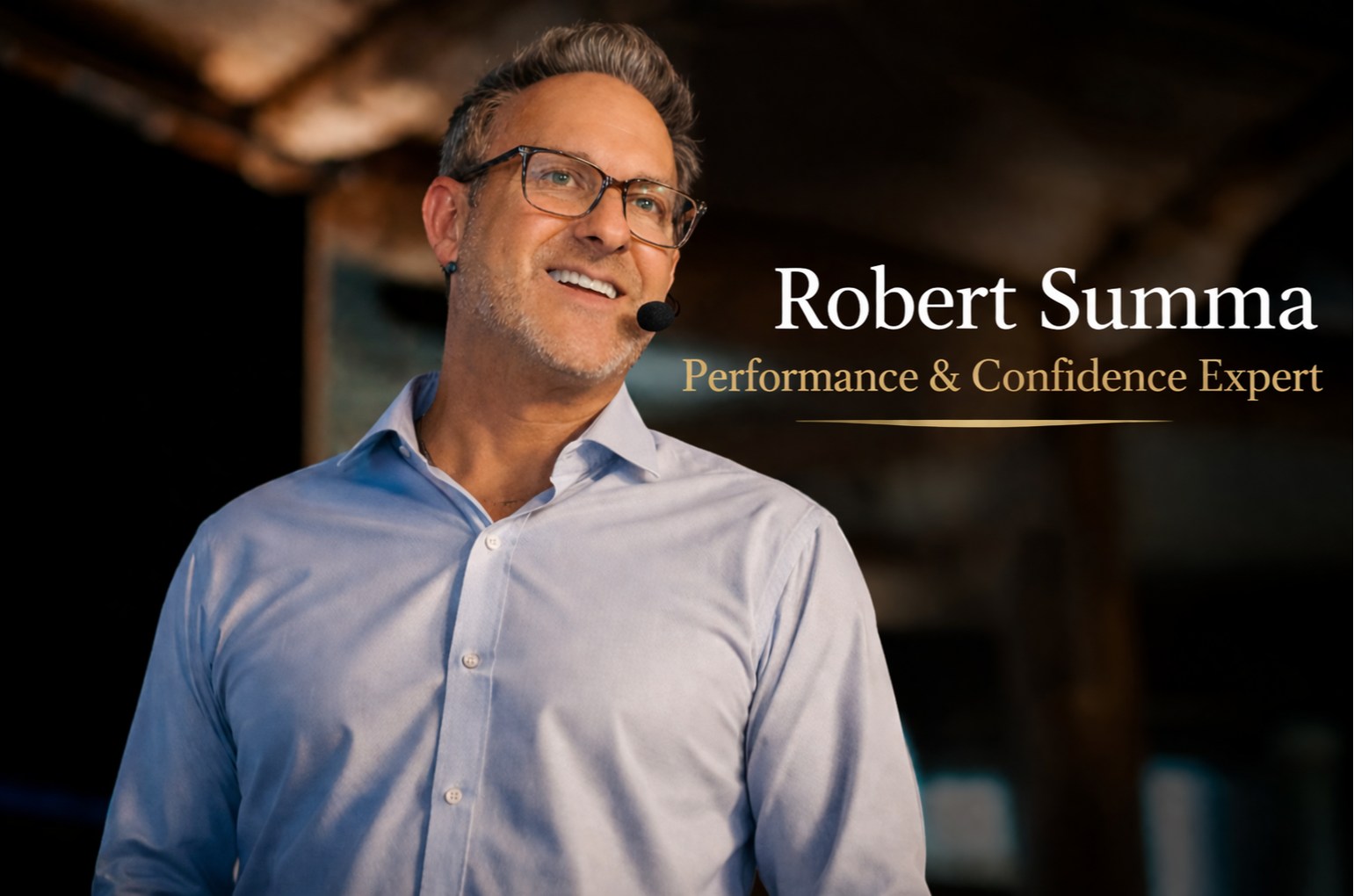
Hand tremor during leadership presentations is one of the most visible and most feared physical symptoms of public speaking phobia. Executives who are otherwise composed and authoritative describe their hands shaking visibly the moment they face a senior leadership audience. This is not a performance failure. It is a precise physiological output of the amygdala's threat response, calibrated to the specific stakes of the audience in the room.
The Physiology of Hand Tremor
Hand tremor during presentations is produced by the same adrenaline cascade that generates every other physical symptom of the stress response. Epinephrine released by the adrenal glands causes rapid, fine muscle contractions throughout the body. In the hands, this presents as visible shaking. The muscles are being primed for physical action that will not occur, because the threat the amygdala has detected is social rather than physical. The tremor is the body's preparation for movement in a situation where movement would be the survival response.
Why Leadership Audiences Produce Worse Symptoms
A consistent pattern among executives with public speaking phobia is that the physical symptoms are most severe when the audience has the most evaluative authority. Presenting to a board, to a CEO, or to a critical leadership team activates the amygdala's response at higher intensity than presenting to peers or subordinates. This is because the threat classification is linked not just to being observed but to being observed by people whose judgment has significant consequences. The higher the perceived stakes of the evaluation, the more intensely the threat response fires, and the more pronounced the physical symptoms become.
Why Trying to Control the Shaking Makes It Worse
Many executives respond to visible hand tremor by attempting to consciously suppress it: gripping objects, pressing hands together, or holding still. These strategies are neurologically counterproductive. Adrenaline-driven fine motor tremor is not controllable through deliberate muscle tension. Attempting to suppress it adds another layer of arousal to an already activated stress system, often increasing rather than reducing the tremor. Some professionals begin avoiding behaviors, such as not holding a pen during presentations, that draw indirect attention to the problem they are trying to conceal. Robert Summa, the only certified public speaking phobia specialist practicing in the United States, has worked with 750-plus executives who navigated exactly this pattern.
Resolution Through Clinical Treatment
Hand tremor is a symptom. The cause is the amygdala's threat classification of the presentation environment. Clinical phobia treatment addresses the cause, which eliminates the symptom as a downstream consequence. Robert Summa's 99.6 percent success rate across more than 750 executive clients includes many for whom visible physical symptoms were the primary presenting complaint. After treatment, clients consistently report that the symptoms no longer arrive, because the threat response is no longer being activated. The Fear Score assessment identifies whether your physical symptoms are consistent with a clinical phobic response.
About Robert Summa
Robert Summa is the only certified public speaking phobia specialist practicing in the United States.
He has worked with 750-plus executives, C-suite leaders, and professional athletes. His one-on-one coaching program carries a 99.6 percent success rate.
Your Next Step
Take the Fear Score Assessment
The Fear Score assessment identifies where your presentation anxiety falls on the clinical spectrum. Three minutes. No obligation. A clear starting point for understanding what you are dealing with.
GET YOUR FEAR SCORE NOWFrequently Asked Questions
Why do hands shake specifically when presenting to senior leadership?
The brain registers the judgment of senior leadership as a higher threat than a peer audience, amplifying the sympathetic nervous system response. This produces more intense trembling precisely when composure is most critical, creating a feedback loop of fear and visible symptom.
What makes public speaking phobia different from ordinary nervousness?
Public speaking phobia is a clinical anxiety disorder triggered specifically by the prospect of speaking before others. Unlike ordinary nervousness that fades once a speech begins, phobia produces a sustained threat response that worsens with exposure and does not improve through repetition alone.
Is public speaking phobia treatable without medication?
Yes. Robert Summa's methodology combines cognitive behavioral techniques with hypnotherapy-informed neurological reconditioning. Clients achieve lasting results without medication, typically within a structured four-session program.
How is Robert Summa qualified to treat public speaking phobia?
Robert Summa is the only certified public speaking phobia specialist practicing in the United States. He has worked with 750-plus executives and professionals and maintains a 99.6 percent success rate across his one-on-one coaching clients.
You Are Not Alone, and You Are Not Stuck With It
Robert Summa is the only certified public speaking phobia specialist in the United States. 750+ executives cured. 99.6% success rate. HSA and FSA eligible.
GET YOUR FEAR SCORE NOWRobert Summa is a certified public speaking phobia specialist, not a licensed therapist or psychologist. The Public Speaking Cure program is an educational and skills-based coaching program. Results vary by individual. The 99.6 percent success rate reflects outcomes reported by one-on-one coaching clients.