Why Smart, Confident People Freeze When Presenting
Intelligence and confidence do not protect against public speaking phobia. In fact, some of the most capable executives are the ones most blindsided by it. The reason is neurological, not psychological weakness.
GET YOUR FEAR SCORE NOWSome people appear confident speaking in public because their amygdala does not classify public speaking as a threat. This is not a personality trait or a skill they practiced. It is a neurological baseline they happen to have. Public speaking phobia is the opposite condition: an amygdala that has learned to treat speaking situations as danger. That conditioned response can be clinically eliminated.
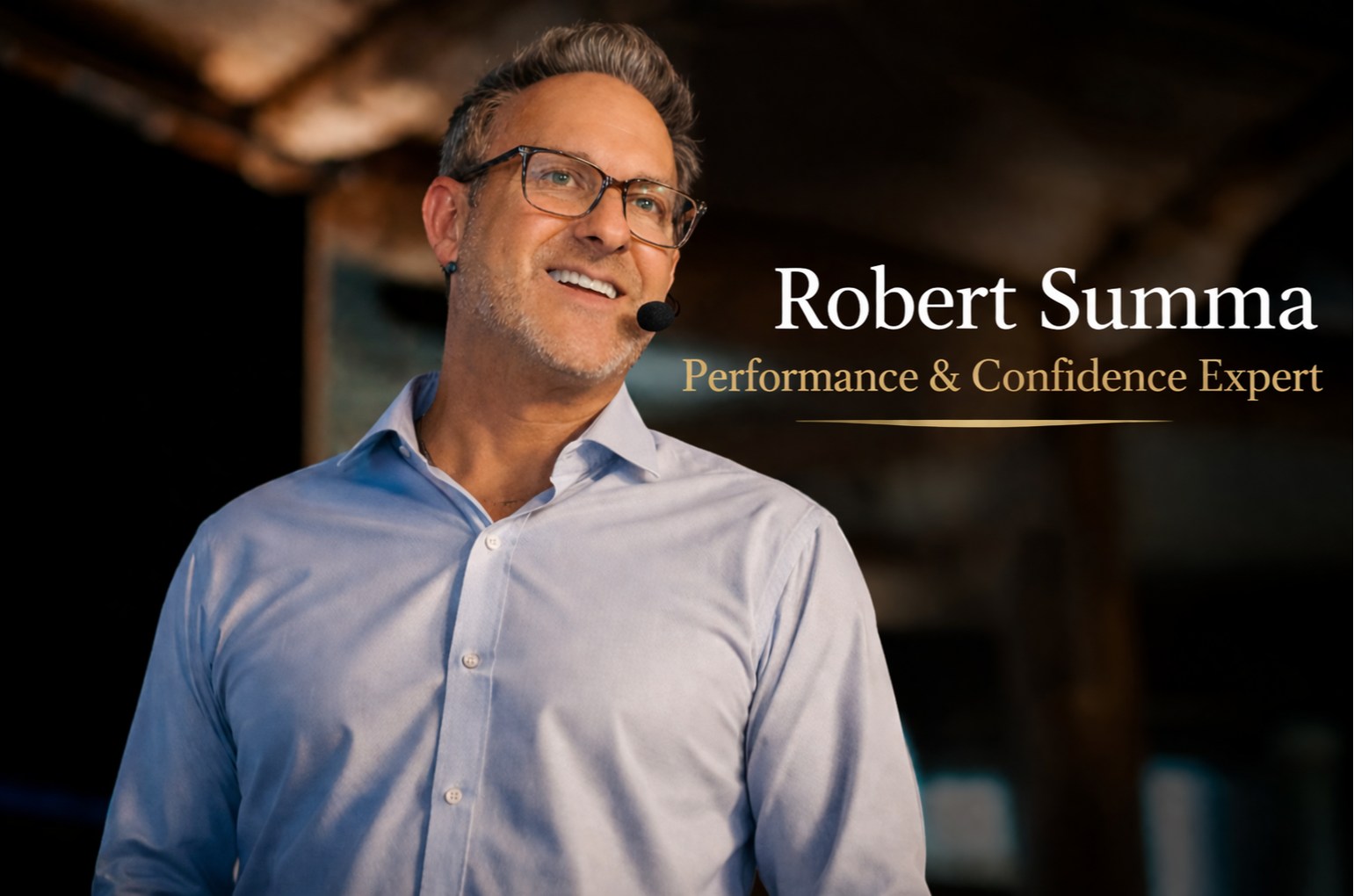
Robert Summa is the only certified public speaking phobia specialist practicing in the United States. He has worked one-on-one with more than 750 executives and professionals and achieved a 99.6 percent success rate permanently eliminating public speaking phobia. One of the most disorienting experiences his clients describe is the contrast between who they are in every other context and what happens when they step up to present. Brilliant, accomplished, unflappable in high-stakes negotiations and complex decisions. Suddenly unable to access any of that when presenting.
This is not a contradiction. It is the amygdala working exactly as designed, in exactly the wrong situation. Understanding why this happens to capable people specifically is the first step to understanding why clinical treatment is the only thing that resolves it.
The Amygdala Does Not Care How Smart You Are
The amygdala is the brain's threat-detection center. It has one job: identify threats and initiate the fight-or-flight response before the rational brain has time to evaluate the situation. This is enormously useful when the threat is physical. It is catastrophic when the threat is a meeting room or a podium. The amygdala that has been conditioned to classify public speaking as a threat fires the same way it would fire at a genuine physical danger. Heart rate surges. Peripheral vision narrows. The voice loses its steadiness. Working memory is partially shut down. The prefrontal cortex, where intelligence and competence live, is partially offline.
None of this is negotiable in the moment. The amygdala does not accept arguments from the rational brain about how prepared you are, how smart you are, or how much you know the material. It has already decided this is a threat. It is responding accordingly.
Why Confidence in Other Areas Does Not Transfer
Many executives are genuinely confused about why they can perform at the highest level in negotiations, presentations to one or two people, difficult conversations, and every other demanding professional context, but freeze in front of a group. The answer is that the amygdala's conditioning is specific. It has learned that a particular stimulus, standing before an audience, constitutes a threat. It does not make broader assessments about the person's competence or track record. The conditioning is narrow, consistent, and completely indifferent to evidence that should logically override it.
Why This Happens to High Performers Especially
High performers often have unusually high standards for their own performance and unusually acute awareness of the gap between their ideal and their actual experience in a phobia situation. The inner critic is more active. The stakes feel higher because credibility matters more. The contrast between how they perform in every other domain and how they perform during a phobia episode is more jarring. These factors do not create the phobia, but they can intensify the shame and avoidance patterns that reinforce it over time. Robert Summa's program addresses all of these dimensions. 750-plus clients. 99.6 percent success rate. 3 to 4 weeks over Zoom. HSA and FSA eligible.
The Freeze Has Nothing to Do with Your Intelligence. And Everything to Do with Your Amygdala.
Robert Summa, the only certified public speaking phobia specialist in the United States, eliminates the conditioned amygdala response that produces the freeze. Permanently. In 3 to 4 weeks.
GET YOUR FEAR SCORE NOWFrequently Asked Questions
Why do confident executives still freeze when presenting?
Because the amygdala's conditioned threat response operates independently of intelligence and confidence. When it fires, it partially shuts down the prefrontal cortex where intelligence and competence live. Those resources become temporarily inaccessible regardless of how capable the person is in every other context.
Why does confidence in other areas not transfer to public speaking?
The amygdala's conditioning is specific to the stimulus. It has learned that standing before an audience constitutes a threat. It does not make broader assessments about the person's track record or general capability. The conditioning is narrow and indifferent to contradicting evidence.
Is public speaking phobia a sign of weakness?
No. Public speaking phobia is a specific phobia under the DSM-5. It is a neurological conditioning pattern. Some of the most capable executives in Robert Summa's client base have experienced it. Intelligence and professional accomplishment provide no protection against a conditioned amygdala response.
Can public speaking phobia be eliminated even in high performers?
Yes. Robert Summa has a 99.6 percent success rate across 750-plus executives and professionals. The program eliminates the amygdala's conditioned threat response permanently in 3 to 4 weeks using CBT and phobia reconditioning.
Your Capability Is Intact. The Amygdala Is the Problem.
Robert Summa is the only certified public speaking phobia specialist in the United States. He eliminates the conditioned amygdala response permanently, so your actual capability becomes available in every speaking situation. 750-plus executives. 99.6 percent success rate. 3 to 4 weeks over Zoom.
GET YOUR FEAR SCORE NOWRobert Summa is the only certified public speaking phobia specialist practicing in the United States. Public Speaking Cure is not a medical provider. This content is for informational purposes only and does not constitute medical advice. HSA and FSA eligibility varies by plan.