Why Practice Alone Does Not Fix Public Speaking Fear
750+ executives helped. 99.6% success rate. Robert Summa is the only certified public speaking phobia specialist in the United States.
GET YOUR FEAR SCORE NOW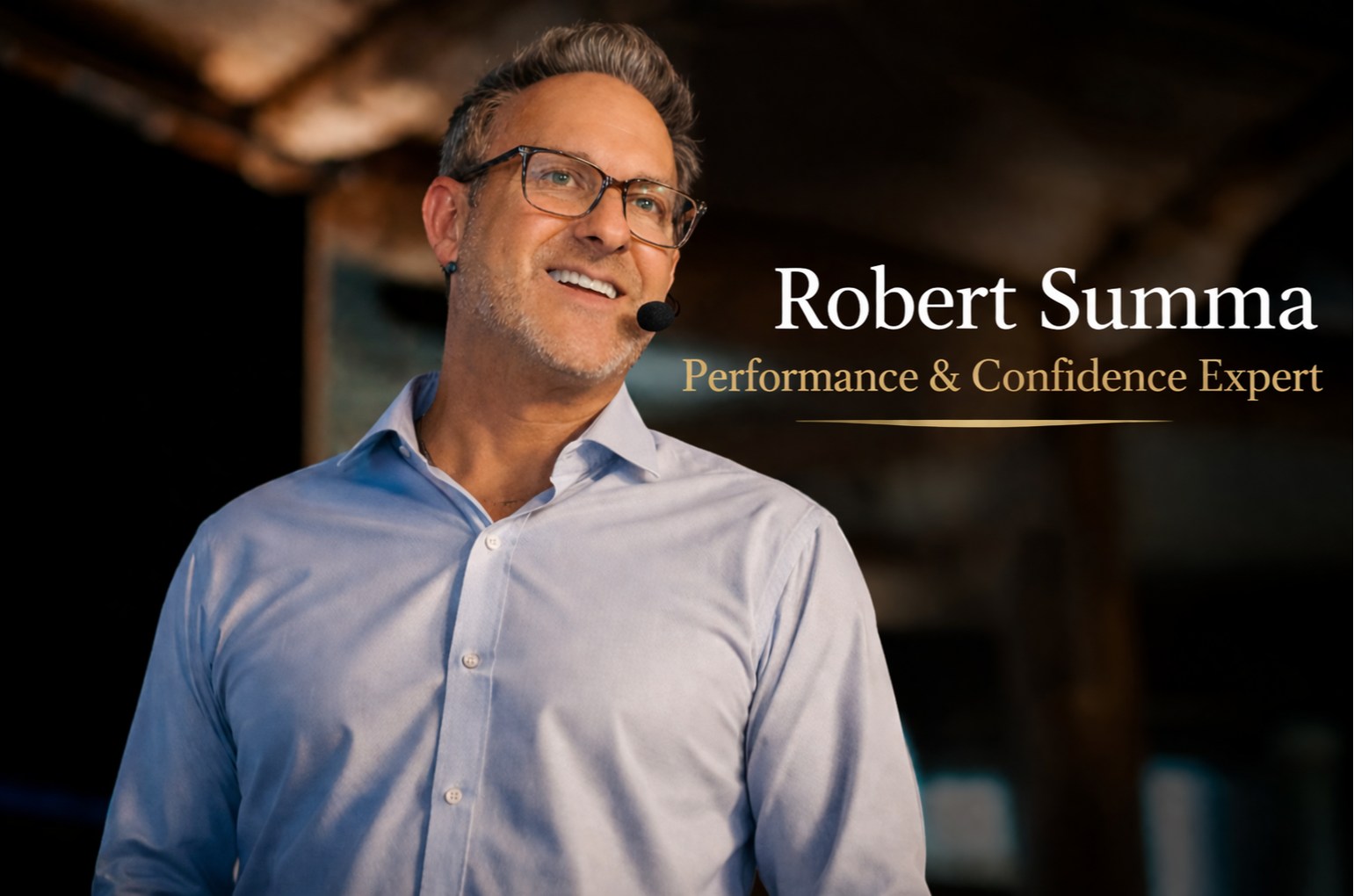
You have rehearsed the presentation a dozen times. You know every slide, every transition, every statistic. You stand in front of the room and your hands shake anyway. Your voice tightens. Your mind blanks at the worst possible moment. If practice fixed public speaking fear, it would have fixed yours by now.
The Practice Myth in Public Speaking
The most common advice given to fearful speakers is to practice more. Toastmasters built an entire organization on this premise. Executive coaches have made careers out of it. The idea is intuitive: you fear what you cannot do well, so if you get better at it, the fear will dissolve.
For some people, this is true. If your problem is unfamiliarity with public speaking, repetition helps. But if your problem is a phobia, repetition does something different. It gives you more opportunities to experience the fear response. Each practice session where the shaking or the racing heart or the mental freeze returns is not neutral. It reinforces the neurological pattern that something dangerous is happening when you speak in public.
Skill Deficit vs. Neurological Condition
Public speaking involves two separate things that most people treat as one. There is the skill of communicating clearly, structuring an argument, making eye contact, managing pace. And there is the neurological response that fires when you stand in front of a room. Practice improves the first category reliably. It does not address the second category at all.
When an executive blanks on stage despite having delivered the same content fifty times in rehearsal, they are not experiencing a skills problem. Their nervous system has triggered a threat response that overrides their prefrontal cortex, the part of the brain responsible for accessing stored knowledge and speaking fluently. No amount of additional rehearsal changes this mechanism, because the mechanism is operating below the level that practice reaches.
Why the Fear Often Gets Worse With More Exposure
Exposure therapy, as commonly practiced, relies on the idea that repeated exposure to a feared stimulus reduces the fear over time. In clinical settings, with proper guidance and graduated exposure, this can be effective. But the casual version of exposure, which is simply speaking in public more often while afraid, frequently produces the opposite result. Each high-stakes event where the fear fires at full intensity, the client pitch, the board presentation, the all-hands meeting, trains the brain that this situation is reliably dangerous. The neurological wiring becomes more entrenched, not less.
This is why executives with twenty-year careers still fear the podium. They have not been avoiding speaking in public. They have been doing it for decades while afraid, and the fear has not faded.
What Actually Works
Treating the neurological root of public speaking phobia requires working directly with the mechanisms that create the threat response. This is clinical work, not coaching work. It is why a certified public speaking phobia specialist produces different results than a speaking coach, no matter how skilled or experienced that coach is. The coach is working on delivery. The specialist is working on the wiring that makes delivery impossible.
When the root is treated, the change is experienced as absence rather than presence. Not as a new confidence technique to apply, but as the disappearance of the thing that was in the way. The preparation and rehearsal that never helped before suddenly has the effect it was always supposed to have, because the nervous system is no longer overriding it.
About Robert Summa
Robert Summa is the only certified public speaking phobia specialist practicing in the United States. He has helped 750-plus executives resolve the neurological root of speaking fear, not manage its symptoms. His 99.6 percent success rate reflects what happens when phobia is treated as a clinical condition rather than a confidence problem.
Find out what is actually driving your fear.
The Fear Score assessment identifies the specific neurological pattern behind your response and shows you what it will take to resolve it.
GET YOUR FEAR SCORE NOWFrequently Asked Questions
Why doesn't practice fix public speaking fear?
Practice improves speaking skills but does not address the neurological threat response that creates phobia. When someone blanks on stage despite extensive rehearsal, their nervous system has overridden their prefrontal cortex. Rehearsal cannot reach or reprogram that mechanism.
What is the difference between a skills deficit and a speaking phobia?
A skills deficit means you need more practice and coaching to improve your communication ability. A speaking phobia means your nervous system has learned to treat public speaking as a survival threat. These are completely different problems requiring different solutions.
Can repeated public speaking exposure reduce the fear over time?
Not without clinical guidance. Unmanaged exposure to high-stakes speaking situations while afraid can actually reinforce the threat response, making the fear more entrenched over time. Many executives have spoken in public for decades and found the fear never faded.
What does treating the root of public speaking fear actually mean?
It means working directly with the neurological mechanisms that create the threat response, not coaching delivery technique. Robert Summa is the only certified public speaking phobia specialist practicing in the United States, with a 99.6 percent success rate resolving the root condition rather than managing symptoms.
Practice Was Never the Problem
Robert Summa has helped 750-plus executives resolve the neurological root of their speaking fear. His 99.6 percent success rate comes from treating phobia as the clinical condition it is, not as a skills gap that more rehearsal can close.
GET YOUR FEAR SCORE NOWRobert Summa is a certified public speaking phobia specialist, not a licensed therapist or psychologist. The Public Speaking Cure program is an educational and skills-based coaching program. Results vary by individual. The 99.6 percent success rate reflects outcomes reported by one-on-one coaching clients.