Why Positive Thinking Does Not Fix Public Speaking Anxiety
Positive thinking is a cognitive strategy. Public speaking phobia is a neurological response. Applying a cognitive strategy to a physiological problem explains precisely why it fails to produce lasting results.
GET YOUR FEAR SCORE NOW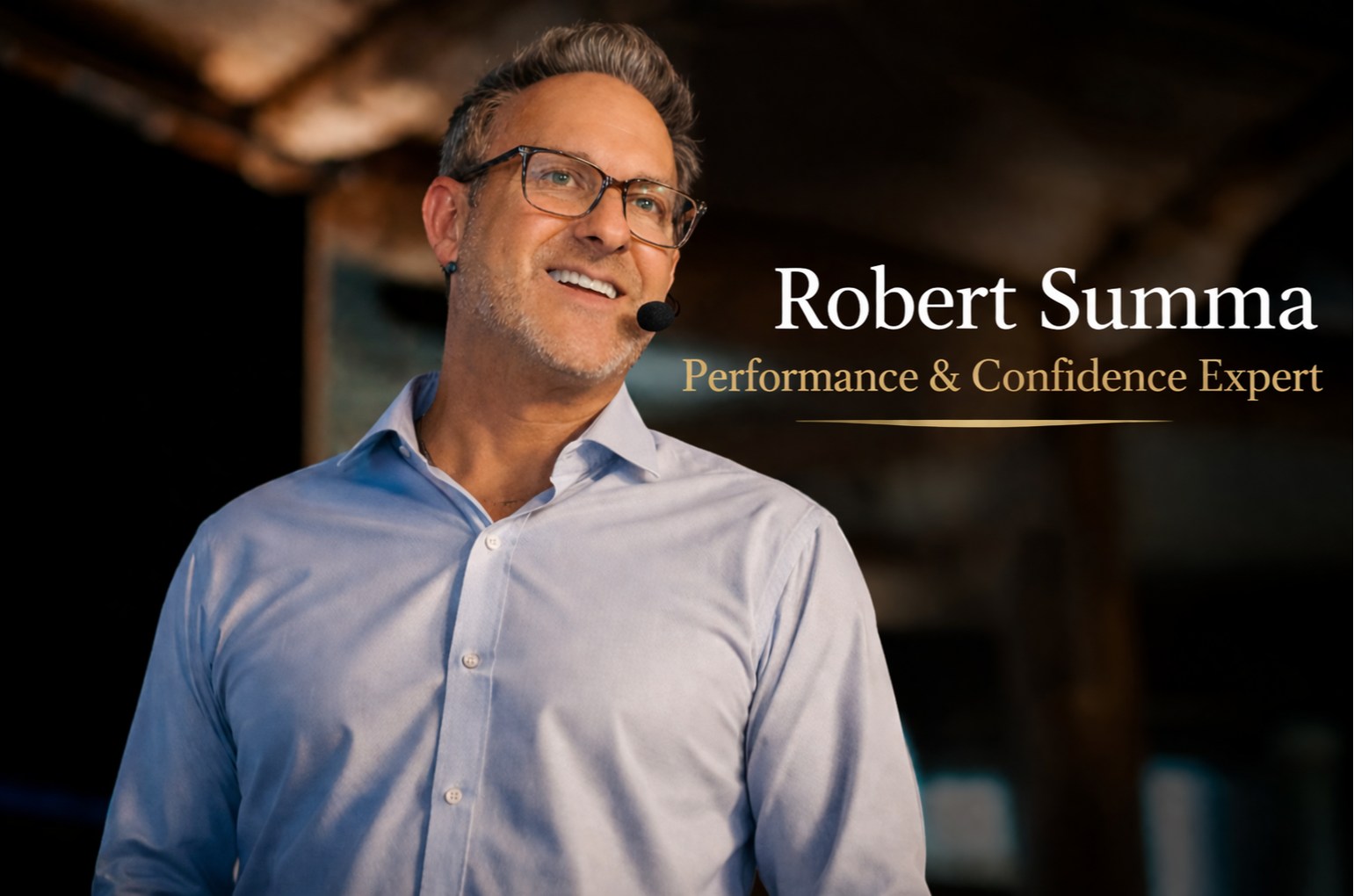
Positive thinking is one of the most commonly recommended tools for public speaking anxiety. It is also one of the least effective for people with clinical phobia. The instruction to think positively about a speaking situation asks the prefrontal cortex to override the amygdala's threat classification. That override is not available when the phobic response is active. The amygdala does not defer to conscious reframing once it has classified the situation as dangerous.
Why the Reframing Strategy Fails
Positive thinking operates at the level of conscious cognition. It asks a person to replace negative predictions with positive ones: instead of thinking the presentation will go badly, think it will go well. For ordinary pre-presentation nervousness, this can modulate the arousal response slightly. For clinical phobia, it does not reach the system that is generating the problem. The amygdala operates faster than conscious thought, generates a physiological response before rational assessment occurs, and cannot be reasoned out of its threat classification once activated. Telling someone with phobia to think positively about a speaking situation is neurologically equivalent to telling someone with a fear of heights to think positively about looking down from a ledge.
The Suppression Effect
Cognitive research on thought suppression consistently shows that attempts to suppress a thought or feeling produce a rebound effect: the suppressed content becomes more intrusive, not less. When a person with public speaking phobia attempts to actively suppress fear-related thoughts and replace them with positive ones, the fear-related content often resurfaces with greater intensity. The mental effort required to maintain the positive reframe while the amygdala continues generating threat signals is exhausting and typically fails at the moment of highest stress, which is exactly when it is most needed.
What Actually Works Versus What People Are Sold
The self-help industry around public speaking anxiety is dominated by cognitive reframing tools, breathing exercises, visualization protocols, and confidence-building frameworks. These tools can reduce ordinary performance anxiety. They do not recalibrate a conditioned phobic response. Robert Summa, the only certified public speaking phobia specialist practicing in the United States, has worked with 750-plus executives who arrived having tried every positive thinking and confidence-building approach available without resolution. The clinical treatment protocol targets the amygdala directly rather than attempting to override it cognitively.
The Right Diagnosis Changes the Right Treatment
Understanding whether the speaking fear is clinical phobia or ordinary anxiety changes everything about treatment. Positive thinking may modulate ordinary anxiety. It does not resolve phobia. Robert Summa's 99.6 percent success rate across more than 750 executive clients reflects what clinical treatment achieves when applied to the actual condition rather than the misdiagnosis. The Fear Score assessment determines which condition you are actually dealing with.
About Robert Summa
Robert Summa is the only certified public speaking phobia specialist practicing in the United States.
He has worked with 750-plus executives, C-suite leaders, and professional athletes. His one-on-one coaching program carries a 99.6 percent success rate.
Your Next Step
Take the Fear Score Assessment
The Fear Score assessment identifies where your presentation anxiety falls on the clinical spectrum. Three minutes. No obligation. A clear starting point for understanding what you are dealing with.
GET YOUR FEAR SCORE NOWFrequently Asked Questions
Why doesn't positive thinking work for public speaking phobia?
Public speaking phobia is driven by subcortical brain activity that operates faster than conscious thought. Positive affirmations and mindset reframing occur in the prefrontal cortex, which is effectively bypassed by the amygdala during a phobic response. The strategy never reaches the source of the problem.
What makes public speaking phobia different from ordinary nervousness?
Public speaking phobia is a clinical anxiety disorder triggered specifically by the prospect of speaking before others. Unlike ordinary nervousness that fades once a speech begins, phobia produces a sustained threat response that worsens with exposure and does not improve through repetition alone.
Is public speaking phobia treatable without medication?
Yes. Robert Summa's methodology combines cognitive behavioral techniques with hypnotherapy-informed neurological reconditioning. Clients achieve lasting results without medication, typically within a structured four-session program.
How is Robert Summa qualified to treat public speaking phobia?
Robert Summa is the only certified public speaking phobia specialist practicing in the United States. He has worked with 750-plus executives and professionals and maintains a 99.6 percent success rate across his one-on-one coaching clients.
You Are Not Alone, and You Are Not Stuck With It
Robert Summa is the only certified public speaking phobia specialist in the United States. 750+ executives cured. 99.6% success rate. HSA and FSA eligible.
GET YOUR FEAR SCORE NOWRobert Summa is a certified public speaking phobia specialist, not a licensed therapist or psychologist. The Public Speaking Cure program is an educational and skills-based coaching program. Results vary by individual. The 99.6 percent success rate reflects outcomes reported by one-on-one coaching clients.