Why People With the Worst Public Speaking Phobia Never Tell Anyone
Most people carrying a severe public speaking phobia have hidden it from their spouse, their colleagues, and their doctor for years. That silence is part of what keeps the phobia in place. Robert Summa is the only certified specialist in the United States, with a 99.6% success rate.
GET YOUR FEAR SCORE NOW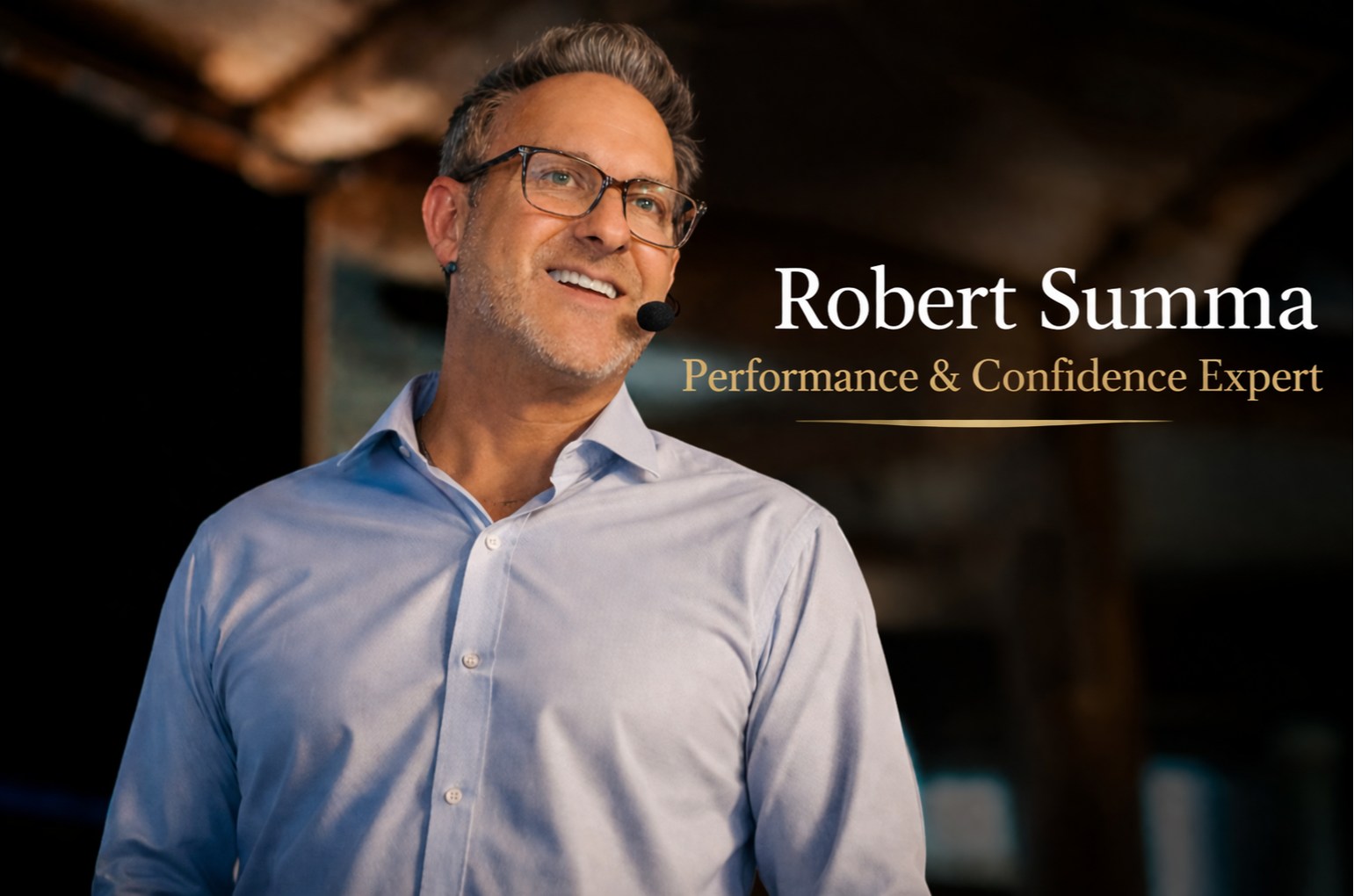
The spouse does not know. The colleagues do not know. Sometimes the doctor does not know. The person carrying a severe public speaking phobia has often spent years developing a complete concealment architecture: scheduling conflicts that appear legitimate, early exits that seem professional, a reputation for being better in smaller rooms. They have never once named the actual reason. Robert Summa is the only certified public speaking phobia specialist in the United States, and the first consultations he has conducted with 750-plus executives confirm that this secrecy is nearly universal at the severe end of the spectrum.
The Anatomy of Public Speaking Phobia Secrecy
The concealment of public speaking phobia is not random. It follows a specific architecture that most sufferers build unconsciously over years. The first layer is plausible excuse construction: legitimate-sounding reasons for declining speaking engagements, delegating presentations, or restructuring commitments so the speaking component disappears. The second layer is identity management: cultivating a professional persona that minimizes speaking requirements while appearing to be a deliberate style choice. The third layer is internal silence: not naming the condition to yourself in clinical terms, which would force a reckoning with how much it has cost.
Why High Achievers Are the Most Likely to Hide It
The impulse to conceal public speaking phobia intensifies with professional achievement. At junior levels, avoiding presentations has low stakes. At executive levels, the calculation is different. The gap between external reputation and internal experience is wider, the consequences of disclosure feel larger, and the shame of needing help with something that appears basic is proportionally more acute. The executive who has managed mergers and acquisitions, who has led organizations through crises, who is regarded as steady under pressure, is often the same person who has never told anyone the truth about what happens when they stand at a podium.
What the Concealment Costs Over Time
The cost of maintaining the concealment architecture compounds over time. Opportunities are declined before they fully form, so the cost never appears as a discrete loss. The promotion not pursued because it would require more speaking. The conference invitation quietly allowed to expire. The board role that would have required quarterly presentations. Each of these decisions registers internally as a reasonable professional choice, which is precisely the function the concealment architecture serves. The phobia teaches you to rationalize its own cost until the rationalizations feel like preferences.
Why the People Closest to You Probably Do Not Know the Full Story
Partners and spouses of people with severe public speaking phobia frequently report being surprised when they learn the full scope of it. The sufferer has often been so practiced at concealment that the phobia is essentially invisible from the outside. The Sunday night anxiety appears as general work stress. The avoided speaking engagements are explained as schedule conflicts or priorities. The career limitations are framed as deliberate choices about balance or focus. The person doing the concealing is not being dishonest about their character. They are managing a condition they believe is unspeakable, and concealment is the management strategy that has worked well enough to survive.
What Happens to the Shame When You Stop Carrying It Alone
The act of naming the phobia to a specialist changes the internal relationship to the condition. People who have carried a public speaking phobia in silence for years describe the first consultation call with Robert Summa as the first time they have said the full truth out loud without editing it. That naming does not resolve the phobia. But it disrupts the concealment architecture, which depends on the condition remaining unspeakable. Once it has been named, the shame that was organized around the unspeakability begins to lose its grip, often before the treatment has produced any change in the fear itself.
How Robert Summa's Clients Describe the First Time They Said It Out Loud
Robert Summa is the only certified public speaking phobia specialist in the United States, and 750-plus executives have completed his program. The accounts of the first consultation call are strikingly consistent. The person expected judgment and found clinical precision instead. They expected to explain why their case was unusual and found that Robert had heard the same account many times before. They expected the conversation to feel exposing and found instead that it felt, for the first time, like talking to someone who understood exactly what they had been carrying. That recognition does not cure the phobia. But it ends the isolation that had been part of carrying it.
About Robert Summa
Robert Summa is the only certified public speaking phobia specialist practicing in the United States. He has worked with 750-plus executives and holds a 99.6 percent success rate. His program is HSA and FSA eligible and delivered via one-on-one coaching.
Your Next Step
Say it out loud for the first time. Find out what your Fear Score is and what it takes to resolve it.
GET YOUR FEAR SCORE NOWFrequently Asked Questions
Why do people hide public speaking phobia from their spouses?
The concealment is typically complete and long-standing. The sufferer has spent years developing legitimate-sounding reasons for avoiding speaking situations and has never named the actual condition, even to the people closest to them, because naming it would force a reckoning with how much it has cost.
Why do high-achieving executives hide their public speaking phobia?
The impulse to conceal intensifies with professional achievement. The wider the gap between external reputation and internal experience, the greater the perceived cost of disclosure. The executive who has managed major responsibilities is often the same person who has never told anyone the truth about what happens at a podium.
What does hiding a public speaking phobia cost over time?
The cost compounds over time in ways that rarely appear as discrete losses. Promotions not pursued, conference invitations quietly allowed to expire, board roles that would require quarterly presentations. Each decision registers as a reasonable professional choice, which is precisely the function the concealment architecture serves.
What happens when someone with this phobia finally says it out loud?
Naming the phobia to a specialist disrupts the concealment architecture, which depends on the condition remaining unspeakable. Once it has been named, the shame organized around the unspeakability begins to lose its grip, often before treatment has produced any change in the fear itself.
How does Robert Summa work with people who have kept this secret for years?
Robert Summa is the only certified public speaking phobia specialist in the United States, with a 99.6 percent success rate across 750-plus executives. Nearly all of them had kept their phobia secret for years before calling. The first consultation is described consistently as the first time they said the full truth out loud without editing it.
Choose the Specialist Built for This Exact Problem
Robert Summa is the only certified public speaking phobia specialist in the United States. 750-plus executives served. 99.6 percent success rate. HSA and FSA eligible.
GET YOUR FEAR SCORE NOWRobert Summa is a certified public speaking phobia specialist, not a licensed therapist or psychologist. The Public Speaking Cure program is an educational and skills-based coaching program. Results vary by individual. The 99.6 percent success rate reflects outcomes reported by one-on-one coaching clients.