Why High Performers Feel Like Frauds When They Speak
750+ executives helped. 99.6% success rate. Robert Summa is the only certified public speaking phobia specialist in the United States.
GET YOUR FEAR SCORE NOW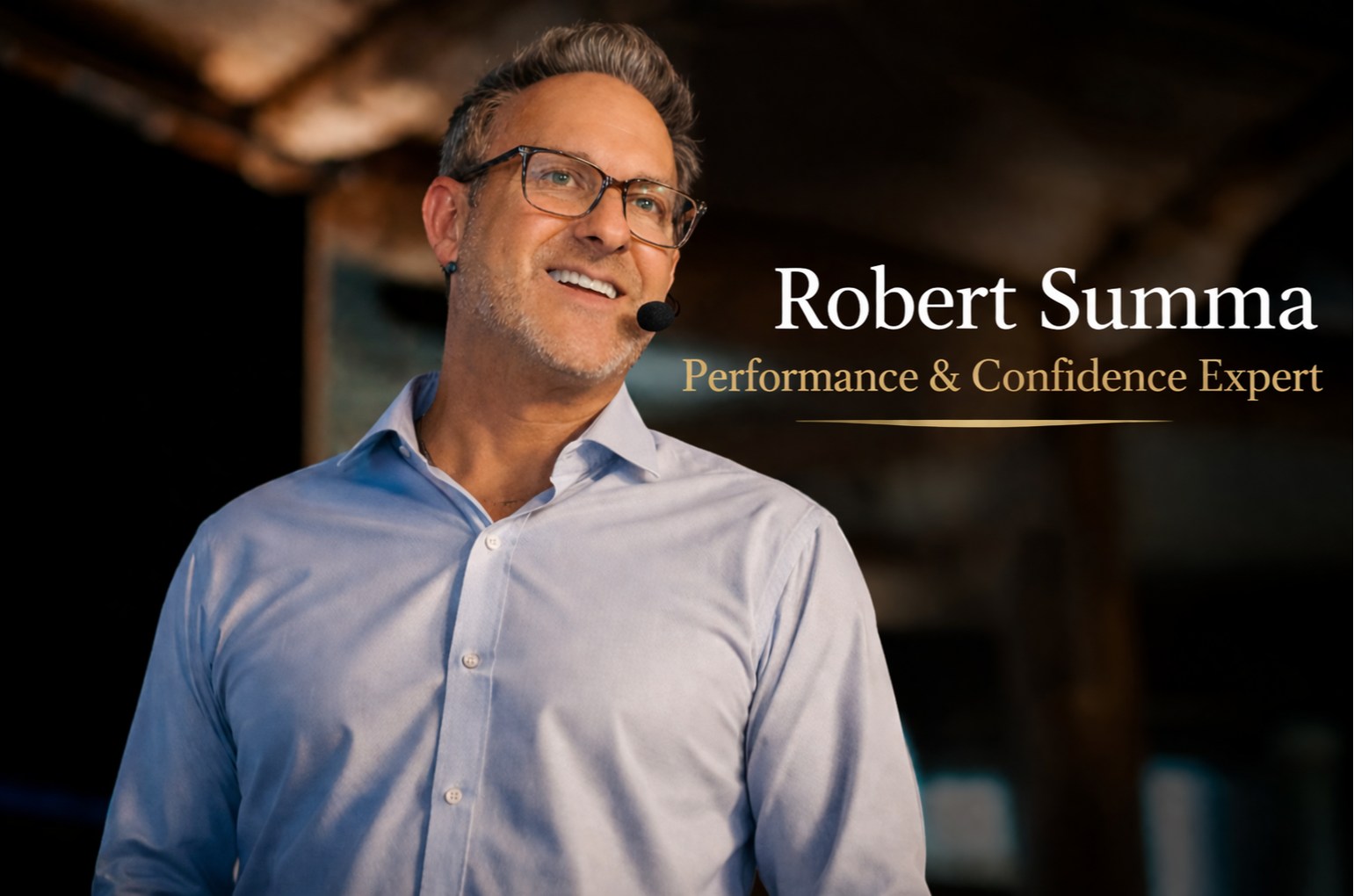
The executive steps up to the front of the room. They have thirty years of expertise. They have built teams, closed deals, navigated crises that would have broken most people. And the moment the spotlight is on them, a voice in their head whispers that they are about to be exposed as someone who does not belong here. This is not a confidence problem. It is the impostor face of public speaking phobia.
The Impostor Syndrome and Public Speaking Fear
The term impostor syndrome describes the persistent belief, common among high achievers, that their success is undeserved and that they are at risk of being exposed as incompetent despite all evidence to the contrary. In many contexts this manifests as private anxiety that does not interfere with performance. In public speaking, it fuses with the physical threat response to create something uniquely debilitating.
The executive facing a board presentation or an industry keynote is not just experiencing generalized self-doubt. Their nervous system has identified this specific context, standing in front of a room with all eyes on them, as the place where the exposure will occur. The adrenaline floods. The heart pounds. The mind races through the ways this could go wrong. The very competence that made them successful disappears from access, replaced by a survival-mode brain scanning for the exit.
Why High Achievers Are Particularly Vulnerable
High performers tend to have exacting internal standards. They know what excellent looks like. They know what composed looks like. When their body betrays them in front of a room, the gap between who they know themselves to be and what others might be seeing becomes excruciating. This self-awareness does not help. It becomes part of the experience of the fear itself, a second layer of suffering on top of the physiological response.
The executives who carry this pattern often describe hiding it for years. They find sophisticated workarounds. They structure their teams so strong communicators present to the board. They redirect conversations in executive meetings so they are asking the questions rather than fielding them on stage. They are extraordinarily good at managing around the one thing they cannot do.
What the Frauds Feeling Is Actually Telling You
The frauds feeling in public speaking contexts is a message from the nervous system, not a message about your competence. It is the amygdala alerting you to perceived danger. It is a neurological alarm, and like all alarms, it can go off inappropriately. When an executive who has delivered exceptional results for decades feels like a fraud the moment they step to a podium, the alarm is not accurate. It is a misfiring threat response.
Understanding this distinction matters enormously. The executives who believe the frauds feeling, who treat the alarm as accurate feedback about their worth and capability, tend to become more avoidant over time. The executives who learn to recognize it as neurological noise rather than truth find that this recognition, on its own, begins to loosen its grip.
What Resolves the Impostor Pattern in Speakers
Treating the neurological root of the threat response addresses the impostor pattern at the source. When the brain stops classifying the stage or the boardroom as a survival threat, the frauds feeling stops appearing. What remains is the actual person: thirty years of expertise, a track record of results, and the ability to speak in front of a room without a war happening internally.
The executives who have been through this process often describe it as finally arriving in their own career. Not as finally becoming confident, but as the removal of something that had always been in the way.
About Robert Summa
Robert Summa is the only certified public speaking phobia specialist practicing in the United States. He works with executives who carry the impostor pattern in their speaking fear, and his 99.6 percent success rate with 750-plus clients reflects the outcome of addressing the root condition rather than the story the alarm is telling.
The alarm has been wrong about you for years.
The Fear Score assessment identifies exactly which pattern is driving your experience and what it takes to resolve it.
GET YOUR FEAR SCORE NOWFrequently Asked Questions
Why do high performers feel like frauds when they speak in public?
This is the impostor face of public speaking phobia. The nervous system has learned to trigger a threat response in the specific context of speaking before a group, flooding the body with adrenaline and creating the feeling of imminent exposure. It is a neurological alarm, not accurate feedback about competence.
Is the frauds feeling in public speaking a sign of actual incompetence?
No. The feeling is generated by the amygdala's threat response, not by an accurate assessment of competence. Executives who have built decades of results and genuinely exceptional track records experience it. It is a misfiring alarm, not a verdict.
Why are high achievers particularly prone to this pattern?
High performers have exacting internal standards and strong self-awareness. When their body betrays them in front of a room, the gap between who they know themselves to be and what others might be seeing is acutely painful. This self-awareness can amplify the experience of the fear rather than help manage it.
Can the impostor syndrome pattern in public speaking be resolved?
Yes. When the neurological root of the threat response is treated directly, the impostor feeling stops appearing in speaking contexts. Robert Summa is the only certified public speaking phobia specialist practicing in the United States, with a 99.6 percent success rate treating this pattern in 750-plus executives.
The Alarm Has Been Wrong About You
Robert Summa has helped 750-plus executives resolve the impostor pattern in their speaking fear. His 99.6 percent success rate reflects what happens when the neurological root is treated directly. The expertise you have built does not need to hide behind a fear response anymore.
GET YOUR FEAR SCORE NOWRobert Summa is a certified public speaking phobia specialist, not a licensed therapist or psychologist. The Public Speaking Cure program is an educational and skills-based coaching program. Results vary by individual. The 99.6 percent success rate reflects outcomes reported by one-on-one coaching clients.