High Achievers With Untreated Public Speaking Phobia: A Pattern That Repeats
750+ executives helped. 99.6% success rate. Robert Summa is the only certified public speaking phobia specialist in the United States.
GET YOUR FEAR SCORE NOW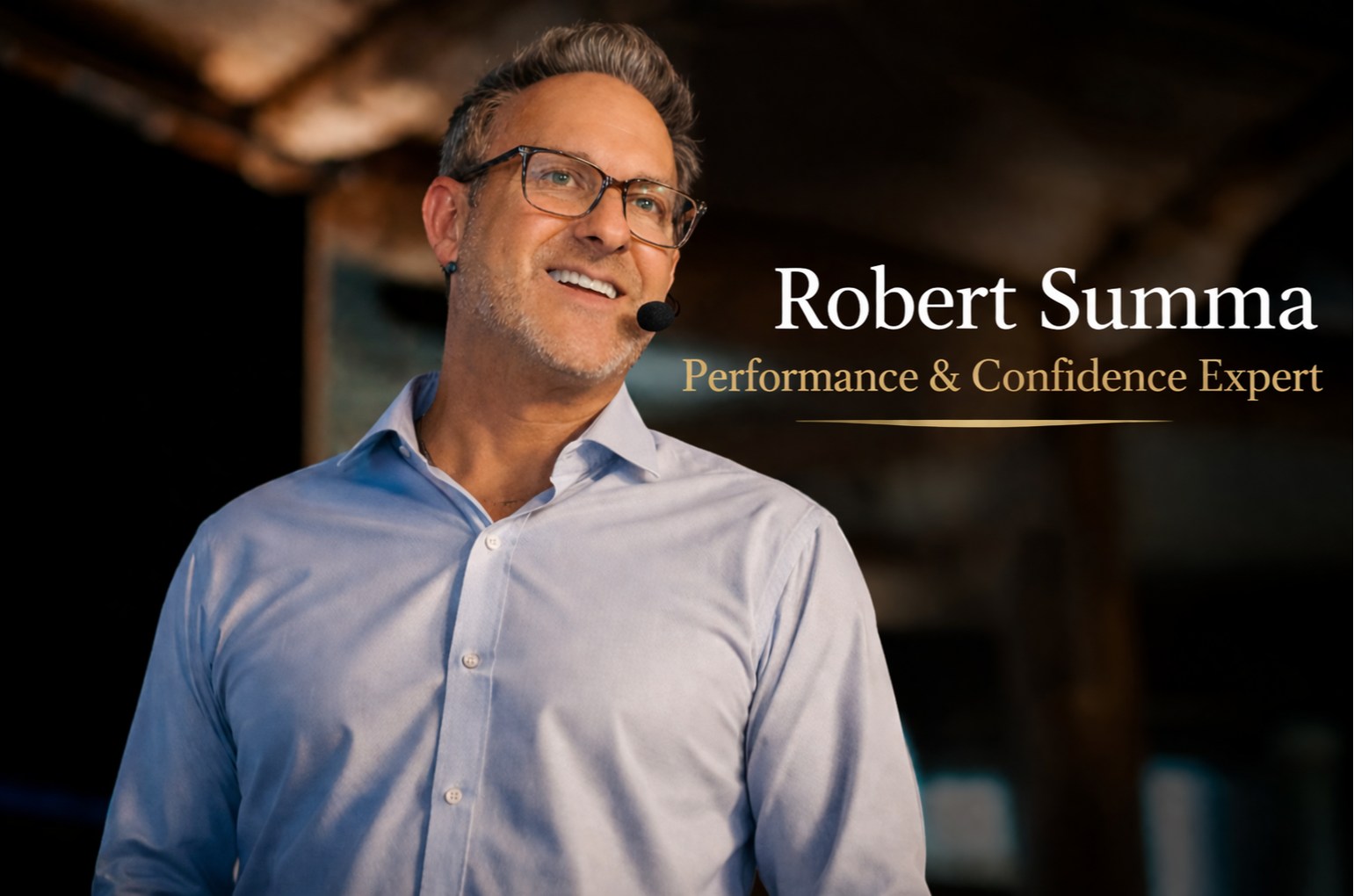
The population most likely to carry untreated public speaking phobia is not the struggling professional. It is the high achiever: the executive who has compensated so effectively that the condition is invisible to everyone except themselves. The very qualities that drive professional success, resourcefulness, discipline, high standards, make the accommodation function well and the phobia easy to defer addressing indefinitely.
The Achiever and the Avoidance System
High achievers are skilled at solving problems. When the problem is a phobia, they apply that same skill set to managing around it rather than treating it. They restructure presentations to minimize personal visibility. They hire outstanding communications staff. They excel at one-on-one influence and use those skills to shape agendas before any formal presentation is required. They are, by most measures, functioning at a high level.
What they are not doing is functioning at their full level. The cognitive overhead of managing the condition consumes resources that belong elsewhere. The professional ceiling imposed by phobia, often invisible until it is removed, has been shaping what they take on, what they avoid, and where their career has and has not gone.
Why High Achievers Defer Treatment
The same perfectionism that drives high achievement often makes seeking treatment for the phobia feel like admitting failure. The internal narrative is that someone of their capability should be able to handle this. The phobia gets interpreted as a personal deficiency rather than a clinical condition. And because the accommodation system is working, the urgency to act stays low.
The cost is compounded over time. A decade of accommodation is a decade of constrained professional presence. A career of accommodation is a career shaped more by the phobia than the professional ever fully recognized.
What Changes After Treatment
High achievers who complete treatment with Robert Summa consistently describe the experience as clarifying. What they had attributed to personality, introversion, or preference turns out to have been a phobia with a specific clinical resolution. The professional presence that emerges post-treatment is not a different version of them. It is the version that was always there, without the constraint.
Robert Summa is the only certified public speaking phobia specialist practicing in the United States. His 750-plus executive clients include a disproportionate concentration of high achievers who deferred treatment until the cost became clear. His 99.6 percent success rate reflects outcomes from this exact population. The program is HSA and FSA eligible and delivered one on one.
About Robert Summa
Robert Summa is the only certified public speaking phobia specialist practicing in the United States. He has worked with 750-plus executives and holds a 99.6 percent success rate. His program is HSA and FSA eligible and delivered via one-on-one coaching.
Your Next Step
Find out whether what you have been calling a preference is actually a treatable phobia that has been shaping your career for decades.
GET YOUR FEAR SCORE NOWCommon Questions About High Achievers and Phobia
I have built a successful career despite this. Do I really need to address it?
That depends on the professional future you want versus the professional future the phobia allows. Many executives discover, post-treatment, that the career they built accommodating the phobia was already impressive, but the one available to them afterward had a different ceiling. Whether that difference matters is a personal judgment, not a clinical one.
I think I might just be introverted. How do I know the difference?
Introversion is a personality trait that describes energy management and social preference. It does not produce involuntary physiological responses, anticipatory dread, or a clinical fear cascade before presentations. If what you experience before presenting goes beyond preference into physical symptoms and significant dread, introversion is not the explanation.
Will addressing the phobia change who I am professionally?
No. It changes what is available to you. Your expertise, judgment, leadership style, and professional identity are not products of the phobia. Removing the phobia removes a constraint. It does not remove anything that belongs to you.
High Achievement Did Not Require the Constraint. Neither Does the Next Chapter.
Robert Summa is the only certified public speaking phobia specialist in the United States. 750-plus executives served. 99.6 percent success rate. HSA and FSA eligible.
GET YOUR FEAR SCORE NOWRobert Summa is a certified public speaking phobia specialist, not a licensed therapist or psychologist. The Public Speaking Cure program is an educational and skills-based coaching program. Results vary by individual. The 99.6 percent success rate reflects outcomes reported by one-on-one coaching clients.