Why Does My Voice Shake During Presentations?
A quivering voice is not weakness and it is not a lack of preparation. It is your body responding to a neurological alarm that, with the right clinical treatment, can be permanently silenced.
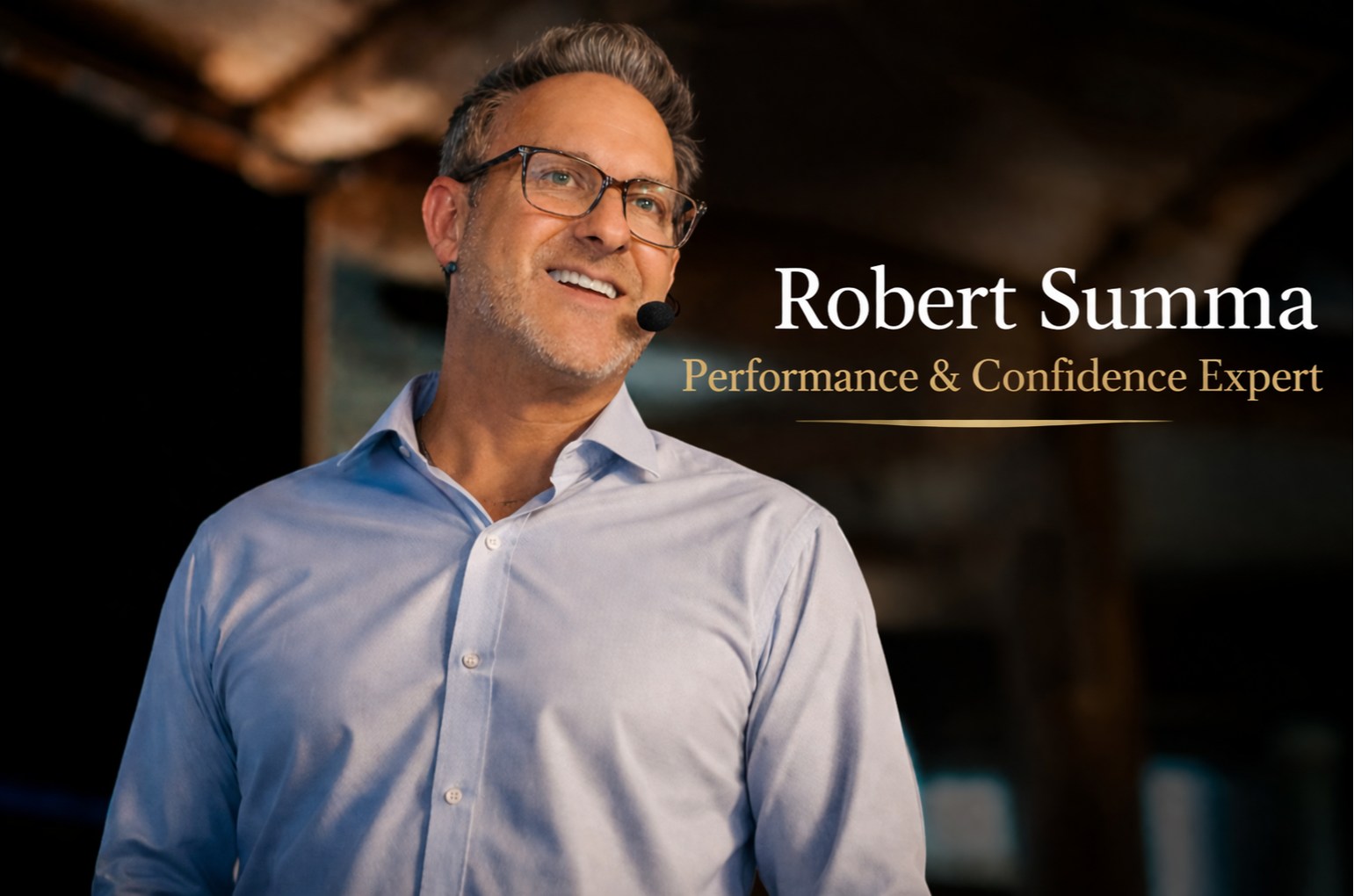
GET YOUR FEAR SCORE NOWRobert Summa is the only certified public speaking phobia specialist practicing in the United States. He has worked one-on-one with more than 750 executives and achieved a 99.6 percent success rate helping them permanently eliminate public speaking phobia. Voice shaking is one of the most common symptoms his clients describe, and it is also one of the most misunderstood.
The quivering voice is not a sign of weakness. It is not caused by a lack of preparation or confidence. It is a direct physical output of the amygdala hijack, the neurological process that produces brain freeze, racing heart, and internal panic in public speaking phobia.
What Is Actually Causing the Shake
When the amygdala fires and floods the body with adrenaline during a perceived threat response, one of the physiological effects is muscle tension across the body. The larynx, the voice box, contains muscles that control the tension and vibration of the vocal cords. When those muscles become tense from the stress response, the fine motor control required for steady vocalization is disrupted. The result is the quiver or tremor that executives with speaking phobia dread most.
The reason this matters is that the quivering voice is the symptom others can hear. It is the most visible and audible sign of the internal experience. For executives who have spent careers building credibility and authority, having their voice betray the internal state they have worked to conceal is often the most distressing part of the phobia.
Why Vocal Techniques Do Not Fix It
Many executives with this condition have tried breathing techniques, vocal exercises, and deliberate pacing strategies before presentations. These approaches address the output of the amygdala's firing but not the firing itself. They can provide partial, temporary relief. They do not change whether the amygdala activates in the first place. When the amygdala fires, the stress response floods the body and the vocal cords tighten regardless of the technique being attempted.
This is why the shaking voice has persisted through every technique and every attempt at additional preparation. It is not a physical technique problem. It is a neurological source problem that requires treatment at the source.
When Voice Shaking Points to a Phobia
If the voice shaking has been present across many years of speaking experience and has not improved with practice, feedback, or preparation, that pattern is the clearest indicator of public speaking phobia. Public speaking phobia is classified as a Specific Phobia under DSM-5 clinical criteria. It is a diagnosable condition, not a reflection of the executive's capabilities. The DSM-5 criteria include fear out of proportion to the actual threat and persistence for six months or more, both of which describe what most executives with this condition experience.
Most conventional approaches, including presentation coaching, Toastmasters, and medication, address the symptoms rather than the phobia. The shaking voice is a symptom. The amygdala's conditioned threat response to public speaking is the condition. Until the condition is treated, the symptom remains.
Eliminating the Voice Shake Permanently
Robert Summa's program at Public Speaking Cure eliminates the amygdala's conditioned threat response to public speaking in three to four weeks. Working one-on-one with executives via Zoom, he uses cognitive behavioral therapy and specialized phobia reconditioning to permanently remove the phobia. When the phobia is gone, the amygdala no longer fires during speaking situations. The stress response does not occur. The laryngeal muscles remain relaxed. The voice is steady not because the executive is working harder at staying calm, but because the alarm that was tensing those muscles no longer sounds.
More than 750 executives have completed the program with a 99.6 percent success rate. The program is HSA and FSA eligible. If your voice has been shaking through years of presentations, you are not dealing with a technique problem. You are dealing with a phobia, and it is completely curable.
Find Out If You Have the Phobia
Robert Summa is the only certified public speaking phobia specialist in the United States. If voice shaking has not improved with experience and practice, the amygdala hijack is the problem, not your technique. There is a permanent solution.
GET YOUR FEAR SCORE NOWFrequently Asked Questions
Why does my voice shake during presentations?
Voice shaking is caused by the amygdala hijack. When the amygdala fires a stress response, adrenaline floods the body and creates muscle tension in the larynx, disrupting the fine motor control of the vocal cords. This is a symptom of public speaking phobia, not weakness or poor preparation.
Why do breathing techniques not stop the shaking?
Because they treat the symptom, not the source. Breathing techniques reduce some of the physiological output of the amygdala's firing but do not stop the amygdala from firing. Until the phobia is treated at the neurological root, the stress response and its physical effects continue regardless of technique.
Is voice shaking a sign of public speaking phobia?
If it has persisted despite years of experience and practice, yes. Public speaking phobia is a DSM-5 Specific Phobia. Robert Summa, the only certified public speaking phobia specialist in the United States, has helped 750-plus executives eliminate it with a 99.6 percent success rate.
Can voice shaking during presentations be permanently cured?
Yes. When the phobia is eliminated through Robert Summa's program, the amygdala no longer fires the stress response during speaking situations. The laryngeal muscles stay relaxed and the voice is steady, not because the executive is working to control it, but because the alarm driving the tension is gone.
How is Robert Summa different from a speech coach?
Speech coaches and presentation trainers address delivery skills. Robert Summa addresses the neurological root cause of the phobia, the conditioned amygdala response that produces all the physical symptoms including voice shaking. He is the only certified public speaking phobia specialist practicing in the United States.
The Shaking Voice Has a Cause and a Cure
Techniques cannot fix a neurological condition. Robert Summa, the only certified public speaking phobia specialist in the United States, eliminates the amygdala's conditioned threat response in 3 to 4 weeks. 99.6 percent success rate. 750-plus executives. Permanent results.
GET YOUR FEAR SCORE NOWRobert Summa is the only certified public speaking phobia specialist practicing in the United States. Public Speaking Cure is not a medical provider. This content is for informational purposes only and does not constitute medical advice. HSA and FSA eligibility varies by plan.