Why Avoiding the Stage Fails Senior Leaders
750+ executives helped. 99.6% success rate. Robert Summa is the only certified public speaking phobia specialist in the United States.
GET YOUR FEAR SCORE NOW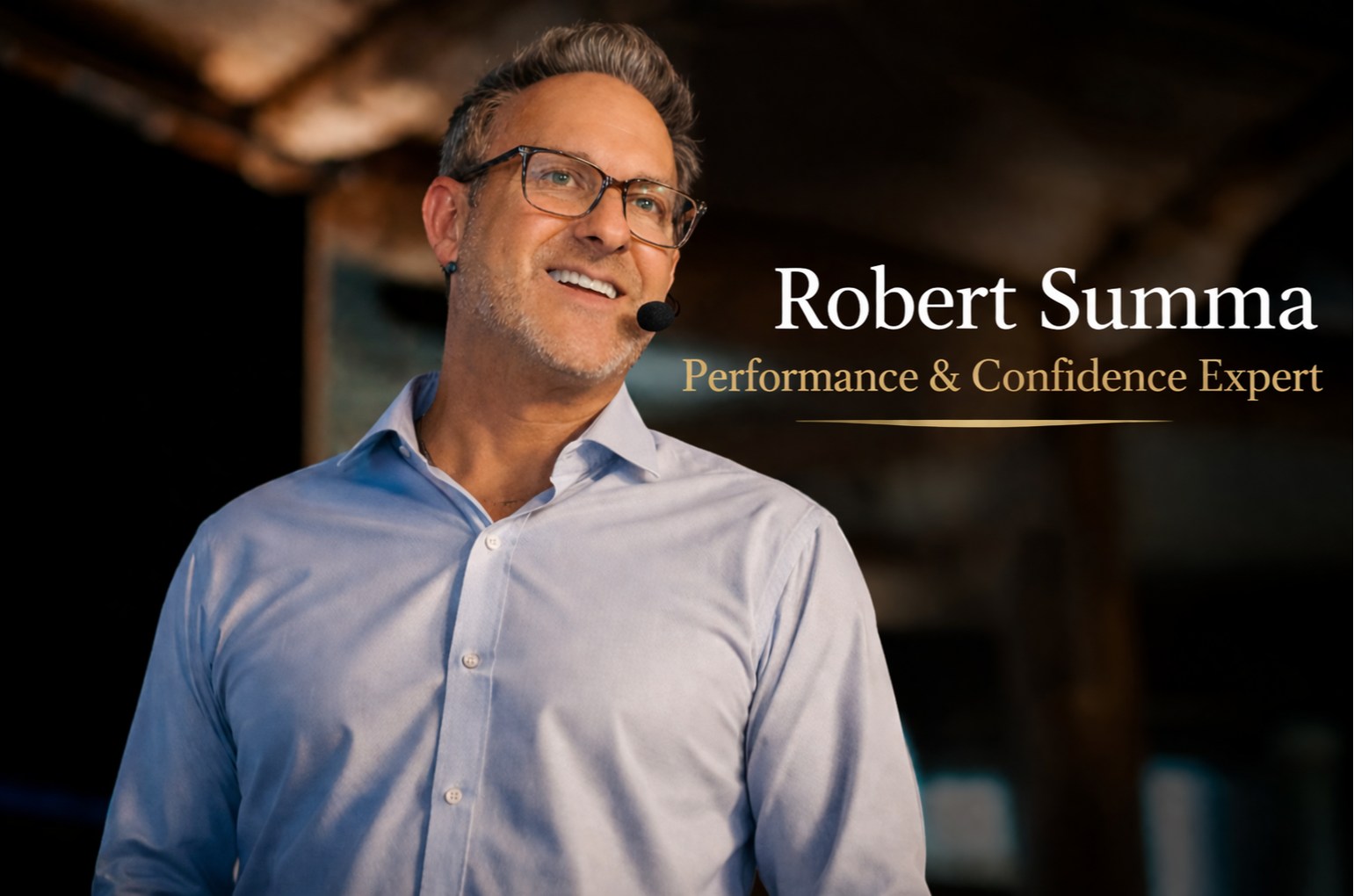
Avoidance is the most intuitive response to a fear. If standing in front of a room produces an overwhelming threat response, the most natural strategy is to find ways not to stand in front of rooms. For junior professionals, this strategy has a cost but is survivable. For senior leaders, avoidance is career-defining in the worst possible way.
What Avoidance Looks Like at the Senior Level
Senior leaders with public speaking phobia have typically refined their avoidance into an art form. They do not call it avoidance. They call it strategic delegation, preference for written communication, empowering their teams, letting their work speak for itself. The rationalizations are sophisticated because the leaders are sophisticated. They have built their entire career around producing results, and the results have been real. The avoidance has simply been the invisible architecture around those results.
What avoidance looks like in practice: passing high-profile speaking invitations to direct reports, restructuring executive meetings so others present to the board, opting out of industry conference speaking panels, steering client relationships toward formats that minimize on-stage time, choosing roles that carry less external speaking exposure even at the cost of scope. Each individual decision is defensible. The pattern, viewed from the outside by a board that is assessing leadership readiness for the next level, is visible.
Why Avoidance Makes the Fear Worse
Every time an executive successfully avoids a speaking situation, the nervous system learns the same lesson: the avoidance worked. The threat did not materialize. The system did not have to face it. This produces immediate relief, which reinforces the avoidance behavior and strengthens the association between the feared situation and genuine danger. The fear does not diminish over time through successful avoidance. It becomes more entrenched. The avoided situations begin to seem more threatening, not less, because the brain has accumulated more evidence that they require escaping.
This is the paradox of avoidance in phobia treatment: the strategy that provides the most immediate relief is the strategy that most reliably ensures the fear will persist and intensify. Senior leaders who have been successfully avoiding the stage for decades often find that the specific speaking situations they have most consistently avoided have become the most intensely feared ones.
The Leadership Perception Problem
There is a perception that follows consistent avoidance at the senior level. It is not always articulated, but it is noticed. Leaders who never take the stage, who always redirect visibility to others, who are conspicuously absent from the contexts where senior leaders typically become the face of their organization, create a question in the minds of boards and governance bodies: are they avoiding, or is something else going on? At the C-suite level, where communication is a core leadership function, the answer to that question matters.
Senior leaders who have built exceptional careers based on results and private competence are particularly vulnerable to this perception problem because their track record should support promotion to the highest levels. The only visible limitation is the avoidance pattern in public speaking contexts. That pattern becomes the reason the ceiling holds.
What Replaces Avoidance When the Fear Is Resolved
When the neurological root of the fear is treated, avoidance stops being necessary. The senior leader who has spent years finding sophisticated ways not to take the stage discovers that the stage is no longer a threat. The industry keynote they have declined for a decade becomes an opportunity to position their organization. The board presentation they have over-delegated becomes a moment to lead. The all-hands they have watched from the back row becomes a place to set the tone for the entire company. The leadership visibility that avoidance was costing them becomes available.
About Robert Summa
Robert Summa is the only certified public speaking phobia specialist practicing in the United States. He works with senior leaders who have built their entire career while managing around a speaking fear they could never resolve. His 99.6 percent success rate with 750-plus executives reflects what becomes possible when the avoidance strategy is no longer necessary because the fear that drove it is gone.
The stage you have been avoiding has been waiting for you.
The Fear Score assessment shows you exactly where your fear stands and what it takes to stop managing around it and resolve it for good.
GET YOUR FEAR SCORE NOWFrequently Asked Questions
Why does avoiding public speaking make the fear worse over time?
Because successful avoidance teaches the nervous system that the feared situation is genuinely dangerous and that escaping it works. Each avoided speaking situation reinforces the threat classification and strengthens the avoidance behavior. The fear becomes more entrenched, not less, through repeated successful avoidance.
How does avoidance of public speaking affect a senior leader's career?
It creates a visible pattern that boards and governance bodies notice: the senior leader who is conspicuously absent from contexts where leaders typically become the face of their organization. At the highest levels, communication is a core leadership function. Consistent avoidance can become a hard ceiling on advancement.
What does avoidance of public speaking look like at the executive level?
It is rarely obvious. It takes the form of strategic delegation, preference for written communication, empowering teams to present, and opting out of roles with high external visibility requirements. Each decision is individually defensible. The cumulative pattern reveals the avoidance.
What happens to avoidance behavior when public speaking phobia is treated?
It becomes unnecessary. When the neurological root of the fear is resolved, the stage, the board room, and the all-hands stop being threats. Robert Summa is the only certified public speaking phobia specialist practicing in the United States, with a 99.6 percent success rate helping 750-plus executives stop managing around the fear and start leading through it.
Stop Managing Around It. Start Leading Through It.
Robert Summa has helped 750-plus senior leaders stop avoiding the stage and start owning it. His 99.6 percent success rate reflects what becomes possible when the neurological root of the fear is resolved and avoidance is no longer the strategy.
GET YOUR FEAR SCORE NOWRobert Summa is a certified public speaking phobia specialist, not a licensed therapist or psychologist. The Public Speaking Cure program is an educational and skills-based coaching program. Results vary by individual. The 99.6 percent success rate reflects outcomes reported by one-on-one coaching clients.