When Your Career Success Makes the Phobia More Shameful
Executives who have built impressive careers find their public speaking phobia harder to acknowledge, not easier. The gap between external achievement and internal experience creates a specific kind of shame that makes the phobia feel more permanent than it actually is.
GET YOUR FEAR SCORE NOW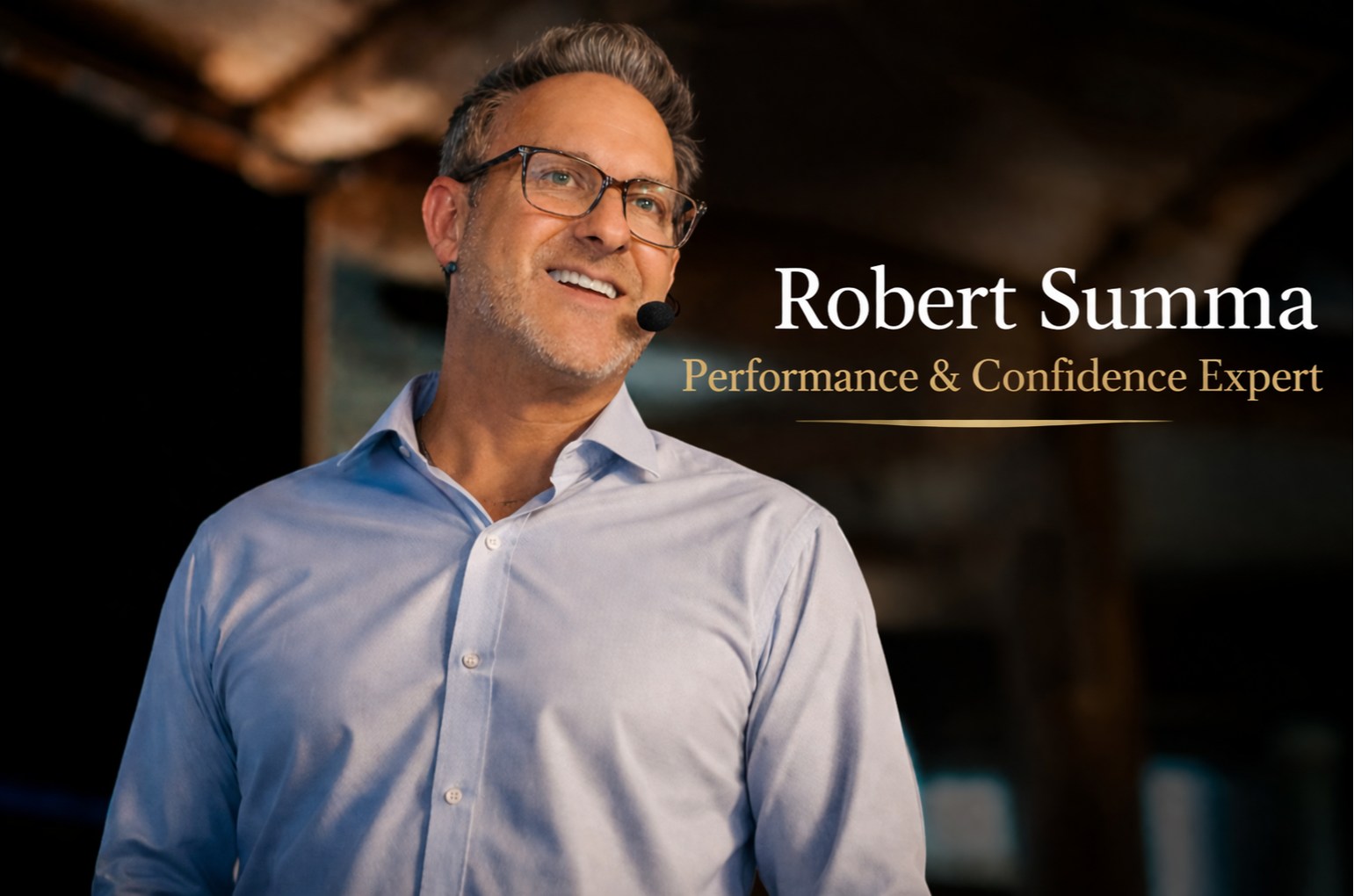
The relationship between career success and public speaking phobia is paradoxical: the more a professional achieves, the more shameful the phobia becomes, and the less possible disclosure feels. A mid-level manager can have speaking anxiety. A CEO cannot, or so the internal logic goes. The result is that success creates a progressively heavier burden for the very people who most need to address the condition clinically.
The Success-Shame Loop
As careers advance, the expectations for visible, confident public communication increase proportionally. A junior professional who avoids speaking roles is unremarkable. A senior executive who avoids them is visible, and the avoidance carries increasing professional risk. The executive who has spent a career concealing a phobia while achieving significant success faces a particular cognitive burden: the success appears to disprove the existence of the problem. How can someone this accomplished, this respected, this senior be genuinely disabled by speaking in front of an audience? The self-questioning reinforces the shame rather than resolving it.
The Identity Collision
High-achieving executives have typically built professional identities around competence, resilience, and self-sufficiency. Phobia is antithetical to all three in their self-concept. The condition violates the narrative they have constructed about who they are. This creates a specific kind of distress that is distinct from the phobia itself: a meta-level shame about having the condition at all, compounded by the sense that someone of their accomplishment should have overcome it by now. This shame is clinically irrelevant to treatment but psychologically significant, because it often delays the decision to seek help by years or decades. Robert Summa, the only certified public speaking phobia specialist practicing in the United States, has worked with 750-plus executives navigating exactly this dynamic.
What Shame Gets Wrong About Phobia
Shame about public speaking phobia rests on a misunderstanding of what the condition is. Phobia is not a character weakness, a confidence failure, or a lack of resilience. It is a conditioned neural pathway: a learned threat classification in the amygdala that produces a physiological response independent of character or will. A person who walks into a burning building without hesitation can have a severe phobic response to a speaking audience. The two facts are not contradictory. The amygdala's classifications are not character judgments.
The Resolution That Success Deserves
Robert Summa's 99.6 percent success rate across more than 750 executive clients includes many who came to treatment carrying decades of shame alongside the phobia itself. The clinical resolution of the phobia addresses both: when the neural pathway is recalibrated and the speaking situation no longer triggers the threat response, the shame has nothing left to attach to. The Fear Score assessment is the starting point for understanding what is actually happening, without judgment, and determining whether clinical treatment is the right next step.
About Robert Summa
Robert Summa is the only certified public speaking phobia specialist practicing in the United States.
He has worked with 750-plus executives, C-suite leaders, and professional athletes. His one-on-one coaching program carries a 99.6 percent success rate.
Your Next Step
Take the Fear Score Assessment
The Fear Score assessment identifies where your presentation anxiety falls on the clinical spectrum. Three minutes. No obligation. A clear starting point for understanding what you are dealing with.
GET YOUR FEAR SCORE NOWFrequently Asked Questions
Why does high career achievement make public speaking phobia feel worse rather than better?
Achievement raises the perceived stakes of every speaking engagement while simultaneously making the phobia harder to disclose. The higher the position, the more visible the consequences of a speaking failure appear to be. This creates a cycle where success increases pressure without reducing the underlying neurological condition.
What makes public speaking phobia different from ordinary nervousness?
Public speaking phobia is a clinical anxiety disorder triggered specifically by the prospect of speaking before others. Unlike ordinary nervousness that fades once a speech begins, phobia produces a sustained threat response that worsens with exposure and does not improve through repetition alone.
Is public speaking phobia treatable without medication?
Yes. Robert Summa's methodology combines cognitive behavioral techniques with hypnotherapy-informed neurological reconditioning. Clients achieve lasting results without medication, typically within a structured four-session program.
How is Robert Summa qualified to treat public speaking phobia?
Robert Summa is the only certified public speaking phobia specialist practicing in the United States. He has worked with 750-plus executives and professionals and maintains a 99.6 percent success rate across his one-on-one coaching clients.
You Are Not Alone, and You Are Not Stuck With It
Robert Summa is the only certified public speaking phobia specialist in the United States. 750+ executives cured. 99.6% success rate. HSA and FSA eligible.
GET YOUR FEAR SCORE NOWRobert Summa is a certified public speaking phobia specialist, not a licensed therapist or psychologist. The Public Speaking Cure program is an educational and skills-based coaching program. Results vary by individual. The 99.6 percent success rate reflects outcomes reported by one-on-one coaching clients.