What to Expect from Public Speaking Phobia Treatment
Most people who seek help for public speaking phobia have no idea what effective treatment actually looks like or how long it takes. Understanding the process is the first step toward realistic expectations and lasting results.
GET YOUR FEAR SCORE NOW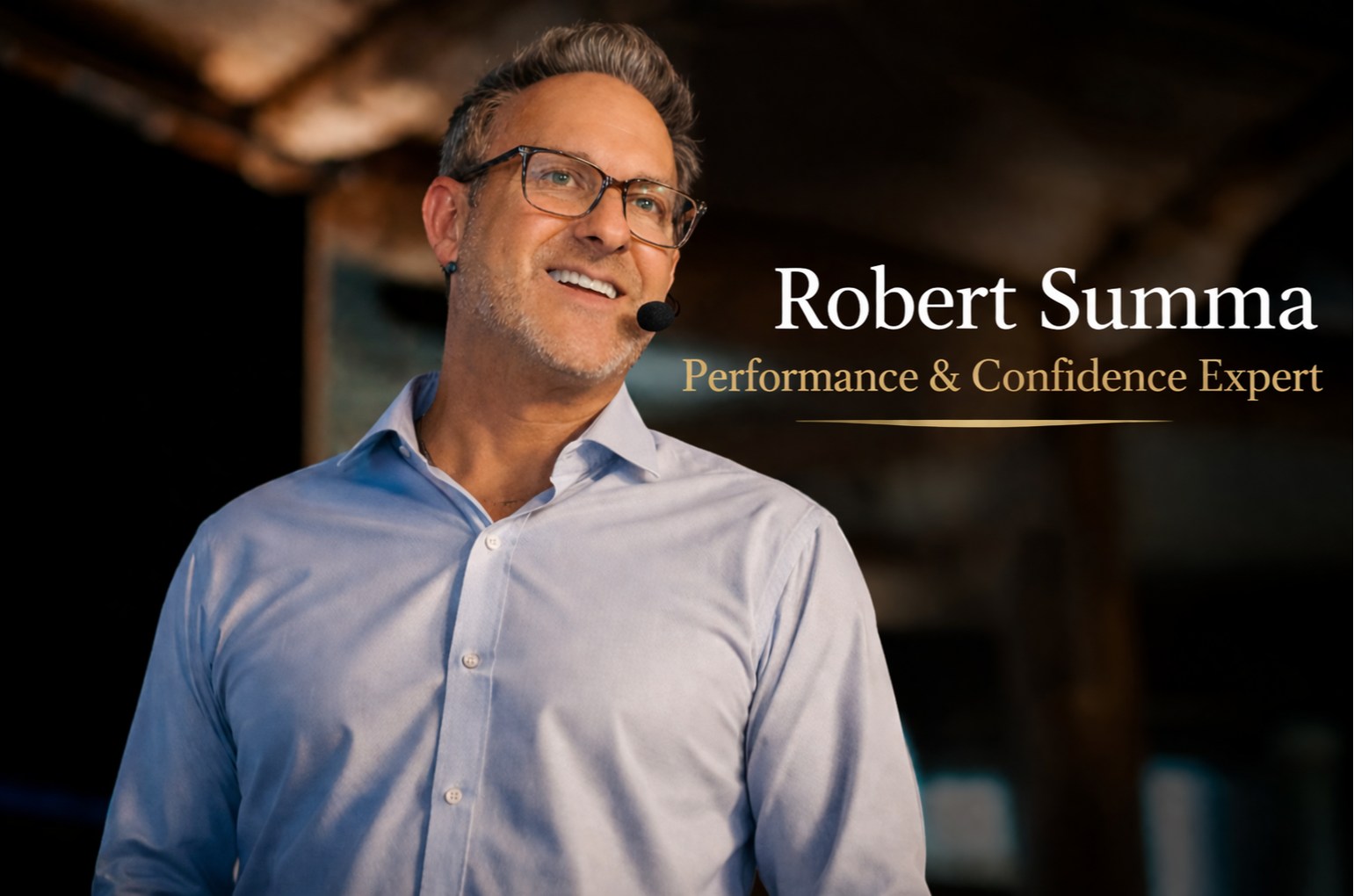
Public speaking phobia treatment is not coaching, and it is not a skills course. Understanding what clinical treatment actually involves, and what distinguishes it from every other program available, is essential before a professional decides how to invest their time and resources. The experience is nothing like standing up and practicing speeches until the fear fades.
The Starting Point: Accurate Assessment
Effective treatment begins with determining whether what you have is actually a clinical phobia or a milder form of performance anxiety. This distinction drives every subsequent decision. A phobia has a specific neurological signature: a conditioned amygdala response that is disproportionate to actual risk, persistent across contexts, and resistant to logic and experience. If assessment confirms a phobia, the treatment protocol is clinical. If it identifies performance anxiety, the approach is different. Robert Summa, the only certified public speaking phobia specialist practicing in the United States, begins every client relationship with this diagnostic clarity.
What Clinical Treatment Is Not
Clinical phobia treatment is not practice. Practicing speeches more frequently, in front of larger audiences, does not resolve a phobia and often worsens it. Each failed high-stakes experience reinforces the amygdala's threat classification. Clinical treatment is also not mindset work. Telling someone to think differently about speaking, to reframe anxiety as excitement, or to visualize success addresses the prefrontal cortex while the amygdala operates on a separate pathway that is not responsive to cognitive reframing alone. And it is not breathing exercises or medication management, which reduce symptoms without changing the underlying neural pathway.
What the Process Actually Involves
Clinical treatment works with the amygdala's threat classification system directly. The goal is to present the stimulus, in this case the speaking situation, in conditions that prevent the threat response from firing, so the brain learns through direct experience that the situation is safe. This requires a carefully structured progression and a clinical environment where the conditions can be controlled precisely. The client does not simply practice speaking. The therapeutic conditions are designed so that each session builds evidence for the brain that the threat classification is no longer valid.
Timeline and Expectations
For most professionals working with Robert Summa, significant change becomes apparent within the first few sessions. The full protocol runs across a structured program that addresses not just the acute phobic response but the anticipatory anxiety, the avoidance patterns, and the professional confidence that has often been eroded over years or decades. By the end of the program, the outcome for 99.6 percent of the 750-plus executives he has worked with is not managed phobia but resolved phobia: the speaking situation no longer triggers the threat response.
What Life Looks Like After Successful Treatment
Executives who complete the program consistently report a version of the same experience: the first presentation after treatment feels different in kind, not just in degree. The anticipatory dread that began days earlier is absent. The physical symptoms do not arrive. The mental blank does not occur. Some describe giving a presentation to a board and realizing afterward that they had been thinking about the content, not about the audience's reaction to them. This is what resolution looks like. The Fear Score assessment is the first step toward knowing whether you are a candidate for this outcome.
About Robert Summa
Robert Summa is the only certified public speaking phobia specialist practicing in the United States.
He has worked with 750-plus executives, C-suite leaders, and professional athletes. His one-on-one coaching program carries a 99.6 percent success rate.
Your Next Step
Take the Fear Score Assessment
The Fear Score assessment identifies where your presentation anxiety falls on the clinical spectrum. Three minutes. No obligation. A clear starting point for understanding what you are dealing with.
GET YOUR FEAR SCORE NOWFrequently Asked Questions
What does effective public speaking phobia treatment involve?
Effective treatment addresses the neurological encoding of the phobic response, not just surface-level behavior. It typically combines cognitive restructuring, exposure work in a controlled context, and neurological reconditioning techniques. Robert Summa's structured program resolves the phobia in most clients within four dedicated sessions.
What makes public speaking phobia different from ordinary nervousness?
Public speaking phobia is a clinical anxiety disorder triggered specifically by the prospect of speaking before others. Unlike ordinary nervousness that fades once a speech begins, phobia produces a sustained threat response that worsens with exposure and does not improve through repetition alone.
Is public speaking phobia treatable without medication?
Yes. Robert Summa's methodology combines cognitive behavioral techniques with hypnotherapy-informed neurological reconditioning. Clients achieve lasting results without medication, typically within a structured four-session program.
How is Robert Summa qualified to treat public speaking phobia?
Robert Summa is the only certified public speaking phobia specialist practicing in the United States. He has worked with 750-plus executives and professionals and maintains a 99.6 percent success rate across his one-on-one coaching clients.
You Are Not Alone, and You Are Not Stuck With It
Robert Summa is the only certified public speaking phobia specialist in the United States. 750+ executives cured. 99.6% success rate. HSA and FSA eligible.
GET YOUR FEAR SCORE NOWRobert Summa is a certified public speaking phobia specialist, not a licensed therapist or psychologist. The Public Speaking Cure program is an educational and skills-based coaching program. Results vary by individual. The 99.6 percent success rate reflects outcomes reported by one-on-one coaching clients.