What 750-Plus Executives Reported After Working With Robert Summa
A career without public speaking avoidance. A boardroom without dread. A voice that does not lock up under pressure. Here is what clients across industries report in the week after completing the program with the only certified public speaking phobia specialist in the United States.
GET YOUR FEAR SCORE NOW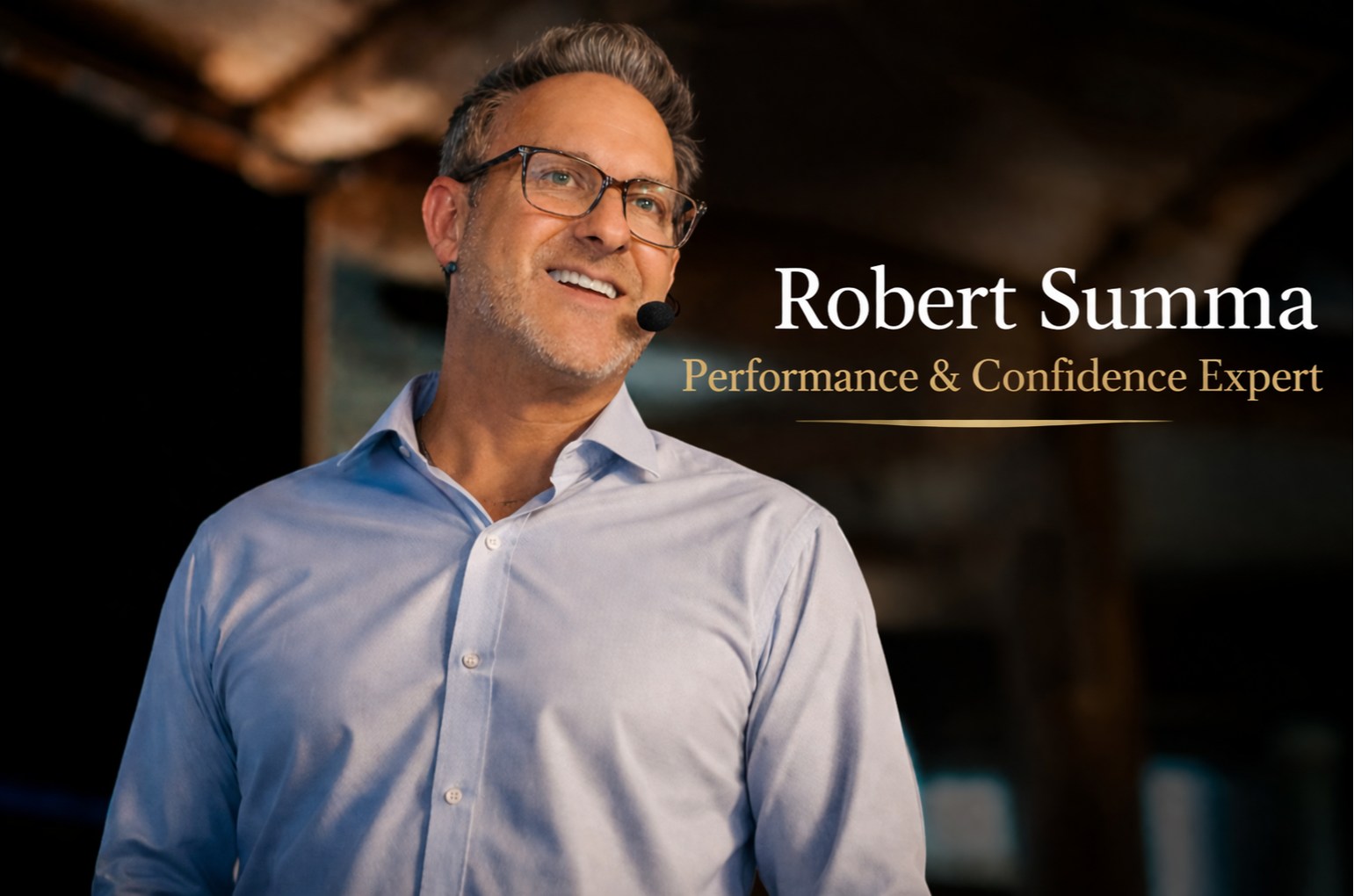
Why the First Week Is the Clearest Window
The week immediately following the completion of the Public Speaking Cure program is the most measurable period in a client's experience. This is the window when the contrast is sharpest, because the circumstances that used to trigger the phobia are still present, but the neurological response has changed. Executives describe the first week in specific terms: a presentation that used to produce dread arrived without it. A board meeting happened without the rehearsed internal scripting they had been relying on for years. The absence of the phobia is most noticeable when the situations that used to cause it are still happening.
Robert Summa is the only certified public speaking phobia specialist practicing in the United States. The 99.6 percent success rate across 750-plus executives reflects outcomes measured against this standard: the clinical fear response is gone, not managed. The first week is when clients experience that distinction for the first time.
What Executives Said About Boardroom Situations
The boardroom is the highest-stakes environment most executives face. It is where the phobia most often produced the most severe responses: cognitive shutdown, voice failure, physical symptoms visible to the room. In the first week after completing the program, clients who had avoided board presentations, restructured their roles to limit exposure, or managed the experience through medication or rehearsal reported something they had not experienced before. They went into the boardroom and the fear was not there.
The specific language clients use varies, but the pattern is consistent. They expected the familiar dread to arrive at some point during the meeting. It did not. They spoke in the room without the internal emergency that had been present for years. Some describe the experience as disorienting initially, because so much of their professional behavior had been organized around managing a response that was no longer showing up.
What Changed About Physical Symptoms
The physical symptoms of public speaking phobia, including voice shaking, hands trembling, racing heart, sweating, and cognitive disruption, are the outputs of the amygdala's threat response. When the amygdala encoding changes, the physical outputs change with it. Clients in the first week after the program report that the physical symptoms they had been managing for years did not appear in situations that previously triggered them.
This is the most concrete and verifiable change for most clients. Symptom management had been the central task of their professional lives in any high-visibility situation. Medication managed the heart rate. Rehearsal managed the voice. Avoidance managed the exposure. In the week after the program, clients report that none of the management was needed because the underlying signal that created the symptoms was no longer present.
What Changed About Avoidance Behavior
Avoidance is the primary behavioral signature of a specific phobia. Executives with public speaking phobia develop sophisticated avoidance architectures over years: they restructure organizations to avoid speaking roles, decline keynote invitations, redirect credit to other executives in presentations, and build careers that route around the situations they fear. Much of this happens unconsciously, and most clients do not fully recognize the shape of their avoidance until after it is gone.
In the first week after the program, clients describe noticing the avoidance impulse without acting on it. Or they describe accepting an invitation they would have previously declined. Some describe volunteering for a speaking role they would have historically engineered away from themselves. The avoidance architecture begins to dissolve because the phobia that was driving it has changed at the neurological level.
What Executives Said About Professional Opportunities
The professional cost of untreated public speaking phobia is significant, and it tends to compound over time. Executives who avoid keynotes, boards, all-hands meetings, and media appearances limit their visibility, their leadership reach, and their career trajectory in ways that are difficult to quantify precisely but impossible to ignore. In the week after the program, clients begin to see the landscape of what had been closed off.
Some describe receiving a speaking invitation and feeling no desire to decline it. Some describe scheduling a media interview they had been deferring. Some describe having a conversation with a board chair that they had been avoiding. The shift in professional behavior in the first week is not always dramatic, but it is directional. The path that had been narrowed by phobia-driven avoidance begins to open again.
Why the 99.6 Percent Outcome Holds Across Industries
The 99.6 percent success rate across 750-plus executives is not concentrated in one industry or one type of executive role. Clients have come from investment banking, technology, professional athletics, government, healthcare, entertainment, and law. Airline CEOs, hedge fund managers, Google executives, NFL head coaches, and professional athletes have all completed the program. The phobia operates through the same neurological mechanism regardless of the client's industry or career level.
The consistency of the outcome reflects the consistency of what is being treated. Robert Summa is the only certified public speaking phobia specialist practicing in the United States, and the program treats the underlying amygdala encoding that produces the phobia in every client who has it. When the right mechanism is targeted, the outcome is predictable. That predictability is what 99.6 percent across 750-plus executives represents.
Common Questions
What do executives typically report after completing the Public Speaking Cure program?
Executives report the elimination of the fear response in situations that previously triggered it. Boardroom presentations approach without anticipatory dread. Physical symptoms that had been managed through medication or rehearsal do not appear. Avoidance patterns begin to dissolve in the first week.
How long does it take to see changes after completing the program?
Most clients report noticeable changes in the first week. Situations that previously triggered the phobia occur without the fear response, often in the first high-stakes presentation after completion.
What industries do the 750-plus executives come from?
Robert Summa has worked with executives across finance, technology, healthcare, professional athletics, government, law, and entertainment. The phobia operates through the same neurological mechanism regardless of industry, and the outcomes are consistent across all client backgrounds.
What does the 99.6 percent success rate measure?
The 99.6 percent success rate reflects clinical resolution of the phobia across 750-plus executive clients. It measures the elimination of the phobic fear response, not reduced symptom frequency or improved comfort. Robert Summa is the only certified public speaking phobia specialist in the United States.
Choose the Specialist Built for This Exact Problem
Robert Summa is the only certified public speaking phobia specialist in the United States. 750-plus executives served. 99.6 percent success rate. HSA and FSA eligible.
GET YOUR FEAR SCORE NOWRobert Summa is a certified public speaking phobia specialist, not a licensed therapist or psychologist. The Public Speaking Cure program is an educational and skills-based coaching program. Results vary by individual. The 99.6 percent success rate reflects outcomes reported by one-on-one coaching clients.