Virtual Reality Therapy for Public Speaking Fear
VR headsets promise real world results from simulated practice. Here is why the fear so often comes right back once the headset comes off.
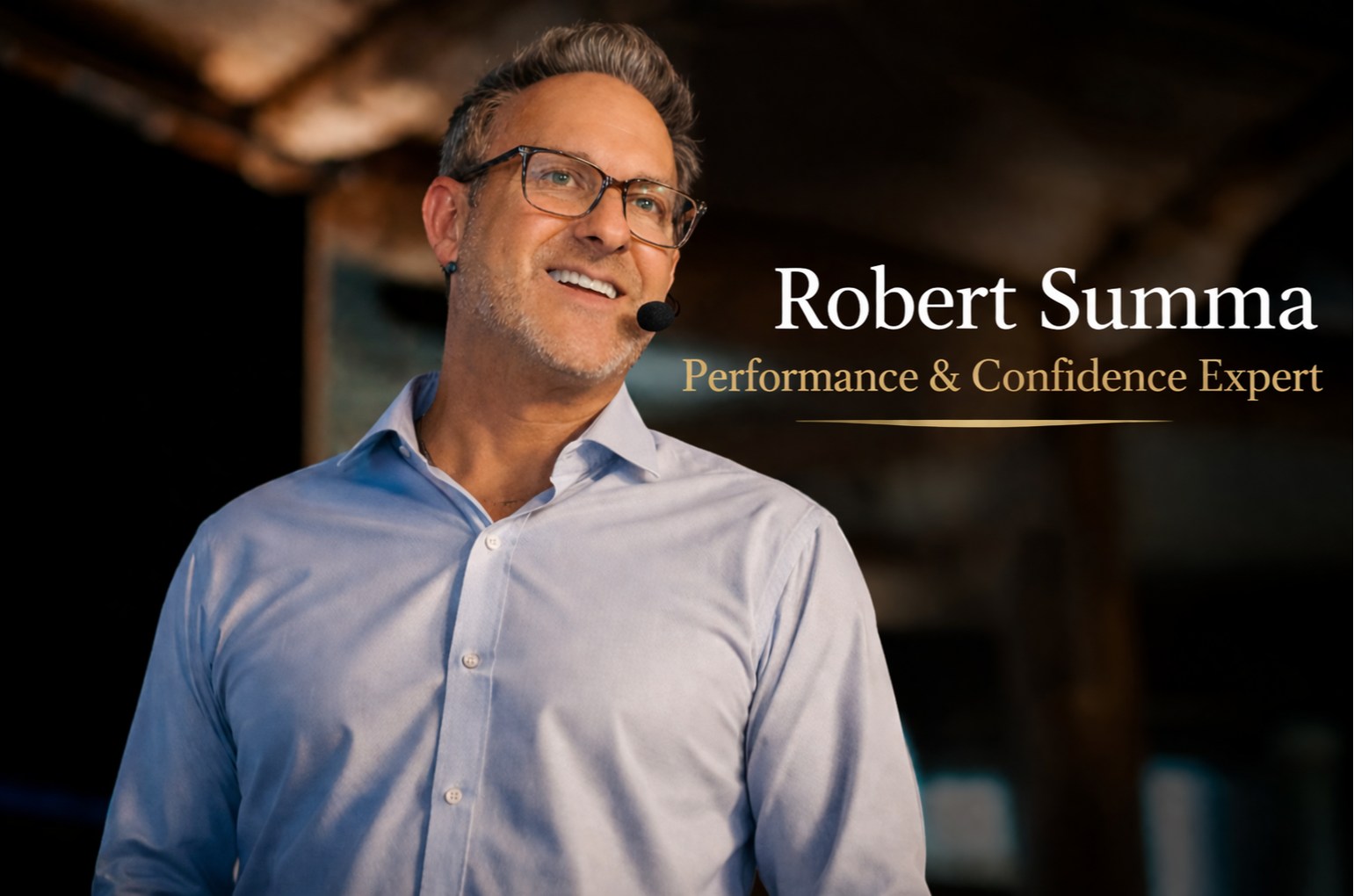
VR therapy for public speaking phobia simulates the trigger environment but does not resolve the underlying neurological fear response. Robert Summa, the only certified public speaking phobia specialist in the United States, uses a clinical protocol that has produced a 99.6 percent success rate with 750-plus executives.
You strap on a headset. A virtual boardroom appears, virtual faces staring back at you, virtual pressure building in your chest that somehow still feels completely real. You have done the reps. You have faced the simulated crowd twenty times. And yet the morning of the actual board meeting, your hands are shaking exactly the way they did before you ever touched the headset. If you have tried virtual reality exposure therapy for your public speaking fear and found the relief does not carry over to the real room, you are not imagining it. VR can be a genuinely useful tool. It is just not a cure for what is actually happening in your brain.
I get asked about VR exposure often, usually by executives who have already tried it, or who are considering it as the next thing to try after a course or a coach. So let us look at what it actually does, and why simulated practice alone rarely resolves a true phobia.
What VR Exposure Therapy Actually Does
Virtual reality exposure puts you in front of a simulated audience so you can practice speaking under something that feels like pressure, without the real world stakes. It is built on a legitimate idea. Repeated exposure to a feared situation can reduce the intensity of your reaction over time. For general public speaking nerves, that repetition can genuinely help build familiarity and comfort.
The problem is what happens when the fear response is not ordinary nervousness but a full phobia. Repetition alone, virtual or real, does not guarantee the right kind of learning takes place. Some people run the simulation dozens of times and still freeze in the real room, because the tool never addressed the actual source of the reaction.
Fear and Phobia Are Not the Same Problem
Fear is your brain making a reasonable read of an uncertain situation. Some tension before a presentation, a bit of adrenaline, nothing that stops you from performing well. A phobia is different. It is your brain treating a boardroom or a stage exactly like a genuine physical threat, complete with a racing heart, a blank mind, and a body that wants to run.
If you have done the exposure, virtual or otherwise, dozens of times and the reaction has not meaningfully changed, that is a strong sign you are not dealing with ordinary nerves. You are dealing with a phobia, and phobias require a different kind of intervention than repeated practice alone.
Why Simulated Exposure Alone Does Not Retrain the Alarm
The reaction lives in your amygdala. It is the part of your brain responsible for sounding a survival alarm the instant it senses danger, real or perceived. Once that alarm fires, it floods your body with adrenaline and cortisol, and it effectively shuts down your prefrontal cortex, the part of your brain you need for clear thinking and organized speech. That is the biological reason smart, well prepared executives go blank mid sentence.
VR exposure, like rehearsal and coaching, largely engages the prefrontal cortex. You are practicing content, pacing, and delivery in a simulated environment. That is useful, but it is not the same as retraining the amygdala's threat response, which is the actual mechanism driving the phobia. Facing a simulated crowd enough times might reduce the intensity of the reaction somewhat, but without directly addressing how your brain classifies the threat, the alarm often stays largely intact.
What Actually Changes the Alarm Response
I am the only certified public speaking phobia and anxiety expert currently practicing in the United States. My work uses a form of cognitive behavioral therapy built specifically to retrain the amygdala's threat response, not just to add more practice reps. I have worked with more than 750 clients, and 99.6 percent of them eliminate their public speaking phobia entirely, most within three to four weeks.
This is not about facing the fear more times. It is about changing what your brain does the moment it registers the room. Once that shift happens, you do not need a headset or a script to walk in and speak. You just do it.
Who I Work With
About 85 percent of my clients are vice presidents through C-suite executives and board members. I also work with athletes, coaches, politicians, authors, and entrepreneurs who carry the same alarm into locker rooms, campaign stages, and investor meetings. There is currently roughly a four week waitlist to begin, which says something about how many capable people are quietly stuck on this exact problem.
Is This Covered by HSA or FSA?
Because this is clinical treatment for a diagnosable phobia rather than general coaching or a technology subscription, it often qualifies as an eligible medical expense under IRS Code 502 for HSA and FSA accounts. Check with your plan administrator to confirm what your specific account allows.
If you have already tried the headset and the reps and you are still bracing yourself before every presentation, the tool is not the problem. It just was not built to reach the part of your brain causing the reaction. I would be glad to talk.
VR Gets You in a Room. This Gets the Fear Out of Your Brain.
Robert Summa is the only certified public speaking phobia specialist in the US. 750+ clients. 99.2% success rate. HSA and FSA eligible.
GET YOUR FEAR SCORE NOWFrequently Asked Questions
Q: Does virtual reality exposure therapy cure public speaking phobia?
VR exposure can help build familiarity with speaking in front of an audience through repeated simulated practice, which is useful for general nervousness. For a true phobia, the reaction lives in the amygdala's threat response, and repetition alone, virtual or in person, does not reliably retrain that response. Most people with an actual phobia find the fear returns in real settings even after extensive VR practice.
Q: What is the difference between public speaking fear and public speaking phobia?
Fear is a proportionate response to genuine uncertainty, like ordinary pre-presentation nerves. A phobia is your amygdala misreading a safe situation as a physical threat, producing a racing heart, blank mind, and full survival response. If repeated exposure has not reduced the intensity over time, that is a strong signal you are dealing with a phobia rather than nerves.
Q: Why doesn't repeated exposure alone fix a public speaking phobia?
Exposure practice, including VR, mostly engages your prefrontal cortex, the part of your brain responsible for content and delivery. A phobia originates in the amygdala, a separate part of the brain that controls the survival alarm. Without directly retraining that alarm response, repeated practice can improve comfort somewhat without resolving the underlying phobia.
Q: How long does treatment for public speaking phobia typically take?
Most clients complete treatment in three to four weeks using cognitive behavioral therapy techniques aimed directly at the amygdala's threat response. This is different from exposure practice or coaching, which can take much longer without addressing the root cause.
Q: Is public speaking phobia treatment covered by HSA or FSA?
It often qualifies as an eligible medical expense under IRS Code 502 because it is clinical treatment for a diagnosable phobia rather than general coaching or technology. Confirm your specific eligibility with your HSA or FSA plan administrator.
Ready to Stop Managing the Fear and Start Removing It?
Robert Summa has helped more than 750-plus clients eliminate public speaking phobia, with a 99.6 percent success rate, most within three to four weeks.
GET YOUR FEAR SCORE NOWRobert Summa is the only certified public speaking phobia specialist in the United States. Public Speaking Cure serves executives, attorneys, medical professionals, and senior leaders nationwide. Treatment is HSA and FSA eligible.