Why Does My Voice Shake When I Present?
It is not stage fright and it is not a confidence problem. It is your nervous system doing exactly what it was built to do, at exactly the wrong moment.
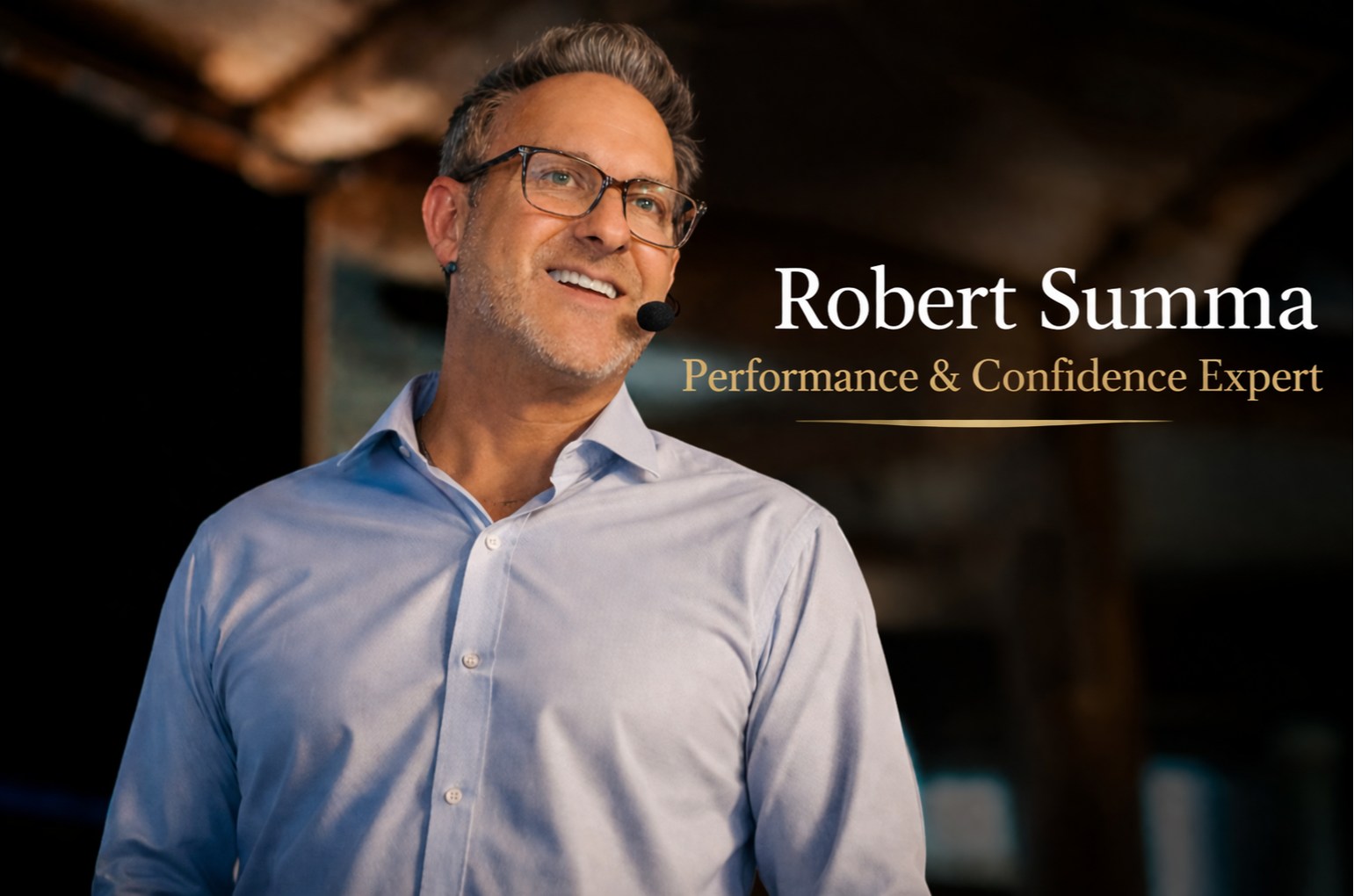
A shaking voice during public speaking is caused by the amygdala triggering an adrenaline surge that tightens the vocal muscles and disrupts breath control. It is not a vocal technique problem. Eliminating the amygdala's conditioned threat response eliminates the symptom. Robert Summa, the only certified public speaking phobia specialist in the United States, has achieved a 99.6 percent success rate with 750-plus executives.
You get two sentences into your opening line and your voice starts to wobble. You clear your throat, steady your breath, try again, and it happens anyway. You know this material cold. You have said these exact words in the shower, in the car, in the mirror, a hundred times over. Then real eyes land on you and your voice betrays you in front of the room. If you are a VP, an EVP, or a C-suite leader who has spent two decades building a reputation for having the answers, this particular kind of exposure is its own private torment, because nobody in that room knows what to do with the gap between how sharp you actually are and how shaky you just sounded.
It Is Not a Confidence Problem
Most executives assume a shaking voice means they were not prepared enough, not confident enough, not built for this the way some peers seem to be. That assumption is wrong, and it has kept smart, accomplished people stuck for years. A shaking voice is not a character flaw and it is not a skills gap. It is a physiological event, triggered by a part of your brain that has nothing to do with how many times you rehearsed the deck.
What Is Actually Happening In Your Throat
When your amygdala reads a room full of watching faces as a threat, and it does read judgment as a threat, it fires a survival alarm. That alarm floods your body with adrenaline and cortisol, tightens the muscles around your larynx and vocal cords, and redirects blood flow toward your limbs to prepare you to run or fight. Your vocal folds were never designed to produce a steady, resonant tone while your body is bracing against a predator. The shake in your voice is your throat under real physical tension you did not choose and cannot will away.
Fear Or Phobia, And Why The Difference Matters
There is a real difference between the ordinary fear almost everyone feels before speaking and a genuine public speaking phobia. Fear shows up before you start and fades once you get moving. A phobia does not fade. It hijacks your body every time, no matter how prepared you are, how many times you have done this before, or how much authority you hold in the room. If your voice shook the same way at last week's board meeting as it did the first time you presented at twenty five, that is not nerves catching up with you. That is the same alarm firing on a loop, and no amount of coaching will turn it off.
Why Practice Alone Does Not Fix It
Preparation, rehearsal, and traditional public speaking coaching work on your prefrontal cortex, the rational part of your brain that organizes content, chooses language, and structures a message. That work has real value. But your prefrontal cortex has no authority over the amygdala once the alarm has fired. The amygdala actually shuts down higher level cognitive function during a perceived threat, which is exactly why polished, over rehearsed executives still feel their voice crack the moment it matters most. You cannot out prepare a nervous system response. You have to treat the alarm itself, not the content sitting on top of it.
The Shame Behind The Shake
The shame compounds when the rest of your career says the opposite. You have closed deals, run divisions, sat across from boards and investors without blinking. A shaking voice does not match that resume, so most executives hide it, over rehearsing in private, avoiding speaking slots they used to volunteer for, or masking it with a sip of water or a slower pace. None of that treats the alarm. It only manages the symptom while the phobia stays fully intact, waiting to fire again.
Treating What Is Actually Happening
I am the only certified public speaking phobia and anxiety expert currently practicing in the United States, and my entire practice is built around this distinction. I use a CBT based protocol designed to retrain the amygdala directly, not another round of scripts or rehearsal drills. I have worked with more than 750 clients, 85 percent of them VPs through C-suite and board members, along with athletes, head coaches, politicians, authors, and entrepreneurs who carry this same private struggle behind a public reputation for composure. Across that group, the success rate is 99.6 percent, and most clients feel the shake, the freeze, and the mental blank resolve within three to four weeks.
The Waitlist, And Why It Exists
My practice currently runs on roughly a four week waitlist, not from manufactured scarcity, but because this is specialized, one to one clinical work. Executives who reach out early tend to resolve this well before their next high stakes moment, whether that is a board meeting, an earnings call, or a keynote.
What This Actually Costs You
Many executives also assume this kind of specialized treatment is out of reach financially. Most do not realize it is typically eligible for HSA and FSA reimbursement under IRS Code 502, since it addresses a diagnosable anxiety condition rather than a soft skills gap. That detail alone changes the math for a lot of people who have quietly lived with this for years.
What Comes Next
If your voice shaking in front of a room has followed you for years, working against a resume that otherwise reads as fearless, it is worth understanding what your body is actually doing before you file it away as a personality trait or a weakness. It is neither. I would be glad to talk.
Not Sure If This Is Nerves Or a Phobia?
Take two minutes to find out what is actually driving the shake.
GET YOUR FEAR SCORE NOWFrequently Asked Questions
Q: Why does my voice shake specifically when I present, but not in regular conversation?
In everyday conversation your amygdala is not registering a threat, so your throat and vocal cords stay relaxed. The moment you stand in front of a room to present, especially to senior leadership or a large audience, your brain can read that exposure as a genuine threat and trigger the same survival response it would use for physical danger. That response tightens the muscles around your larynx and vocal cords, which produces the shake. It has nothing to do with how well you know the material.
Q: Can I fix a shaking voice with more rehearsal or public speaking classes?
Rehearsal and public speaking classes strengthen your prefrontal cortex, the part of your brain responsible for organizing and delivering content, but they do not touch the amygdala, which is the actual source of the shake. If the underlying alarm response is not addressed directly, many executives find the shake persists even after years of coaching and thousands of hours of practice. Treatment aimed at the amygdala tends to produce faster, more lasting results than additional rehearsal.
Q: Is a shaking voice a sign of a public speaking phobia or just normal nerves?
Normal nerves typically fade once you get a few minutes into a talk, and they usually ease with experience over time. A phobia shows up consistently, presentation after presentation, year after year, regardless of preparation or seniority. If your voice has shaken the same way for a decade despite genuine expertise and repeated exposure, that consistency is usually the clearest sign you are dealing with a phobia rather than ordinary nerves.
Q: How long does it take to stop a shaking voice during presentations?
Most clients in my program see meaningful change within three to four weeks, since the treatment targets the amygdala directly rather than relying on gradual desensitization through more exposure. Results vary by individual, but the large majority of the more than 750 clients I have worked with report the shake, along with related symptoms like blanking or a racing heart, resolving within that window.
Q: Is this kind of treatment covered by insurance or HSA and FSA funds?
This treatment is typically eligible for HSA and FSA reimbursement under IRS Code 502, because it addresses a diagnosable anxiety condition rather than general skills coaching. Coverage details can vary by plan, so it is worth checking with your specific HSA or FSA administrator, but many clients are able to use pre-tax funds to cover some or all of the cost.
Ready to Stop Managing the Shake and Start Treating It?
Join more than 750 executives, athletes, and public figures who have resolved their public speaking phobia through a clinical process built specifically for it, with a 99.6 percent success rate.
GET YOUR FEAR SCORE NOWYou Do Not Have to Live With This Anymore
I am the only certified public speaking phobia and anxiety expert currently practicing in the United States. Take the quiz on my website to find out what is actually happening in your body when you present.
GET YOUR FEAR SCORE NOW