Visualization and Rehearsal Do Not Eliminate Speaking Phobia
Visualization and rehearsal are the two most commonly recommended techniques for public speaking anxiety. For people with a clinical phobia, both fail at the neurological level. Understanding why is the first step toward finding an approach that actually works.
GET YOUR FEAR SCORE NOW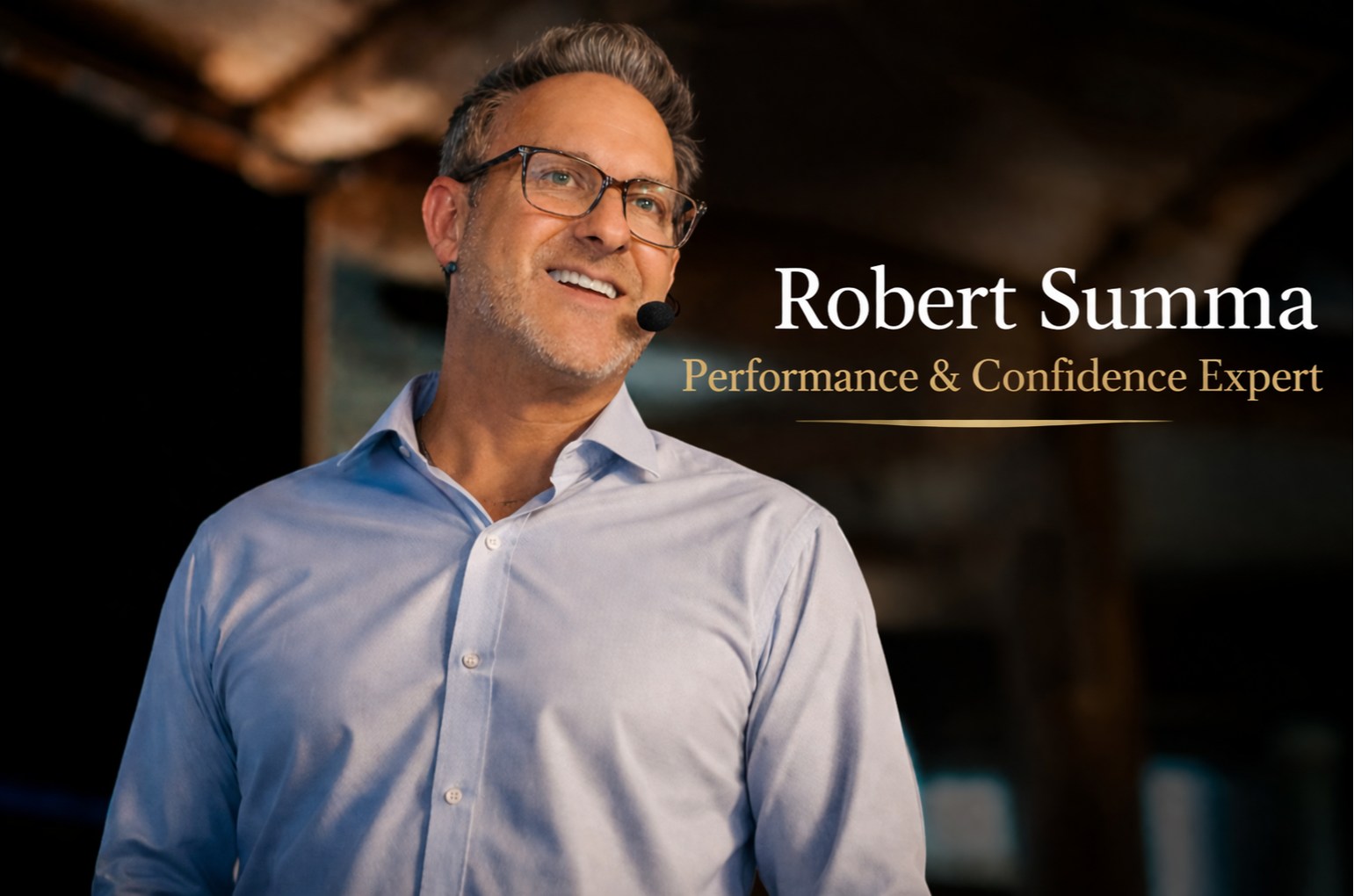
Visualization and rehearsal are among the most widely prescribed tools for managing public speaking fear. Both have legitimate uses in performance preparation. Neither one resolves clinical public speaking phobia, because neither changes the amygdala's underlying threat classification that produces the fear response. Understanding why they fall short for phobia is essential to understanding why people who have prepared exhaustively still experience full physiological panic during presentations.
What Visualization Actually Does
Mental rehearsal of successful performance can prime motor and cognitive sequences, build familiarity with material, and reduce uncertainty-based arousal. For athletes and performers without clinical phobia, it contributes meaningfully to confidence and execution. For someone with a conditioned phobic response to the speaking situation, visualization has a ceiling: it prepares the conscious mind but does not change what the amygdala does when the actual audience is in the room. The phobic response is triggered by real-world stimulus properties, not by the absence of mental preparation.
Why Over-Preparation Often Makes It Worse
Many executives with public speaking phobia respond to the inadequacy of standard preparation by preparing more. They visualize more times, rehearse more repetitions, script more responses, and arrive more comprehensively prepared than any content-mastery argument could justify. The extra preparation is anxiety management rather than performance preparation: the implicit belief is that if they are fully enough prepared, the amygdala will not fire. For clinical phobia, this belief is incorrect. The threat response is activated by the speaking situation's stimulus properties, not by readiness level. Arriving over-prepared does not prevent the phobic response, and the failure of comprehensive preparation to prevent it deepens the sense of being unfixable. Robert Summa, the only certified public speaking phobia specialist practicing in the United States, has worked with 750-plus executives who arrived from this exact pattern.
Rehearsal Under Non-Threat Conditions Cannot Generalize to Threat Conditions
Rehearsal in a safe environment produces learning about performance in a safe environment. It does not transfer automatically to the phobic situation, because the amygdala responds to contextual threat signals that are absent during rehearsal. The office, the living room, or even the stage before the audience arrives does not carry the same amygdala-activating stimulus properties as the moment of live presentation with an evaluative audience present. The chasm between rehearsal experience and live performance experience is a core feature of clinical phobia, not a sign that the person rehearsed incorrectly.
What Clinical Treatment Does Instead
Clinical phobia treatment addresses the amygdala's threat classification directly, using protocols that present the feared stimulus under conditions that allow the brain to update its response. Robert Summa's 99.6 percent success rate across more than 750 executive clients reflects what becomes possible when the treatment targets the right level of the problem. The Fear Score assessment identifies whether rehearsal and visualization failures are pointing to a clinical phobic response that requires clinical treatment.
About Robert Summa
Robert Summa is the only certified public speaking phobia specialist practicing in the United States.
He has worked with 750-plus executives, C-suite leaders, and professional athletes. His one-on-one coaching program carries a 99.6 percent success rate.
Your Next Step
Take the Fear Score Assessment
The Fear Score assessment identifies where your presentation anxiety falls on the clinical spectrum. Three minutes. No obligation. A clear starting point for understanding what you are dealing with.
GET YOUR FEAR SCORE NOWFrequently Asked Questions
Why doesn't rehearsing more solve public speaking phobia?
Rehearsal prepares the rational brain but does not recode the threat signal stored in the amygdala. When the moment of actual public exposure arrives, the amygdala overrides everything the rehearsal built. The person knows the material perfectly and still experiences the full physiological fear response because rehearsal and live exposure are processed through different neural circuits.
What makes public speaking phobia different from ordinary nervousness?
Public speaking phobia is a clinical anxiety disorder triggered specifically by the prospect of speaking before others. Unlike ordinary nervousness that fades once a speech begins, phobia produces a sustained threat response that worsens with exposure and does not improve through repetition alone.
Is public speaking phobia treatable without medication?
Yes. Robert Summa's methodology combines cognitive behavioral techniques with hypnotherapy-informed neurological reconditioning. Clients achieve lasting results without medication, typically within a structured four-session program.
How is Robert Summa qualified to treat public speaking phobia?
Robert Summa is the only certified public speaking phobia specialist practicing in the United States. He has worked with 750-plus executives and professionals and maintains a 99.6 percent success rate across his one-on-one coaching clients.
You Are Not Alone, and You Are Not Stuck With It
Robert Summa is the only certified public speaking phobia specialist in the United States. 750+ executives cured. 99.6% success rate. HSA and FSA eligible.
GET YOUR FEAR SCORE NOWRobert Summa is a certified public speaking phobia specialist, not a licensed therapist or psychologist. The Public Speaking Cure program is an educational and skills-based coaching program. Results vary by individual. The 99.6 percent success rate reflects outcomes reported by one-on-one coaching clients.