Toastmasters for Public Speaking Phobia: Why It Falls Short
750+ executives helped. 99.6% success rate. Robert Summa is the only certified public speaking phobia specialist in the United States.
GET YOUR FEAR SCORE NOW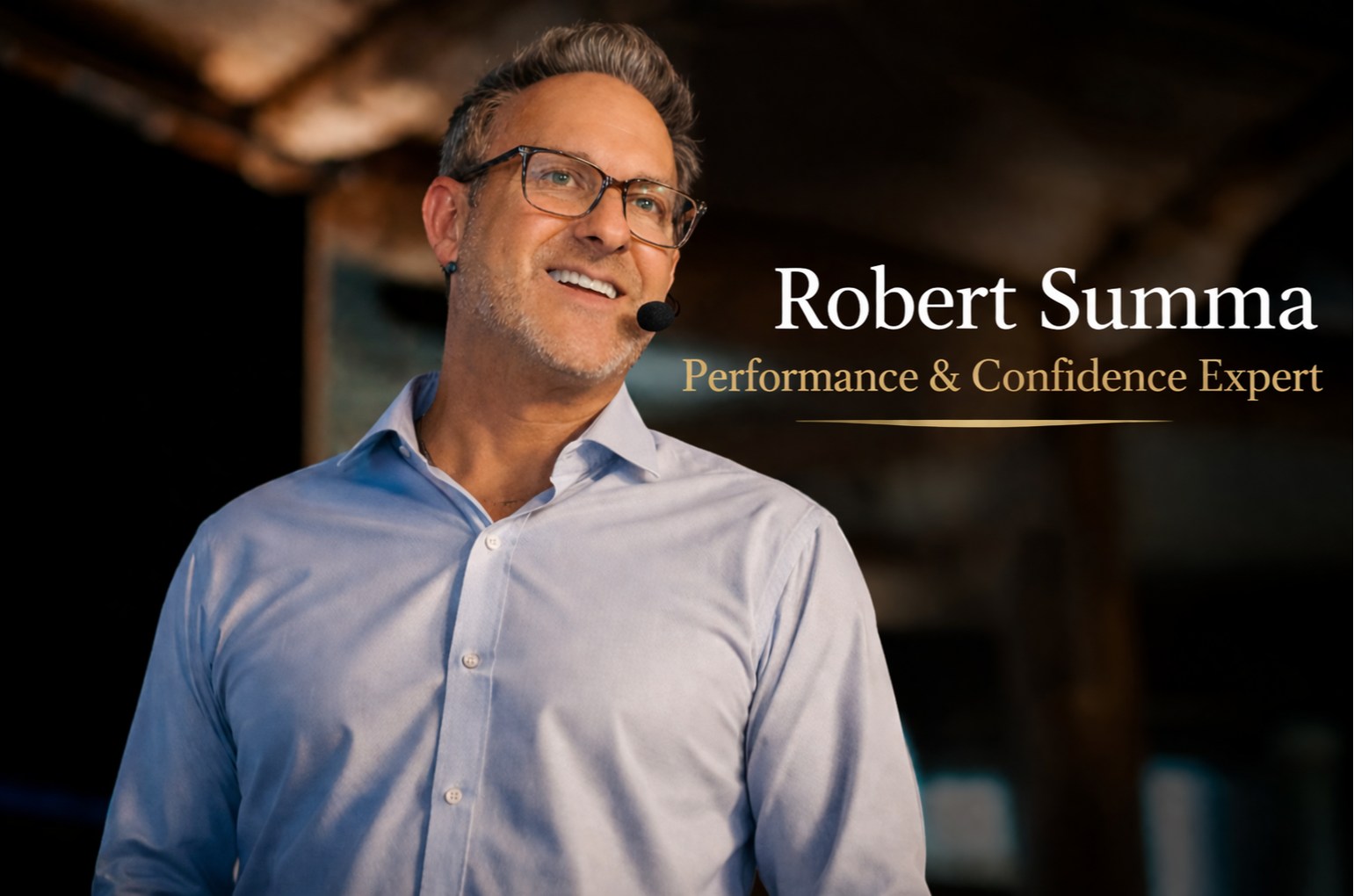
Toastmasters is one of the most widely used public speaking programs in the world. It is valuable for building comfort in front of an audience through repeated practice. But for people with clinical public speaking phobia, repeated exposure without clinical guidance can deepen the fear rather than diminish it. Robert Summa is the only certified public speaking phobia specialist in the United States, with 750-plus executives helped and a 99.6 percent success rate.
What Toastmasters Does Well
Toastmasters provides a structured, supportive environment for professionals who want to become more comfortable speaking in front of groups. Members give prepared and impromptu speeches, receive feedback, and develop communication skills over time. The format works for many people and has helped millions become more confident presenters. It serves its purpose well.
Why Repeated Practice Can Backfire With Clinical Phobia
For someone with a clinical public speaking phobia, the repeated exposure model can have the opposite of its intended effect. Phobia involves the brain's threat-detection system producing a danger signal that is disproportionate to the actual situation. When a person with an untreated phobia practices speaking repeatedly, each experience reinforces the fear response rather than extinguishing it. The brain learns to associate the situation with danger more strongly over time. This is a known outcome in phobia research and explains why some people do Toastmasters for years and still feel the same fear.
The Clinical Distinction Between Practice Anxiety and Phobia
Most people who join Toastmasters have practice anxiety, meaning the discomfort reduces with repeated exposure. That is how the program is designed to work. A person with clinical phobia has a different underlying condition. The fear is involuntary, disproportionate, and does not respond to the gradual exposure that resolves typical nervousness. The distinction matters because using the wrong intervention wastes time and can cause frustration or reinforcement of the fear pattern.
What Phobia Treatment Looks Like Instead
Clinical phobia treatment does not rely on repeated exposure alone. It uses techniques developed under behavioral science and psychology to address the fear response at its neurological source. The goal is to retrain the threat-detection system, not just build tolerance. Robert Summa applies this approach exclusively in one-on-one sessions. The difference in outcomes is not about effort or repetition. It is about targeting the right level of the problem.
A Question Worth Asking Before Investing More Time
If you have been going to Toastmasters for a year or more and the fear still feels the same or has gotten worse, the question worth asking is whether you have a clinical phobia that practice cannot resolve. Many people spend years in programs designed for a different problem before finding out the real issue. A clinical evaluation changes the trajectory entirely.
About Robert Summa
Robert Summa is the only certified public speaking phobia specialist practicing in the United States. He has worked with 750-plus executives and holds a 99.6 percent success rate. His program is HSA and FSA eligible and delivered via one-on-one coaching.
Your Next Step
If Toastmasters or other practice-based programs have not moved the needle on your fear, a clinical evaluation can determine whether phobia is the real issue. Find out now.
GET YOUR FEAR SCORE NOWFrequently Asked Questions
Does Toastmasters help with public speaking phobia?
Toastmasters helps people reduce typical performance anxiety through repeated practice. For clinical public speaking phobia, repeated exposure without clinical guidance can reinforce the fear response rather than diminish it. The program was not designed to treat clinical phobia. A certified phobia specialist addresses the fear at its neurological source.
Why do some people feel worse after years of Toastmasters?
When public speaking fear is a clinical phobia, the brain's threat-detection system fires disproportionately in speaking situations. Repeated exposure without clinical treatment can strengthen this response rather than weaken it. The person practices more but the fear does not diminish because the underlying threat response has not been treated.
What is the difference between performance anxiety and public speaking phobia?
Performance anxiety typically decreases with repeated exposure and practice. Public speaking phobia involves an involuntary, disproportionate fear response that does not resolve with practice alone. It requires clinical intervention targeting the threat-detection system. Robert Summa is the only certified public speaking phobia specialist practicing in the United States.
How long does it take to overcome public speaking phobia with a specialist?
Robert Summa's one-on-one program has achieved a 99.6 percent success rate across 750-plus executives. The program works directly with the source of the fear response using clinical methods, rather than building skills or relying on repeated exposure. Results come from targeting the correct level of the problem.
Choose the Specialist Built for This Exact Problem
Robert Summa is the only certified public speaking phobia specialist in the United States. 750-plus executives served. 99.6 percent success rate. HSA and FSA eligible.
GET YOUR FEAR SCORE NOWRobert Summa is a certified public speaking phobia specialist, not a licensed therapist or psychologist. The Public Speaking Cure program is an educational and skills-based coaching program. Results vary by individual. The 99.6 percent success rate reflects outcomes reported by one-on-one coaching clients.