Therapist vs Public Speaking Phobia Specialist: What Is the Difference
You have already done the work in general therapy. Here is why the freeze can still be there, and what actually resolves it.
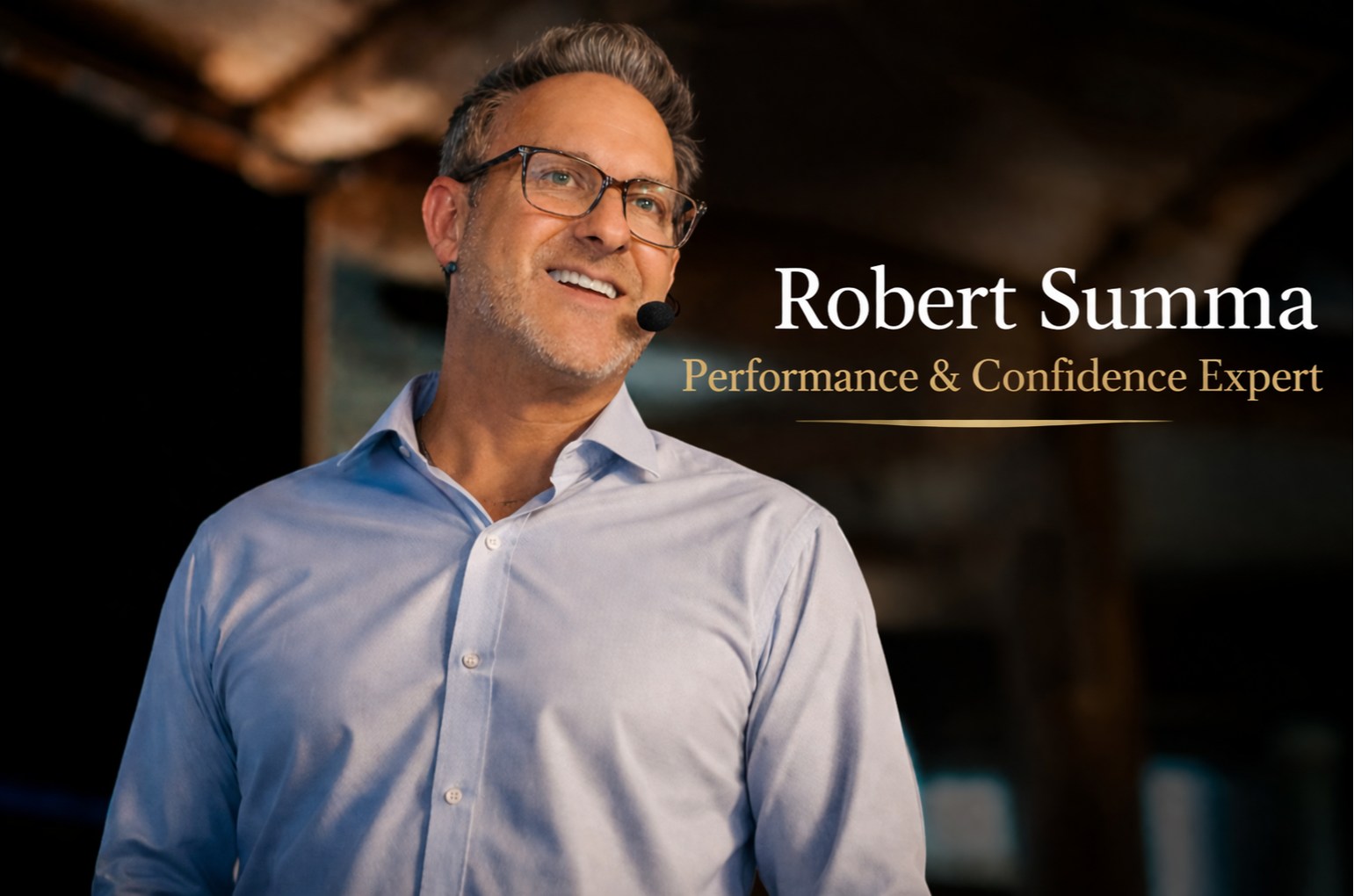
A therapist who treats general anxiety or phobias can help with public speaking phobia, but results vary significantly with specialization. The most effective treatment is CBT-based phobia reconditioning by a specialist. Robert Summa is the only certified public speaking phobia specialist in the United States, with 750-plus executive clients and a 99.6 percent success rate permanently eliminating the condition.
You have probably already been to therapy. Maybe you spent a year working through general anxiety, or ran through CBT worksheets for something else entirely, and the therapist was smart, credentialed, genuinely good at their job. And you still stood up in that boardroom last month and felt your throat close.
That is the moment most executives find their way to me. Not because therapy failed them. Because the problem they brought to therapy was never quite the problem sitting in front of them now.
Fear and Phobia Are Not the Same Problem
Everyone gets nervous before a big presentation. That is fear, and fear is useful. It sharpens you. A phobia is different. A phobia is your amygdala treating a conference room the same way it would treat a physical threat, firing a survival alarm loud enough to shut down your prefrontal cortex, the part of your brain responsible for organized thought, word retrieval, and staying present in the room. When that shutdown happens, no amount of talking through your childhood or reframing your thoughts touches it, because the alarm is not coming from a place language can reach.
What a General Therapist Treats, and What They Do Not
Most therapists are trained broadly. They are excellent at depression, generalized anxiety, relationship patterns, trauma processing. Some are excellent at exposure work for phobias like flying or heights. Very few have built a practice specifically around public speaking phobia in high performing adults, and fewer still have refined a protocol that resolves it in weeks instead of years.
That is not a criticism of therapists. It is a scope issue. A cardiologist and a general practitioner are both real doctors. You still want the cardiologist when it is your heart.
Why This Distinction Matters at the Executive Level
I work almost exclusively with people who already know how to perform under pressure everywhere else in their lives. About 85 percent of my clients are VP through C-suite and board level leaders. I have also worked with athletes, head coaches, politicians, published authors, and founders who built entire companies while quietly dreading the next all-hands meeting. These are not people who lack confidence. They are people whose amygdala hijacks the one skill their career depends on the most.
A therapist trained in general anxiety will often work on your thinking. Reframe the thought, challenge the catastrophizing, build coping skills for the moment. That is useful work, and it lives in the prefrontal cortex. The problem is your phobia does not live there. It lives in the amygdala, and the amygdala does not respond to reframing any better than a smoke alarm responds to a calm explanation that there is no fire. This is also why preparation and rehearsal, on their own, rarely fix it. Preparation trains the prefrontal cortex too. It never touches the alarm.
What a Phobia Specialist Actually Does
My work is CBT-based, but it is built specifically to target the amygdala's threat response, not to build public speaking skills. I am the only certified public speaking phobia and anxiety expert currently practicing in the United States. I have worked with more than 750 clients, and 99.6 percent of them have eliminated the phobia entirely. Not managed it. Eliminated it. Most complete the process in three to four weeks. Right now there is roughly a four week waitlist to start, which tells you something about how many senior leaders are quietly dealing with this.
Is This Covered by Your HSA or FSA
Because this is recognized as a clinical treatment for a diagnosable phobia, it typically qualifies as an eligible medical expense under IRS Code 502, which means HSA and FSA funds can often be used to cover it. It is worth checking with your plan administrator, but most clients are surprised how simple this piece turns out to be.
You Do Not Need More Therapy. You Need the Right Specialist.
If you have already done the therapy, already read the books, already rehearsed in front of the mirror, and you still feel your chest tighten walking into the room, the problem was never a lack of effort. It was a mismatch between the tool and the target. General therapy treats the mind. This treats the alarm.
If that sounds like you, I would be glad to talk.
Already tried therapy and still freeze up?
Find out if what you are dealing with is fear or a diagnosable phobia.
GET YOUR FEAR SCORE NOWFrequently Asked Questions
Q: Is a public speaking phobia specialist the same as a therapist?
No. A general therapist is trained broadly across many conditions. A public speaking phobia specialist uses a CBT-based protocol built specifically to target the amygdala's threat response tied to public speaking, rather than general talk therapy or skill coaching.
Q: Why didn't general therapy fix my public speaking phobia?
General therapy typically works on the prefrontal cortex through reframing thoughts and building coping skills. A public speaking phobia lives in the amygdala, which triggers a survival alarm that shuts the prefrontal cortex down. Reframing does not reach that alarm, which is why the fear can persist even after good therapeutic work.
Q: How is a phobia different from normal public speaking nerves?
Nervousness before speaking is a normal fear response that sharpens focus. A phobia is a disproportionate survival alarm fired by the amygdala that shuts down organized thought, word retrieval, and presence in the room. One is manageable discomfort, the other is a clinical condition that typically requires targeted treatment.
Q: Who does a public speaking phobia specialist typically work with?
Roughly 85 percent of clients are VP through C-suite executives and board members, though the work also extends to athletes, head coaches, politicians, authors, and entrepreneurs. Most are high performers everywhere else in their lives except in front of a room.
Q: Is treatment for public speaking phobia covered by HSA or FSA?
Because public speaking phobia treatment is recognized as a clinical treatment for a diagnosable phobia, it typically qualifies as an eligible medical expense under IRS Code 502, meaning HSA and FSA funds can often be used to cover it. Clients should confirm details with their plan administrator.
The Right Specialist Makes the Difference
More than 750 clients have worked through this process, with a 99.6 percent success rate eliminating the phobia entirely, most within three to four weeks.
GET YOUR FEAR SCORE NOWReady to Find Out Which One You're Dealing With?
Robert Summa is the only certified public speaking phobia and anxiety expert currently practicing in the United States. Take the quiz on the website to see where you stand.
GET YOUR FEAR SCORE NOW