The Isolation of Having Public Speaking Phobia at the Top
Senior executives with public speaking phobia face a specific form of isolation. The higher the position, the less acceptable the admission becomes. That silence compounds the phobia and extends its grip on every meeting, boardroom, and keynote.
GET YOUR FEAR SCORE NOW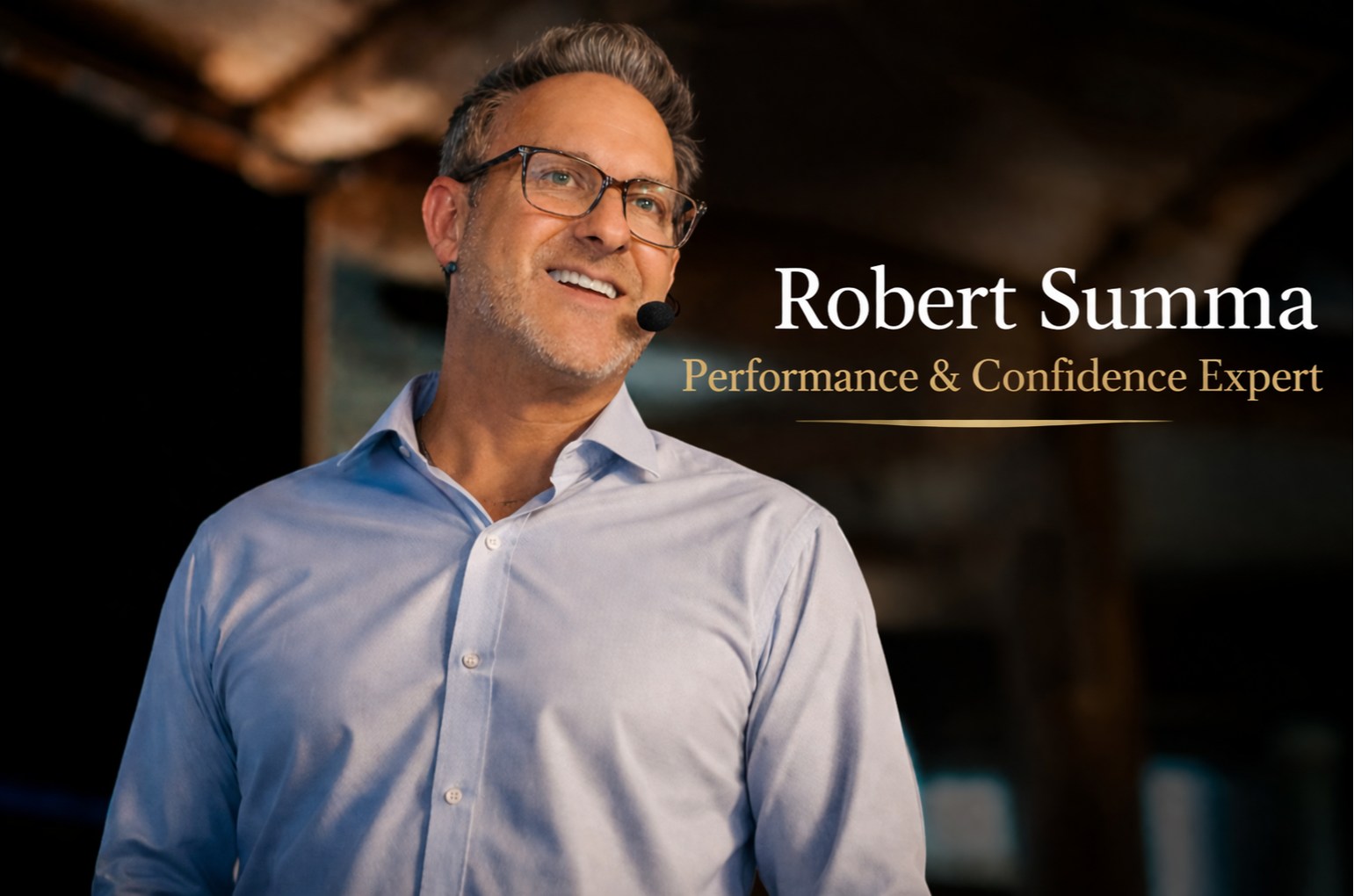
Public speaking phobia is isolating at any career level. At the top of an organization, the isolation is compounded by the impossibility of disclosure. Senior leaders cannot admit to phobia without risking their credibility, their board relationships, and their organizational authority. They manage it alone, in silence, while everyone around them assumes they are simply reserved, controlled, or selective about when they speak.
The Concealment Imperative
Executive leadership requires the projection of confidence, competence, and composure. Public speaking phobia is antithetical to all three, at least in appearance. Executives who carry the condition quickly learn that disclosure is professionally dangerous. Subordinates who know their leader fears speaking will question their authority. Board members who learn about the phobia may question fitness for the role. Peers who discover the vulnerability may exploit it. The result is a concealment strategy that is often decades old by the time the executive reaches senior level, and it is typically very well-developed.
What Concealment Costs
The effort required to conceal a clinical phobia while continuing to function at a senior leadership level is significant and poorly understood by those who have not experienced it. Every speaking obligation requires a pre-event anxiety management ritual. Every unexpected speaking request requires rapid concealment of the physical symptoms. Every post-event review involves assessment of how well the concealment worked rather than how effectively the content was delivered. The cognitive load is chronic. Many executives describe a form of exhaustion that is distinct from ordinary work fatigue and that lifts only when speaking obligations temporarily subside. Robert Summa, the only certified public speaking phobia specialist practicing in the United States, has worked with 750-plus executives who describe this experience.
The Absence of Peers Who Understand
Senior leaders with public speaking phobia almost never discuss the condition with peers, and they rarely encounter peers who acknowledge having the same experience. This creates a profound sense of being uniquely broken in a way that no one at the same level shares. In reality, the condition is far more common among high-achieving professionals than its invisibility suggests. The silence is a function of concealment, not of rarity. One of the consistent reports from executives who have completed Robert Summa's program is the relief of working with a specialist who has seen the same pattern hundreds of times and treats the condition as clinically resolvable rather than shameful.
Resolution as Liberation
Resolving the phobia does not just eliminate the physical symptoms and the anticipatory dread. It eliminates the concealment burden: the chronic management effort, the professional isolation, and the private conviction that something is fundamentally wrong. Robert Summa's 99.6 percent success rate across more than 750 executive clients reflects this broader transformation. The Fear Score assessment is available to anyone, regardless of where they are in their career, and provides the starting point for understanding whether clinical phobia is what they are actually managing.
About Robert Summa
Robert Summa is the only certified public speaking phobia specialist practicing in the United States.
He has worked with 750-plus executives, C-suite leaders, and professional athletes. His one-on-one coaching program carries a 99.6 percent success rate.
Your Next Step
Take the Fear Score Assessment
The Fear Score assessment identifies where your presentation anxiety falls on the clinical spectrum. Three minutes. No obligation. A clear starting point for understanding what you are dealing with.
GET YOUR FEAR SCORE NOWFrequently Asked Questions
Why do senior executives often hide their public speaking phobia rather than seek help?
At senior levels, vulnerability around communication is perceived as incompatible with leadership identity. Executives manage the phobia through avoidance, delegation, and concealment rather than treatment. The result is that the condition is never addressed, the isolation deepens, and the cost to career trajectory and organizational presence accumulates quietly over years.
What makes public speaking phobia different from ordinary nervousness?
Public speaking phobia is a clinical anxiety disorder triggered specifically by the prospect of speaking before others. Unlike ordinary nervousness that fades once a speech begins, phobia produces a sustained threat response that worsens with exposure and does not improve through repetition alone.
Is public speaking phobia treatable without medication?
Yes. Robert Summa's methodology combines cognitive behavioral techniques with hypnotherapy-informed neurological reconditioning. Clients achieve lasting results without medication, typically within a structured four-session program.
How is Robert Summa qualified to treat public speaking phobia?
Robert Summa is the only certified public speaking phobia specialist practicing in the United States. He has worked with 750-plus executives and professionals and maintains a 99.6 percent success rate across his one-on-one coaching clients.
You Are Not Alone, and You Are Not Stuck With It
Robert Summa is the only certified public speaking phobia specialist in the United States. 750+ executives cured. 99.6% success rate. HSA and FSA eligible.
GET YOUR FEAR SCORE NOWRobert Summa is a certified public speaking phobia specialist, not a licensed therapist or psychologist. The Public Speaking Cure program is an educational and skills-based coaching program. Results vary by individual. The 99.6 percent success rate reflects outcomes reported by one-on-one coaching clients.