Stage Fright or a Speaking Phobia? How to Tell the Difference
Done the courses and still dread the boardroom? It may not be stage fright. Robert Summa is a certified executive public speaking coach who specializes in public speaking phobia. 750+ executives. 99.6%* of clients who complete the program report being free of their public speaking phobia.
GET YOUR FEAR SCORE NOW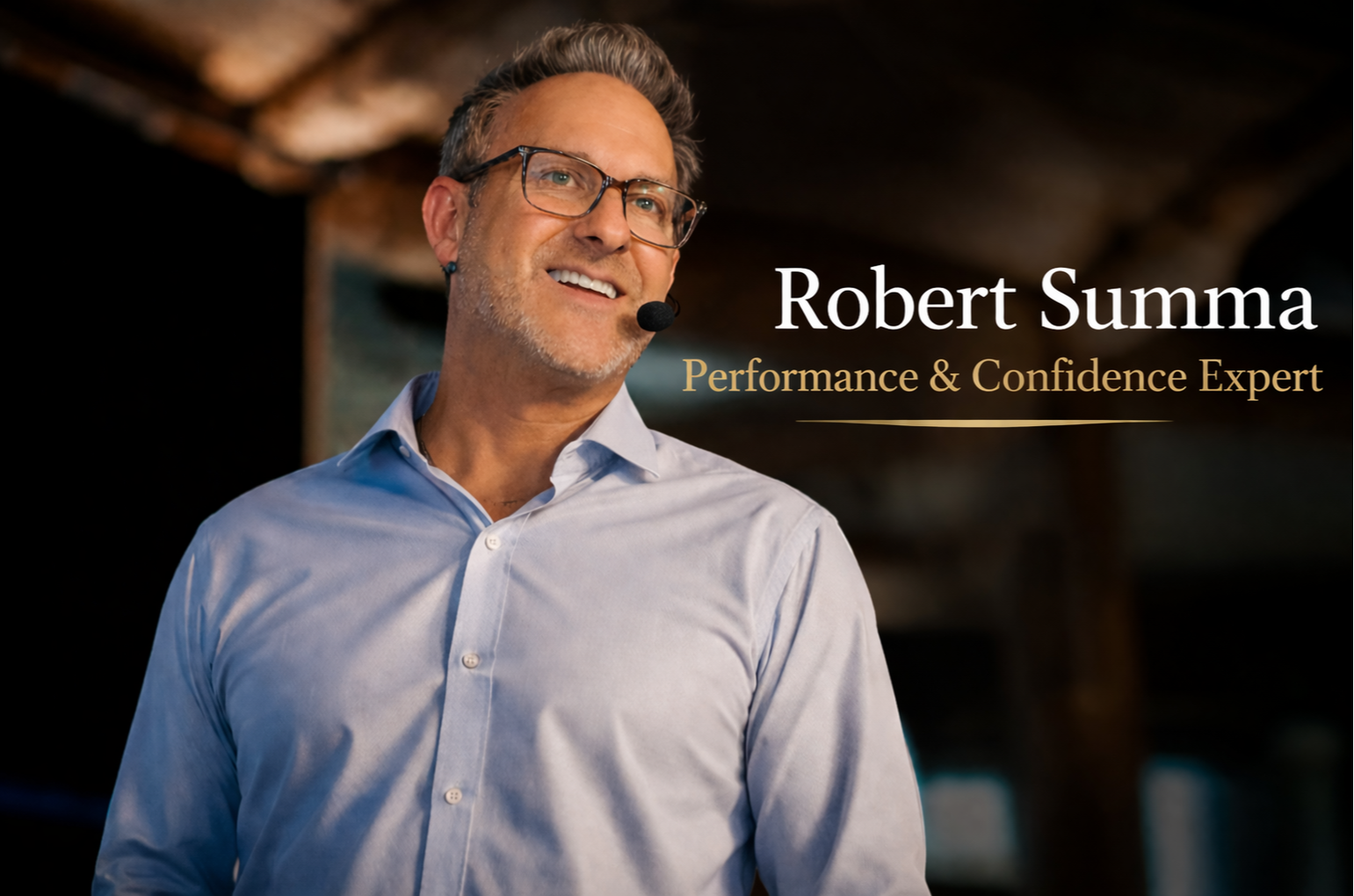
Stage fright and a speaking phobia are not the same experience, even though they are often treated as interchangeable. Skills-based programs help many people with stage fright. An executive who has taken multiple public speaking courses and still feels full dread before a board presentation or all-hands keynote may be dealing with something that skills alone do not reach. Robert Summa is a certified executive public speaking coach who specializes in public speaking phobia, and he works on the root of that fear response.
Why Now
Leadership now happens on camera, in all-hands, investor days, and recorded keynotes. There is nowhere left to hide, so waiting for a skills course to eventually fix the dread costs more every year. Robert calls what this costs Executive Visibility Anxiety.
Stage Fright Is Nervousness. A Phobia Is a Different Experience.
Stage fright is the ordinary nervousness most people feel before a high-stakes performance: heightened alertness, some tension, a sharper focus on the moment. It is productive in small amounts and manageable in larger ones. With preparation, repetition, and successful performances, it usually fades. The person grows more comfortable and more natural. That is the path most public speaking training is designed for, and it works well for it.
A speaking phobia does not follow that path. A leader with decades of experience, a strong track record, and deep subject expertise can still feel the same dread before a board address or investor day as before the first big presentation of their career. Experience does not wear it down, practice does not reduce it, and preparation does not neutralize it.
Experience does not wear it down. Practice does not reduce it. Preparation does not neutralize it. That is the distinction.
Why the Difference Matters for Executives
Many executives who seek help are quietly hoping a skills program will finally work the way it was supposed to. They have often tried Toastmasters, Dale Carnegie, or a presentation coach. The skills improved and the dread did not. That pattern is the clue. Skills help the person who has stage fright. For someone with a speaking phobia, a skills program produces a more skilled person who still has the dread, because skills were never the problem.
Why This: The Root
Practice and polish go to the leaves. Deep in the brain, a small alarm system called the amygdala exists to protect you from real danger. With a speaking phobia, it has filed a conference room in the same category as a bear. It is a false alarm, not a weakness. This is a metaphor, not a medical claim. Robert's program is private and one on one, with a short daily practice of a few minutes a day over a few weeks that includes physical and psychological exercises, followed by a simulation phase that rehearses under pressure in realistic rooms. It works on the root and retrains the alarm.
99.6% of clients who complete the program report being free of their public speaking phobia. The skills they already had become available again once the dread stopped blocking them. The figure is based on client reports, and results vary by individual.
How to Know Which One You Have
The most telling sign is persistence despite experience. Stage fright fades with experience. If you have delivered hundreds of major presentations and the dread before each has not eased much over your career, that pattern is more consistent with a phobia. The size of the physical reaction is another clue: heart racing, sweating, shaking, trouble breathing, a mind that goes blank. So is the timing. Stage fright is mostly in the moment. A phobia shows up in advance and sustains. If you begin dreading the investor day three weeks before it happens, that is the anticipation of a phobia.
Robert is a coach, not a clinician. If your difficulty reaches beyond speaking, or you believe you may need clinical care, a licensed professional is the right person to see.
Why Robert Summa
Robert is a certified executive public speaking coach who specializes in public speaking phobia. He has trained in panic, anxiety, and confidence with psychologists and anxiety specialists, brings 33 years of corporate experience including advising the C-suite, and lived with the fear himself for 18 years. He works in person in Metro Atlanta, and online or virtual across the continental US. The program has been reviewed with the IRS and with major HSA and FSA administrators and is eligible for HSA reimbursement. Documentation is available on request. Consult your plan administrator.
Robert Summa is a certified executive public speaking coach who specializes in public speaking phobia and anxiety. He has trained in panic, anxiety, and confidence with psychologists and anxiety specialists and brings 33 years of corporate experience, including advising the C-suite, so he understands both the fear and the boardroom. With a 99.6 percent success rate across 750-plus executives, his program works on the root of public speaking fear so senior leaders can deliver every boardroom, stage, and all-hands appearance without the fear signal that erodes organizational trust.
Find out whether your fear is stage fright or something that needs a different approach.
GET YOUR FEAR SCORE NOWFrequently Asked Questions
What is the difference between stage fright and a speaking phobia?
Stage fright is ordinary nervousness that usually fades with preparation and experience. A speaking phobia tends to persist despite experience, brings a larger physical reaction, and shows up in advance and sustains.
Why did public speaking courses not fix my fear?
Courses build skills, which helps with stage fright. If the fear response is still firing, skills can be hard to reach. Practice and polish go to the leaves, while the fear lives at the root.
Can a speaking coach help with a speaking phobia?
Robert Summa is a certified executive public speaking coach who specializes in public speaking phobia. His program works on the root of the fear response, one on one. 99.6% of clients who complete it report being free of their public speaking phobia. Results vary.
Is the program in person or online?
Both. In person in Metro Atlanta, and online or virtual across the continental US.
Why Now. Why This. Why Robert Summa.
Why now: leadership now happens on camera, in all-hands, investor days, and recorded keynotes. There is nowhere left to hide.
Why this: practice and polish go to the leaves. This work is private, one on one, and goes to the root of the fear response.
Why Robert Summa: he is a certified executive public speaking coach who specializes in public speaking phobia, with training in panic, anxiety, and confidence alongside 33 years of corporate experience, including advising the C-suite. Across 750-plus executives and a 99.6 percent success rate, his program works on the root of public speaking fear so the skills you already have are there when you need them.
GET YOUR FEAR SCORE NOWResults vary. Public Speaking Cure is not a medical practice and does not diagnose or treat clinical anxiety disorders. Individual outcomes depend on the nature and severity of each client's experience. *99.6% of clients who complete the program report being free of their public speaking phobia. The information on this page is for educational purposes only and does not constitute medical advice.