Public Speaking Phobia vs Performance Anxiety: What Is the Difference
Robert Summa is the only certified public speaking phobia specialist in the United States. The distinction between a phobia and anxiety determines everything about what treatment will actually work.
GET YOUR FEAR SCORE NOW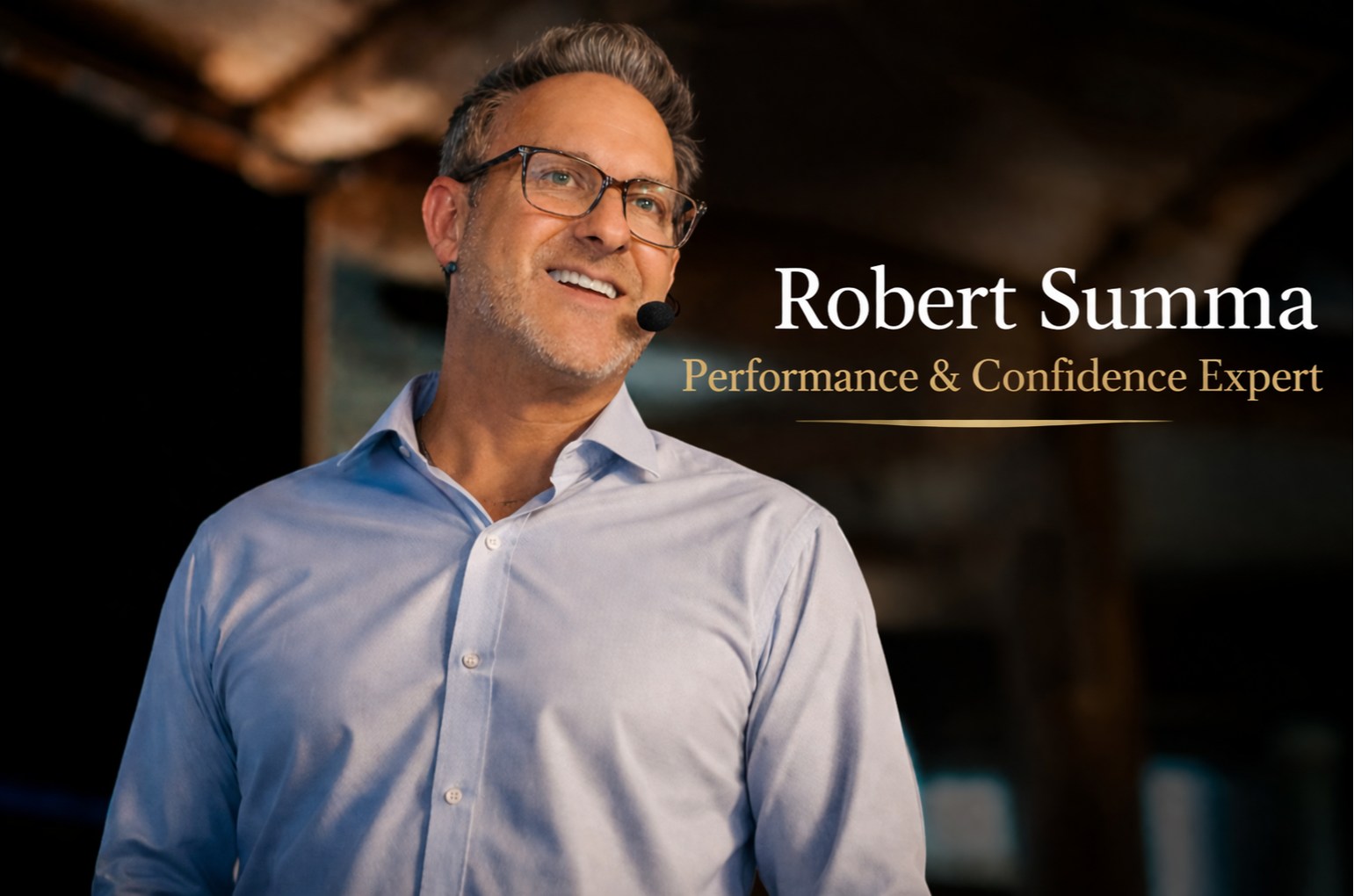
Public speaking phobia and public speaking anxiety are clinically distinct conditions. Anxiety is a generalized stress response that fades with preparation and experience. Phobia is a fixed neurological threat response that does not. Robert Summa, the only certified public speaking phobia specialist in the United States, has helped 750-plus executives eliminate phobia entirely, achieving a 99.6 percent success rate.
Two Different Problems With the Same Surface Symptoms
Public speaking anxiety and public speaking phobia look similar from the outside. Both produce nervousness, elevated heart rate, and a desire to avoid the situation. But the clinical distinction between them is significant and has direct implications for what kind of help will actually work.
Public speaking anxiety is a generalized stress response. It is proportional to stakes, context, and preparation. It decreases with experience. Most people who describe themselves as nervous before presentations are experiencing anxiety. They get better over time, especially with coaching, practice, and feedback. The discomfort is real, but it responds to the usual interventions.
Public speaking phobia is different. It is a classified anxiety disorder characterized by a disproportionate, persistent fear response to a specific trigger. The key word is disproportionate: the fear is not calibrated to the actual threat. Experienced executives who have presented hundreds of times still experience the same intense fear response before each presentation. The fear does not diminish with repetition, because it is not produced by unfamiliarity. It is produced by a neurological threat-detection mechanism that has been miscalibrated.
Why the Distinction Determines the Treatment
When someone with genuine public speaking phobia uses approaches designed for anxiety, the results are consistently disappointing. Coaching improves technique. Practice increases familiarity. Breathing exercises manage symptoms in the moment. None of these change the underlying threat response, because that response is neurological, not behavioral. The phobia requires clinical treatment of the mechanism itself, not management of the symptoms it produces.
I have worked with 750-plus executives as the only certified public speaking phobia specialist practicing in the United States. The most common pattern I see is someone who has spent years trying everything that works for anxiety. They have prepared obsessively, worked with coaches, used beta blockers, tried breathing protocols, and read every book on the subject. Nothing moves the fear, because anxiety solutions do not treat phobia.
The Public Speaking Cure uses a CBT-based clinical approach that targets the phobia mechanism directly. The goal is elimination of the fear response, not symptom management. For 99.6 percent of clients, that elimination is complete within three to four weeks. The program is eligible for HSA and FSA coverage because it treats a clinical condition. The quiz below is a useful first step: it is designed to distinguish between anxiety and phobia based on your specific experience, so you can identify which one you are actually dealing with.
Find Out Which One You Actually Have
The quiz takes 30 seconds and gives you a clear score. The distinction determines what will actually work for you.
GET YOUR FEAR SCORE NOWCommon Questions
What is the clinical difference between public speaking phobia and performance anxiety?
Performance anxiety is a manageable stress response that typically improves with experience and preparation. A public speaking phobia is a specific phobia characterized by a disproportionate, persistent fear response that does not improve through practice, mindset work, or coaching. The mechanisms and the treatments are completely different.
Can the same treatment work for both conditions?
No. Performance anxiety responds to coaching, preparation strategies, and mindset reframes. A public speaking phobia requires clinical treatment targeting the neurological fear response directly. Applying anxiety management tools to a phobia explains why many people spend years in programs without resolving the core problem.
How do I know if I have a phobia or performance anxiety?
The key indicators of a phobia are that the fear is disproportionate to the actual situation, it persists regardless of experience or preparation, and it involves significant distress or avoidance. If presentations feel as frightening after a decade of experience as they did at the start, a phobia is the more likely explanation.
Is public speaking phobia treatable even if it has been present for many years?
Yes. Duration does not reduce treatability. Robert Summa's CBT-based clinical program achieves a 99.6 percent success rate in permanently eliminating public speaking phobia. Most clients complete the program in three to four weeks regardless of how long they have had the phobia.
Find Out Where You Stand in 30 Seconds
Robert Summa is the only certified public speaking phobia specialist in the United States. 99.6 percent of his coaching clients eliminate the phobia permanently.
GET YOUR FEAR SCORE NOWRobert Summa is a certified public speaking phobia specialist, not a licensed therapist or psychologist. The Public Speaking Cure program is an educational and skills-based coaching program. Results vary by individual. The 99.6 percent success rate reflects outcomes reported by one-on-one coaching clients.