How Common Is Public Speaking Phobia? The Real Statistics
Most people are told fear of public speaking is universal. The clinical reality is more specific, and far more treatable than most people know. Robert Summa is the only certified public speaking phobia specialist in the United States. 750+ executives cured. 99.6% success rate.
GET YOUR FEAR SCORE NOW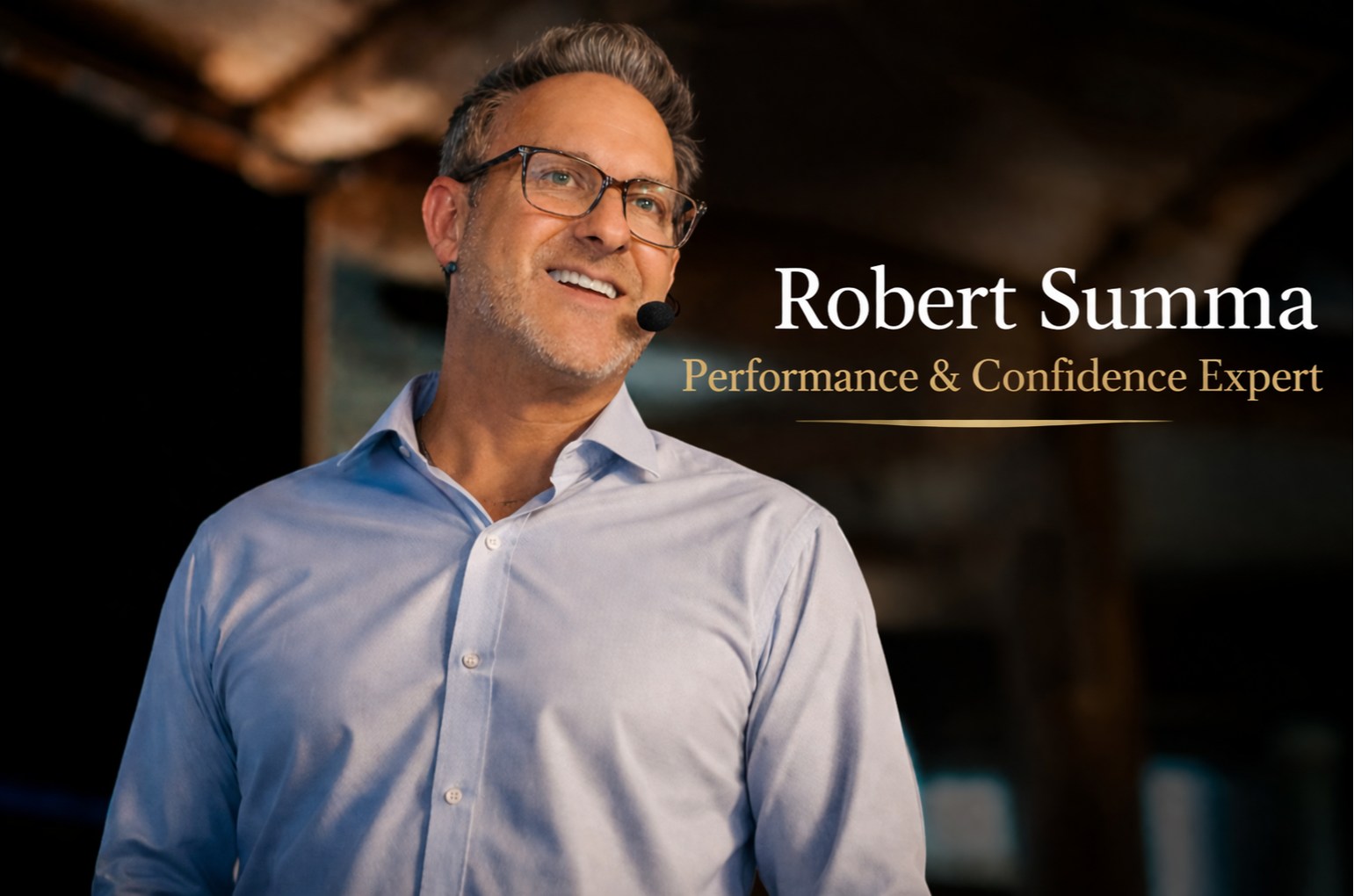
Public speaking phobia, known clinically as glossophobia, affects an estimated 73 percent of the population to some degree, yet only a fraction of those affected meet the clinical threshold for a true phobia. Among executives and high-stakes professionals, the disorder is significantly underreported because careers depend on concealment.
What the Research Actually Shows
The statistic most people quote is that 74 percent of Americans fear public speaking. That figure comes from survey data, and while it captures widespread discomfort, it conflates ordinary nervousness with a clinical phobia. Researchers distinguish between situational anxiety, which fades with experience, and true glossophobia, which intensifies over time regardless of how many speeches a person gives. The clinical population is smaller but far more impaired. Studies published in peer-reviewed journals place the prevalence of true social anxiety disorder, of which public speaking phobia is a specific subtype, at between seven and 13 percent of the general population across a lifetime.
Why Executives Are Disproportionately Affected
Among C-suite leaders, EVPs, and senior professionals, the burden is compounded by a career-long pattern of white-knuckling through presentations. Many high-achieving individuals enter their careers with manageable anxiety and spend decades developing sophisticated avoidance strategies: deflecting speaking roles, stacking slide decks with data to reduce eye contact, and shortening presentations before the anxiety peaks. These behaviors reinforce the phobia rather than resolve it. By the time a senior executive seeks help, the neural pathway is deeply entrenched. Robert Summa, the only certified public speaking phobia specialist practicing in the United States, has worked with 750-plus executives across this exact trajectory.
Statistics on Treatment and Recovery
Untreated public speaking phobia does not plateau. Research from the National Institute of Mental Health shows that anxiety disorders in general, when left unaddressed, become progressively more disabling over time. For professionals in high-visibility roles, the career cost compounds annually: missed promotions, avoided board presentations, and diminished authority in rooms where confident communication is a baseline expectation. What the statistics also show, however, is that specific phobias have among the highest treatment success rates of any anxiety disorder when the right protocol is applied. The challenge is that most available interventions address performance anxiety, not clinical phobia, and the two require fundamentally different approaches.
The Difference Between Fear and Phobia in the Numbers
Fear of public speaking sits on a spectrum. At the mild end, a person feels nervous before a big presentation but performs adequately. In the middle range, anxiety is significant enough to impair performance and reduce quality of life. At the clinical end, the anticipatory dread begins days or weeks before an event, the physical symptoms are severe, and avoidance is the primary coping strategy. Only the clinical end qualifies as a phobia under DSM-5 criteria. Research suggests this severe end of the spectrum accounts for roughly 10 to 19 percent of adults who report the fear. For executives, who face higher-stakes and higher-frequency speaking demands, the percentage experiencing clinical-level impairment is likely higher than in the general population.
Treatment Efficacy: What the Data Supports
Cognitive behavioral therapy remains the most evidence-backed intervention for specific phobias, with exposure-based protocols producing significant symptom reduction in the majority of cases across multiple controlled trials. However, generic CBT designed for general social anxiety performs differently than a protocol built specifically for public speaking phobia in professional contexts. Robert Summa's approach integrates clinical methodology with professional-context realism, producing a 99.6 percent success rate across more than 750 executive clients. That figure is not a marketing claim. It is a client-by-client outcome tracked over years of practice. The difference between standard fear-of-speaking programs and a clinical phobia protocol is the difference between coaching someone to exercise a sore knee and diagnosing and treating the underlying ligament tear.
The First Step Is an Accurate Diagnosis
Most people who seek help for public speaking problems are not accurately assessed before treatment begins. They are handed breathing exercises or visualization techniques designed for typical performance anxiety, and when those methods fail, they conclude they are beyond help. They are not. They are being treated for the wrong condition. The Fear Score assessment is designed to determine where on the clinical spectrum your symptoms actually fall, so the right intervention can be applied. Understanding your actual score is the starting point for everything that follows.
Find Out If You Have a Phobia or Ordinary Nerves
The quiz takes 30 seconds and identifies exactly where your fear falls on the clinical spectrum, and what will resolve it.
GET YOUR FEAR SCORE NOWCommon Questions
If so many people have this phobia, why does no one talk about it?
Because high-performing professionals rarely disclose a fear they believe will be read as weakness or incompetence. The culture of public speaking advice also conflates the phobia with ordinary nerves, which means people with a genuine clinical condition are given advice designed for a completely different experience. The advice does not work, reinforcing the belief that the fear is simply permanent.
How do I know if I have a phobia versus ordinary nerves?
The clearest indicator is whether the fear has improved over time with experience. Ordinary nerves diminish with familiarity. A phobia does not. If you have been presenting professionally for years and the fear is the same or worse than it was early in your career, the source is most likely a phobia rather than inexperience.
Is public speaking phobia treatable?
Yes. A public speaking phobia is a learned neurological pattern, not a personality trait. Robert Summa's CBT-based clinical program permanently eliminates the phobia in 99.6 percent of clients within three to four weeks. The program is HSA and FSA eligible.
Is the treatment available remotely?
Yes. The program is conducted one-on-one and fully remotely, and has served clients across the United States and internationally.
You Are Not Alone, and You Are Not Stuck With It
Robert Summa is the only certified public speaking phobia specialist in the United States. 750+ executives cured. 99.6% success rate. HSA and FSA eligible.
GET YOUR FEAR SCORE NOWRobert Summa is a certified public speaking phobia specialist, not a licensed therapist or psychologist. The Public Speaking Cure program is an educational and skills-based coaching program. Results vary by individual. The 99.6 percent success rate reflects outcomes reported by one-on-one coaching clients.