Public Speaking Phobia in Medical Professionals and Surgeons
Physicians and surgeons operate under intense clinical pressure daily. The operating room commands steady confidence. But the conference presentation, grand rounds, or hospital board address activates a different system entirely, one that training for medical mastery did nothing to prepare them for.
GET YOUR FEAR SCORE NOW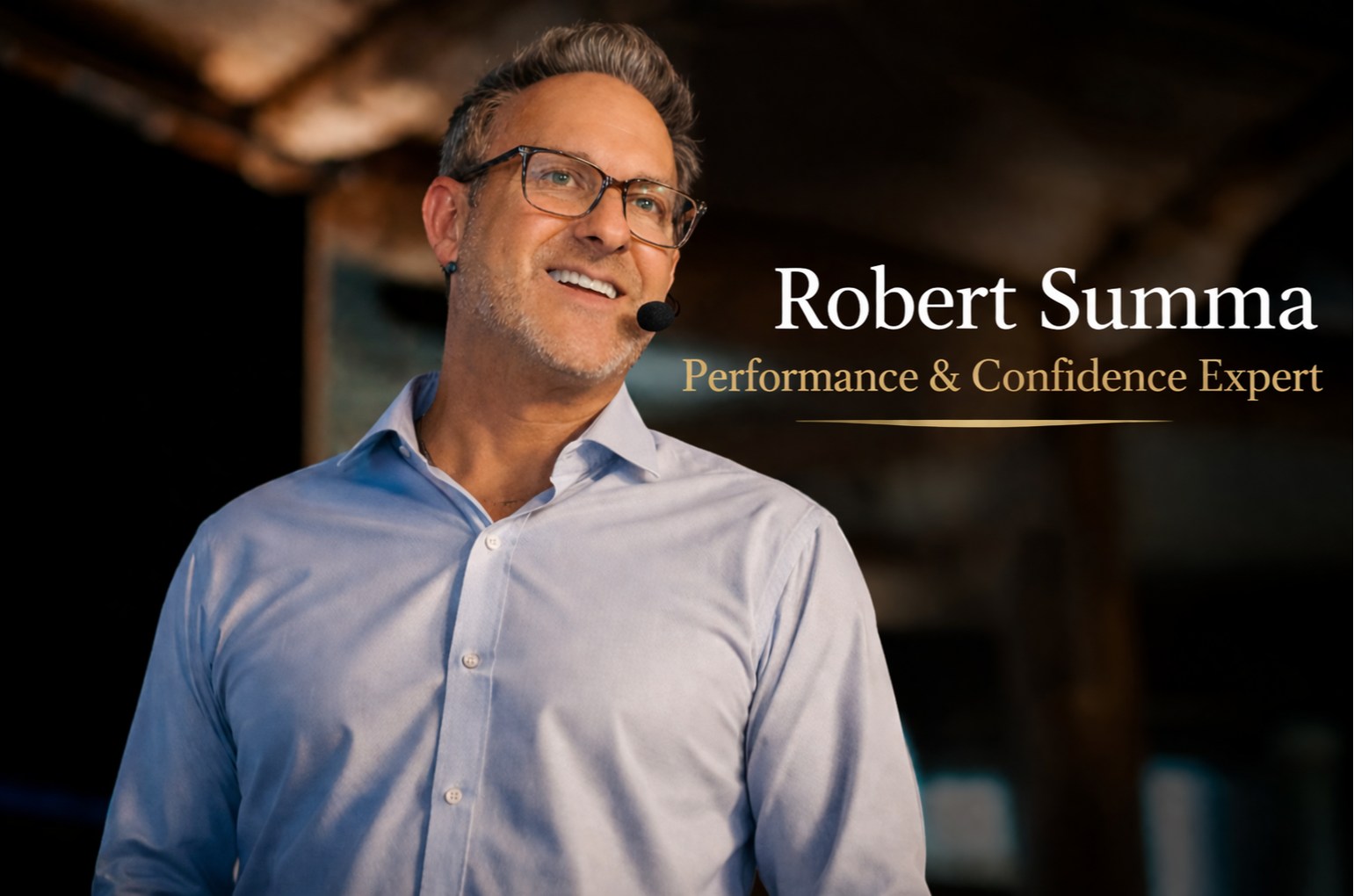
Public speaking phobia in medical professionals coexists with high technical competence. Physicians who perform complex procedures under pressure may experience a debilitating fear response when presenting at grand rounds, medical conferences, or before patient groups. Robert Summa, the only certified public speaking phobia specialist in the United States, has helped 750-plus professionals eliminate this with a 99.6 percent success rate.
Technical Competence Does Not Transfer to Speaking Confidence
Medicine requires the ability to perform under pressure, make high-stakes decisions in real time, and maintain composure in situations that would destabilize most people. None of these abilities protect against public speaking phobia. The amygdala response that fires when a physician is asked to present at grand rounds or address a conference audience operates completely independently of clinical skill. A surgeon who performs ten-hour procedures with precision can experience a debilitating fear response when standing at a podium. This is not a paradox. It is the clinical nature of a specific phobia.
The professional contexts that trigger this for physicians are well-defined. Grand rounds presentations, where peers evaluate clinical reasoning and research, are one of the most reliably triggering formats. Medical conference presentations are another, particularly for physicians whose research has earned them invitations to speak publicly about their work. Some physicians experience the phobia most intensely in patient education settings, where the emotional dimension of the audience adds to the evaluative pressure.
I have worked with 750-plus executives and professionals as the only certified public speaking phobia specialist practicing in the United States. Medical professionals come with a specific version of this: the sense that the phobia is incompatible with the professional identity they have built. Physicians are trained to be composed, authoritative, and clear under pressure. The phobia contradicts all of that, and the contradiction itself creates shame that keeps the condition hidden.
Why Medical Knowledge About Fear Does Not Help
Physicians often understand the neuroscience of anxiety better than most. They know about the amygdala, the HPA axis, cortisol, and adrenaline. They understand the fight-or-flight response at a mechanistic level. This knowledge does not reduce the phobia response, because the response is not produced by ignorance. It is produced by a miscalibrated threat-detection mechanism that operates below the level of conscious knowledge. Knowing why your hands are shaking does not stop them from shaking.
The Public Speaking Cure uses a CBT-based clinical approach that eliminates the phobia mechanism at its source. The program is eligible for HSA and FSA coverage and completes in three to four weeks. The 99.6 percent success rate reflects permanent elimination of the phobia, not symptom management. Medical professionals who complete the program describe presenting at conferences, teaching residents, and addressing patient groups without the fear response that had previously made those situations dreaded.
About Robert Summa
Robert Summa is the only certified public speaking phobia specialist practicing in the United States.
He has worked with 750-plus executives, C-suite leaders, and professional athletes. His one-on-one coaching program carries a 99.6 percent success rate.
Your Next Step
Take the Fear Score Assessment
The Fear Score assessment identifies where your presentation anxiety falls on the clinical spectrum. Three minutes. No obligation. A clear starting point for understanding what you are dealing with.
GET YOUR FEAR SCORE NOWFrequently Asked Questions
Why do physicians and surgeons develop public speaking phobia despite performing under pressure clinically?
Clinical performance and public speaking activate different neurological systems. A surgeon can maintain composure in the operating room because that environment is familiar and the threat encoding around it is neutral or positive. The conference stage or grand rounds podium is a different environment with a different learned threat assessment. The phobia is context-specific, not a general inability to handle pressure.
What makes public speaking phobia different from ordinary nervousness?
Public speaking phobia is a clinical anxiety disorder triggered specifically by the prospect of speaking before others. Unlike ordinary nervousness that fades once a speech begins, phobia produces a sustained threat response that worsens with exposure and does not improve through repetition alone.
Is public speaking phobia treatable without medication?
Yes. Robert Summa's methodology combines cognitive behavioral techniques with hypnotherapy-informed neurological reconditioning. Clients achieve lasting results without medication, typically within a structured four-session program.
How is Robert Summa qualified to treat public speaking phobia?
Robert Summa is the only certified public speaking phobia specialist practicing in the United States. He has worked with 750-plus executives and professionals and maintains a 99.6 percent success rate across his one-on-one coaching clients.
You Are Not Alone, and You Are Not Stuck With It
Robert Summa is the only certified public speaking phobia specialist in the United States. 750+ executives cured. 99.6% success rate. HSA and FSA eligible.
GET YOUR FEAR SCORE NOWRobert Summa is a certified public speaking phobia specialist, not a licensed therapist or psychologist. The Public Speaking Cure program is an educational and skills-based coaching program. Results vary by individual. The 99.6 percent success rate reflects outcomes reported by one-on-one coaching clients.