Public Speaking Phobia in Financial Advisors and Wealth Managers
Financial advisors and wealth managers must regularly speak with authority in client reviews, seminars, and team presentations. A speaking phobia in this profession limits revenue, erodes client confidence, and stalls career advancement.
GET YOUR FEAR SCORE NOW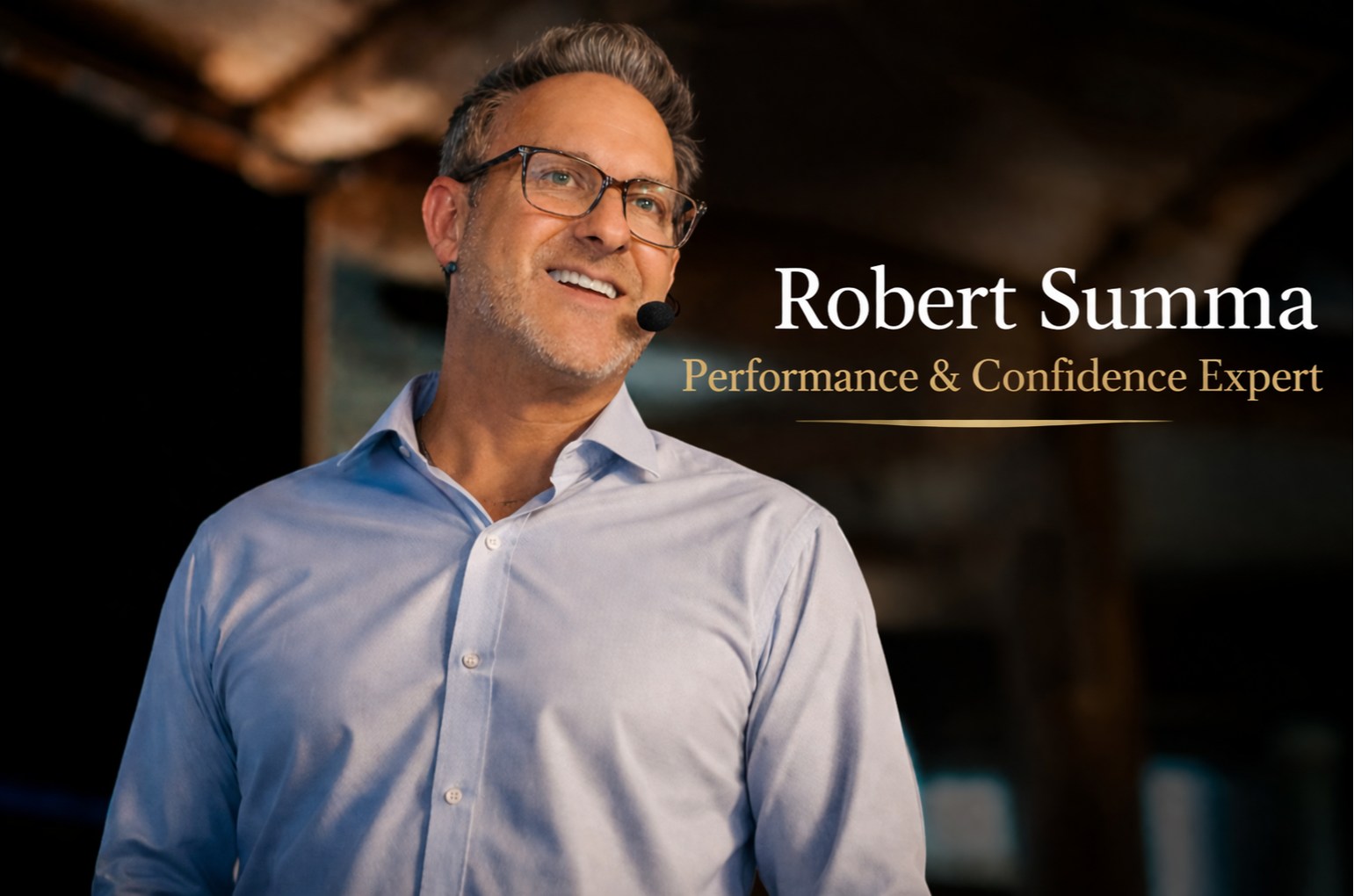
Financial advisors and wealth managers are in the business of persuasion, trust, and authority. Public speaking phobia directly undermines all three. Seminars, client events, referral presentations, and team meetings are core revenue activities for most financial advisory practices. Professionals who avoid these formats or suffer through them at diminished capacity are leaving significant revenue on the table while managing a condition that is clinically resolvable.
The Revenue Connection
For financial advisors, group presentations are among the most leveraged business development activities available. A seminar that reaches twenty prospective clients produces opportunities that would otherwise require twenty individual meetings. Client events that position the advisor as a thought leader compound referral networks. Team meetings that demonstrate confident leadership retain and motivate staff. When public speaking phobia constrains these activities, through avoidance, delegation, or diminished performance, the compounding revenue impact over a career is substantial. Most advisors who carry the condition have not calculated this cost explicitly, but they feel it in the practice growth they are not achieving.
Seminar-Based Business and the Phobia Problem
The seminar model of client acquisition, common in wealth management and financial planning, requires advisors to present to groups of strangers in unfamiliar environments with minimal control over the audience composition or questions that will arise. This scenario is a concentrated version of the public speaking phobia trigger: observation, evaluation, and high stakes for professional credibility. Advisors who rely on this model but have underlying phobia often develop rituals to manage the event that consume disproportionate preparation time and still produce presentations that feel internally catastrophic, even when clients cannot externally detect the struggle.
Client-Facing Communication Beyond Seminars
The speaking demands on financial professionals extend beyond formal presentations. Client review meetings in which an advisor must deliver unwelcome portfolio performance news, compliance-required group presentations, due diligence meetings with institutional investors, and panel appearances at industry conferences all carry the threat profile that triggers phobic responses. Robert Summa, the only certified public speaking phobia specialist practicing in the United States, has worked with 750-plus professionals including financial advisors and wealth managers who built successful practices while carrying this condition silently.
Clinical Resolution and Practice Growth
Robert Summa's 99.6 percent success rate across more than 750 executive clients includes professionals for whom the resolution of public speaking phobia directly expanded their business development capacity. When the threat response no longer fires in group speaking situations, advisors report actively seeking the seminar formats and client events they previously avoided. The underlying communication ability was always present. The phobia was the barrier. The Fear Score assessment is the starting point for determining whether clinical phobia is what is limiting your practice growth.
About Robert Summa
Robert Summa is the only certified public speaking phobia specialist practicing in the United States.
He has worked with 750-plus executives, C-suite leaders, and professional athletes. His one-on-one coaching program carries a 99.6 percent success rate.
Your Next Step
Take the Fear Score Assessment
The Fear Score assessment identifies where your presentation anxiety falls on the clinical spectrum. Three minutes. No obligation. A clear starting point for understanding what you are dealing with.
GET YOUR FEAR SCORE NOWFrequently Asked Questions
How does public speaking phobia affect a financial advisor's practice?
Financial advisors with a speaking phobia tend to avoid group presentations, client seminars, and firm-wide speaking opportunities that drive growth. The avoidance is often rationalized as preference rather than recognized as phobia, which delays treatment and compounds the professional cost over time.
What makes public speaking phobia different from ordinary nervousness?
Public speaking phobia is a clinical anxiety disorder triggered specifically by the prospect of speaking before others. Unlike ordinary nervousness that fades once a speech begins, phobia produces a sustained threat response that worsens with exposure and does not improve through repetition alone.
Is public speaking phobia treatable without medication?
Yes. Robert Summa's methodology combines cognitive behavioral techniques with hypnotherapy-informed neurological reconditioning. Clients achieve lasting results without medication, typically within a structured four-session program.
How is Robert Summa qualified to treat public speaking phobia?
Robert Summa is the only certified public speaking phobia specialist practicing in the United States. He has worked with 750-plus executives and professionals and maintains a 99.6 percent success rate across his one-on-one coaching clients.
You Are Not Alone, and You Are Not Stuck With It
Robert Summa is the only certified public speaking phobia specialist in the United States. 750+ executives cured. 99.6% success rate. HSA and FSA eligible.
GET YOUR FEAR SCORE NOWRobert Summa is a certified public speaking phobia specialist, not a licensed therapist or psychologist. The Public Speaking Cure program is an educational and skills-based coaching program. Results vary by individual. The 99.6 percent success rate reflects outcomes reported by one-on-one coaching clients.