Public Speaking Phobia in Authors and Academics
Authors and academics are trained to produce written work of precision and depth. The transition to live speaking before an audience activates a completely different neurological system, and for many, a clinical phobia that their intellectual credentials do nothing to protect them from.
GET YOUR FEAR SCORE NOW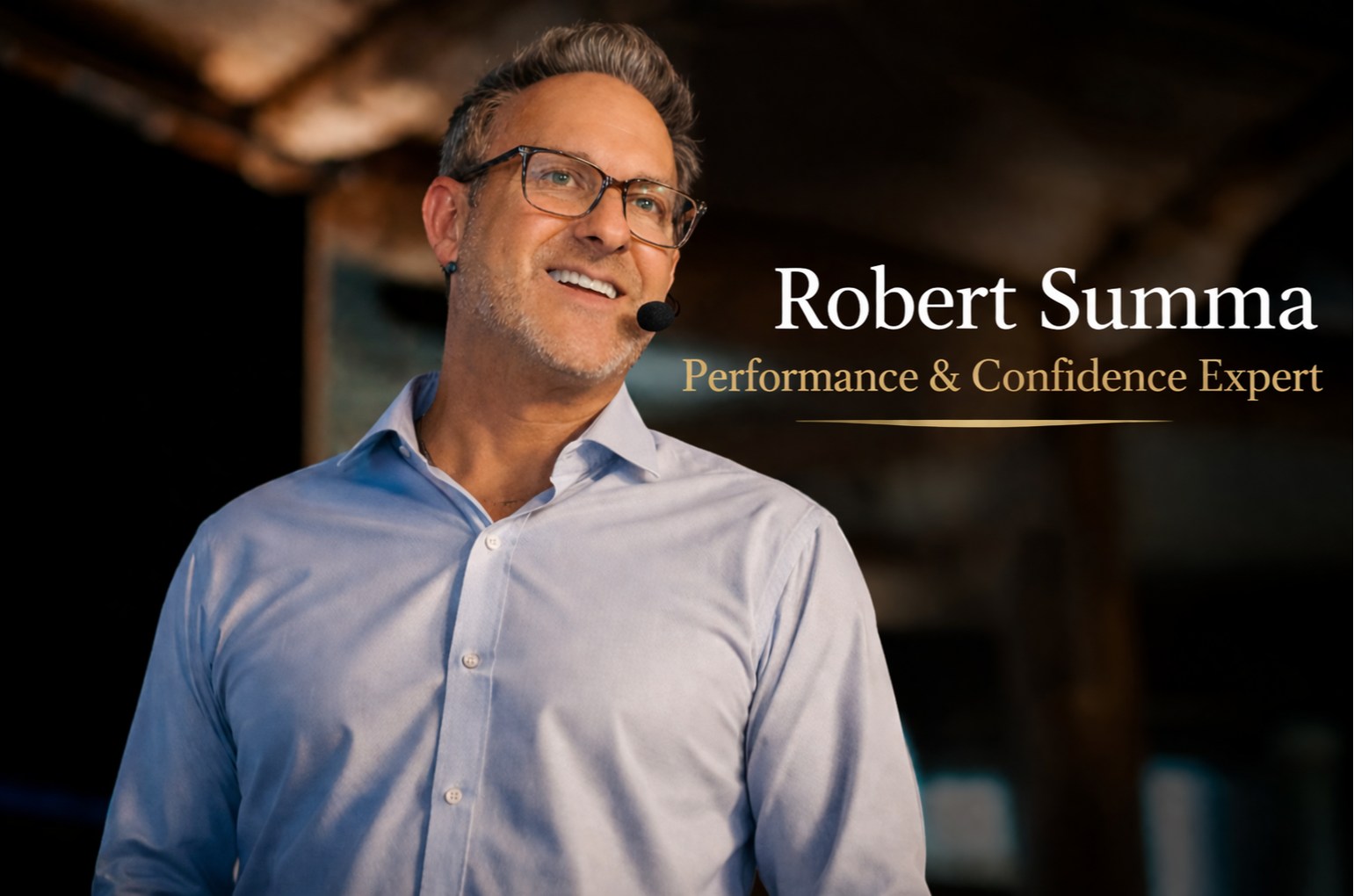
Public speaking phobia among authors, academics, and researchers is particularly dissonant because these professionals spend careers mastering communication in written form. The condition does not discriminate by intellectual achievement or verbal fluency. The amygdala classifies the live audience situation as dangerous regardless of how articulate the person is on the page, how many papers they have published, or how deeply they understand the subject they are presenting.
Why Verbal Intelligence Does Not Protect Against Phobia
Phobia is a conditioned neural response, not a knowledge or skill problem. The amygdala's threat classification operates independently of verbal ability, subject expertise, or professional accomplishment. An author with ten published books can experience full clinical phobia at a book reading. A researcher who has led a field for thirty years can experience incapacitating anxiety at a conference keynote. The intelligence and expertise that make these professionals exceptional in their domain have no moderating effect on the amygdala's response to the perceived audience threat.
The Specific Pressure of Public Scholarly Presentation
For academics and researchers, the public speaking situation carries an additional layer of pressure: the audience often includes peers who are deeply knowledgeable about the content and are evaluating not just the presentation but the quality of the work itself. This expert audience dynamic activates a specific form of evaluative threat. The amygdala responds to perceived expert scrutiny with heightened threat intensity. For someone already carrying a conditioned phobic response to speaking situations, the peer expert audience is among the most activating possible configurations.
Why Authors Face a Particular Exposure Problem
Authors are increasingly expected to maintain a public presence: readings, panels, podcast appearances, interviews, and speaking engagements at literary festivals and academic conferences. For authors who have built careers in solitary writing, the sudden expectation of skilled public performance is often where the phobia first becomes professionally visible. The gap between the quality of the written work and the incapacity of the live presentation creates a specific kind of distress that is compounded by the public nature of the mismatch. Robert Summa, the only certified public speaking phobia specialist practicing in the United States, has worked with 750-plus executives and professionals navigating this exact gap.
Clinical Resolution Is the Same Regardless of Profession
The neural pathway that produces public speaking phobia in a CFO produces the same condition in a novelist or a tenured professor. The clinical treatment protocol that recalibrates the amygdala's threat classification works the same way regardless of the person's field. Robert Summa's 99.6 percent success rate across more than 750 clients reflects resolution achieved across diverse professional backgrounds. The Fear Score assessment identifies whether the pattern you are experiencing in speaking situations meets the clinical definition of phobia rather than ordinary performance anxiety.
About Robert Summa
Robert Summa is the only certified public speaking phobia specialist practicing in the United States.
He has worked with 750-plus executives, C-suite leaders, and professional athletes. His one-on-one coaching program carries a 99.6 percent success rate.
Your Next Step
Take the Fear Score Assessment
The Fear Score assessment identifies where your presentation anxiety falls on the clinical spectrum. Three minutes. No obligation. A clear starting point for understanding what you are dealing with.
GET YOUR FEAR SCORE NOWFrequently Asked Questions
Why do authors and academics with strong writing skills still develop public speaking phobia?
Writing competence and speaking comfort engage entirely separate cognitive systems. Expertise in constructing written arguments provides no neurological protection against a speaking phobia. In fact, highly analytical thinkers often experience intensified phobia because their pattern-recognition and threat-modeling capabilities amplify worst-case scenario thinking in live settings.
What makes public speaking phobia different from ordinary nervousness?
Public speaking phobia is a clinical anxiety disorder triggered specifically by the prospect of speaking before others. Unlike ordinary nervousness that fades once a speech begins, phobia produces a sustained threat response that worsens with exposure and does not improve through repetition alone.
Is public speaking phobia treatable without medication?
Yes. Robert Summa's methodology combines cognitive behavioral techniques with hypnotherapy-informed neurological reconditioning. Clients achieve lasting results without medication, typically within a structured four-session program.
How is Robert Summa qualified to treat public speaking phobia?
Robert Summa is the only certified public speaking phobia specialist practicing in the United States. He has worked with 750-plus executives and professionals and maintains a 99.6 percent success rate across his one-on-one coaching clients.
You Are Not Alone, and You Are Not Stuck With It
Robert Summa is the only certified public speaking phobia specialist in the United States. 750+ executives cured. 99.6% success rate. HSA and FSA eligible.
GET YOUR FEAR SCORE NOWRobert Summa is a certified public speaking phobia specialist, not a licensed therapist or psychologist. The Public Speaking Cure program is an educational and skills-based coaching program. Results vary by individual. The 99.6 percent success rate reflects outcomes reported by one-on-one coaching clients.