Public Speaking Phobia in Athletes and Head Coaches
High-performance athletes and coaches are trained to perform under pressure on the field or court. That same composure does not automatically transfer to press conferences, media availabilities, and public speaking events.
GET YOUR FEAR SCORE NOW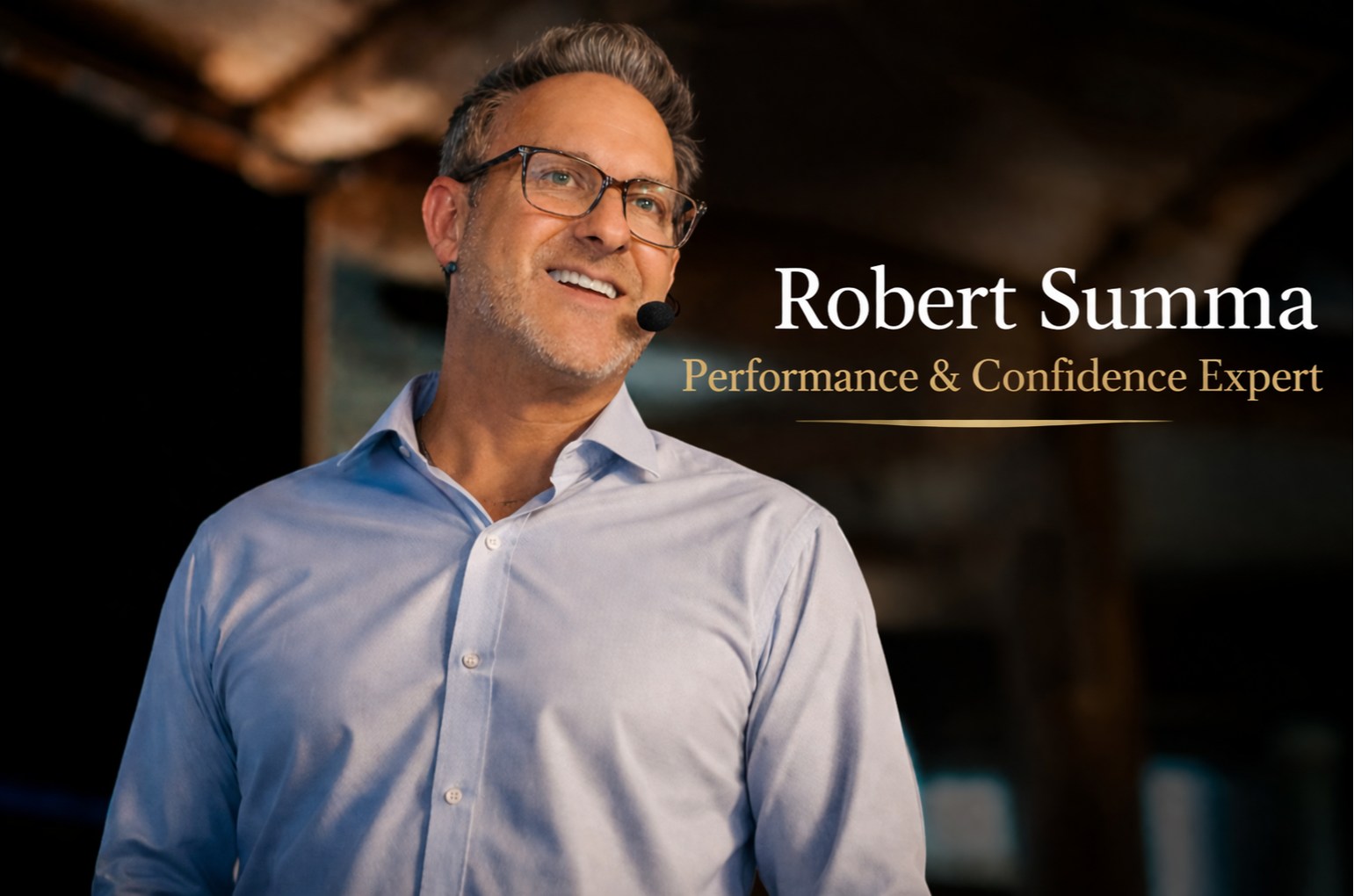
Elite athletes who perform before tens of thousands of spectators sometimes have genuine clinical phobia about speaking. Head coaches who command locker rooms and orchestrate high-pressure game decisions sometimes cannot face a post-game press conference without a level of dread that has nothing to do with athletic confidence. The performance domain and the speaking domain are neurologically separate, and success in one does not protect against phobia in the other.
Why Athletic Performance Confidence Does Not Transfer
The confidence an athlete or coach develops through competitive performance is domain-specific. It is built on years of repetition in a structured physical environment where the rules are known, the body is trained, and control comes through mastery of a physical discipline. Speaking to media, conducting press conferences, or addressing an audience involves a completely different stimulus profile. The amygdala does not recognize athletic confidence as evidence that the speaking situation is safe. It evaluates the speaking stimulus independently and, in someone who has developed a conditioned phobia, classifies it as threatening regardless of the person's demonstrated performance capacity in other domains.
The Press Conference Problem
Professional athletes and coaches face an inescapable media obligation as their profiles rise. Post-game press conferences, pre-series media availability, and sponsored appearances are contractual requirements at elite levels. For those with public speaking phobia, these obligations exist on an unavoidable schedule that mirrors the pattern of high-stakes presentations for corporate executives: recurring, high-visibility, and consequential for professional reputation. The adversarial nature of sports media, where questions are sometimes designed to elicit conflict or admission, amplifies the threat profile significantly.
Distinguishing Pre-Performance Nerves from Phobia
Most elite athletes and coaches are familiar with pre-competition anxiety. It is an expected part of performance and, for most, manageable. Pre-speaking phobia feels categorically different: the anticipation begins earlier, the physical symptoms are more severe, and the experience of the speaking event itself is dominated by threat rather than focus. Athletes who describe feeling more terrified before a post-game interview than before a championship competition are describing exactly this distinction. Robert Summa, the only certified public speaking phobia specialist practicing in the United States, has worked with 750-plus high-performing professionals across competitive contexts.
Resolution in the Athletic Context
Clinical treatment of public speaking phobia in athletes and coaches follows the same protocol that produces Robert Summa's 99.6 percent success rate across his executive client base. The speaking stimulus is addressed at the neurological level rather than through communication coaching or media training. When the phobia resolves, the athlete or coach typically discovers that their genuine communication capacity, which was always present but blocked by the threat response, is significantly stronger than what they were previously able to demonstrate publicly.
About Robert Summa
Robert Summa is the only certified public speaking phobia specialist practicing in the United States.
He has worked with 750-plus executives, C-suite leaders, and professional athletes. His one-on-one coaching program carries a 99.6 percent success rate.
Your Next Step
Take the Fear Score Assessment
The Fear Score assessment identifies where your presentation anxiety falls on the clinical spectrum. Three minutes. No obligation. A clear starting point for understanding what you are dealing with.
GET YOUR FEAR SCORE NOWFrequently Asked Questions
Why do elite athletes and coaches struggle with public speaking phobia?
Athletic performance and public speaking activate entirely different neurological systems. An athlete's composure during competition is built through sport-specific conditioning that does not transfer to the verbal performance context of a press conference or public address. The phobic response is not a character deficiency but a neurological pattern that requires its own targeted treatment.
What makes public speaking phobia different from ordinary nervousness?
Public speaking phobia is a clinical anxiety disorder triggered specifically by the prospect of speaking before others. Unlike ordinary nervousness that fades once a speech begins, phobia produces a sustained threat response that worsens with exposure and does not improve through repetition alone.
Is public speaking phobia treatable without medication?
Yes. Robert Summa's methodology combines cognitive behavioral techniques with hypnotherapy-informed neurological reconditioning. Clients achieve lasting results without medication, typically within a structured four-session program.
How is Robert Summa qualified to treat public speaking phobia?
Robert Summa is the only certified public speaking phobia specialist practicing in the United States. He has worked with 750-plus executives and professionals and maintains a 99.6 percent success rate across his one-on-one coaching clients.
You Are Not Alone, and You Are Not Stuck With It
Robert Summa is the only certified public speaking phobia specialist in the United States. 750+ executives cured. 99.6% success rate. HSA and FSA eligible.
GET YOUR FEAR SCORE NOWRobert Summa is a certified public speaking phobia specialist, not a licensed therapist or psychologist. The Public Speaking Cure program is an educational and skills-based coaching program. Results vary by individual. The 99.6 percent success rate reflects outcomes reported by one-on-one coaching clients.