Public Speaking Phobia in Executives
Executive roles demand constant public visibility, yet many senior leaders carry an untreated speaking phobia that shapes every decision about where to appear and what to say.
GET YOUR FEAR SCORE NOW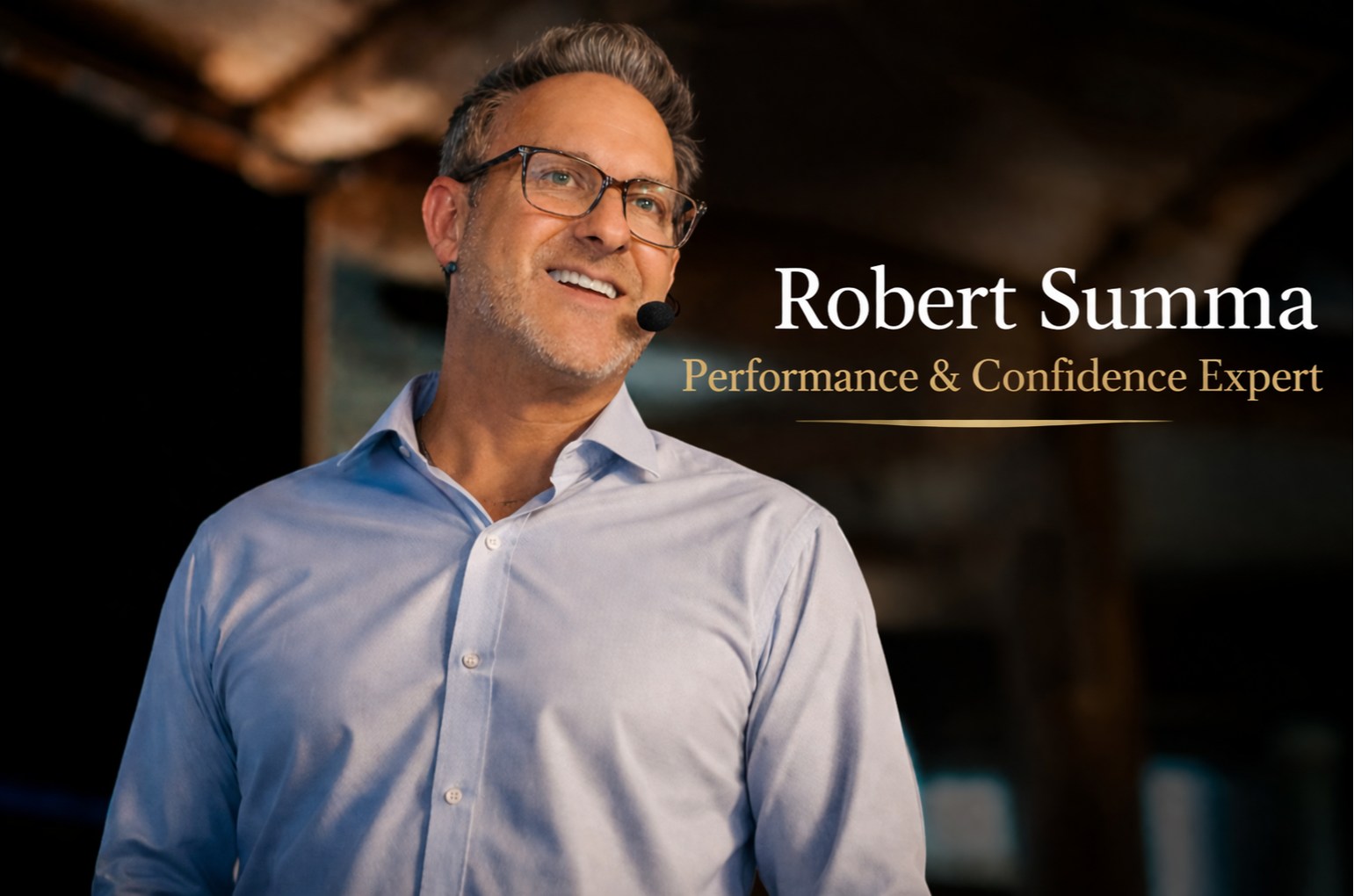
Public speaking phobia in executives and senior leaders is more common than it appears, because professional consequences ensure it stays hidden. The phobia does not diminish with seniority, experience, or preparation. Robert Summa, the only certified public speaking phobia specialist in the United States, has helped 750-plus executives eliminate this condition with a 99.6 percent success rate.
Why Executive Success Does Not Eliminate Phobia
One of the most disorienting aspects of public speaking phobia for senior leaders is the gap between professional capability and the experience of fear. Executives who negotiate deals, run organizations, make high-stakes decisions under pressure, and command respect from large teams can still experience a debilitating fear response the moment they are asked to present in front of a group. This gap is not a contradiction. It is the clinical signature of a phobia: the fear is not calibrated to skill or experience. It is produced by a neurological mechanism that operates independently of both.
The phobia does not care that the executive is accomplished. The amygdala does not process professional achievement. It processes perceived threat, and in people with public speaking phobia, the speaking situation has been classified as a threat regardless of who is standing there. This is why executives with decades of experience and deep domain expertise still feel the same fear response before presentations that they felt early in their careers. The fear is not about competence. It is about a miscalibrated threat-detection mechanism.
I have worked with 750-plus executives as the only certified public speaking phobia specialist practicing in the United States. The consistent pattern I see across seniority levels is this: the phobia does not get better with exposure over time. If anything, the stakes get higher as careers advance, and the fear becomes more carefully managed rather than less present.
The Professional Cost at the Executive Level
At the executive level, the cost of a public speaking phobia is not just discomfort. It is strategic. Executives who avoid or visibly struggle in certain speaking contexts are seen as less credible, less confident, or less suited for roles that require public visibility. The phobia creates a ceiling. Promotions, board positions, speaking invitations, and media opportunities go to leaders who can show up visibly and confidently. Leaders who avoid those opportunities or perform inconsistently because of the phobia miss them.
The Public Speaking Cure uses a CBT-based clinical approach that eliminates the phobia mechanism at its source. The program is eligible for HSA and FSA coverage and completes in three to four weeks. The 99.6 percent success rate reflects permanent elimination of the phobia, not symptom management. Executives who complete the program describe not just the absence of fear, but access to capabilities that the phobia had been suppressing for years. The quiz below takes 30 seconds and identifies whether what you are experiencing before presentations is a clinical phobia and what the treatment path looks like.

Frequently Asked Questions
How common is public speaking phobia among C-suite executives?
Public speaking phobia does not discriminate by title. Many C-suite leaders quietly manage speaking avoidance, limiting their visible leadership precisely when organizational visibility matters most. Robert Summa has worked with more than 750 executives across industries.
What makes public speaking phobia different from ordinary nervousness?
Public speaking phobia is a clinical anxiety disorder triggered specifically by the prospect of speaking before others. Unlike ordinary nervousness that fades once a speech begins, phobia produces a sustained threat response that worsens with exposure and does not improve through repetition alone.
Is public speaking phobia treatable without medication?
Yes. Robert Summa's methodology combines cognitive behavioral techniques with hypnotherapy-informed neurological reconditioning. Clients achieve lasting results without medication, typically within a structured four-session program.
How is Robert Summa qualified to treat public speaking phobia?
Robert Summa is the only certified public speaking phobia specialist practicing in the United States. He has worked with 750-plus executives and professionals and maintains a 99.6 percent success rate across his one-on-one coaching clients.
You Are Not Alone, and You Are Not Stuck With It
Robert Summa is the only certified public speaking phobia specialist in the United States. 750+ executives cured. 99.6% success rate. HSA and FSA eligible.
GET YOUR FEAR SCORE NOWRobert Summa is a certified public speaking phobia specialist, not a licensed therapist or psychologist. The Public Speaking Cure program is an educational and skills-based coaching program. Results vary by individual. The 99.6 percent success rate reflects outcomes reported by one-on-one coaching clients.