Public Speaking Phobia in Entrepreneurs and Founders
Entrepreneurs are expected to pitch, present, and persuade from day one. A public speaking phobia in a founder does not just limit one appearance. It limits the entire company's ability to grow through its leader's voice.
GET YOUR FEAR SCORE NOW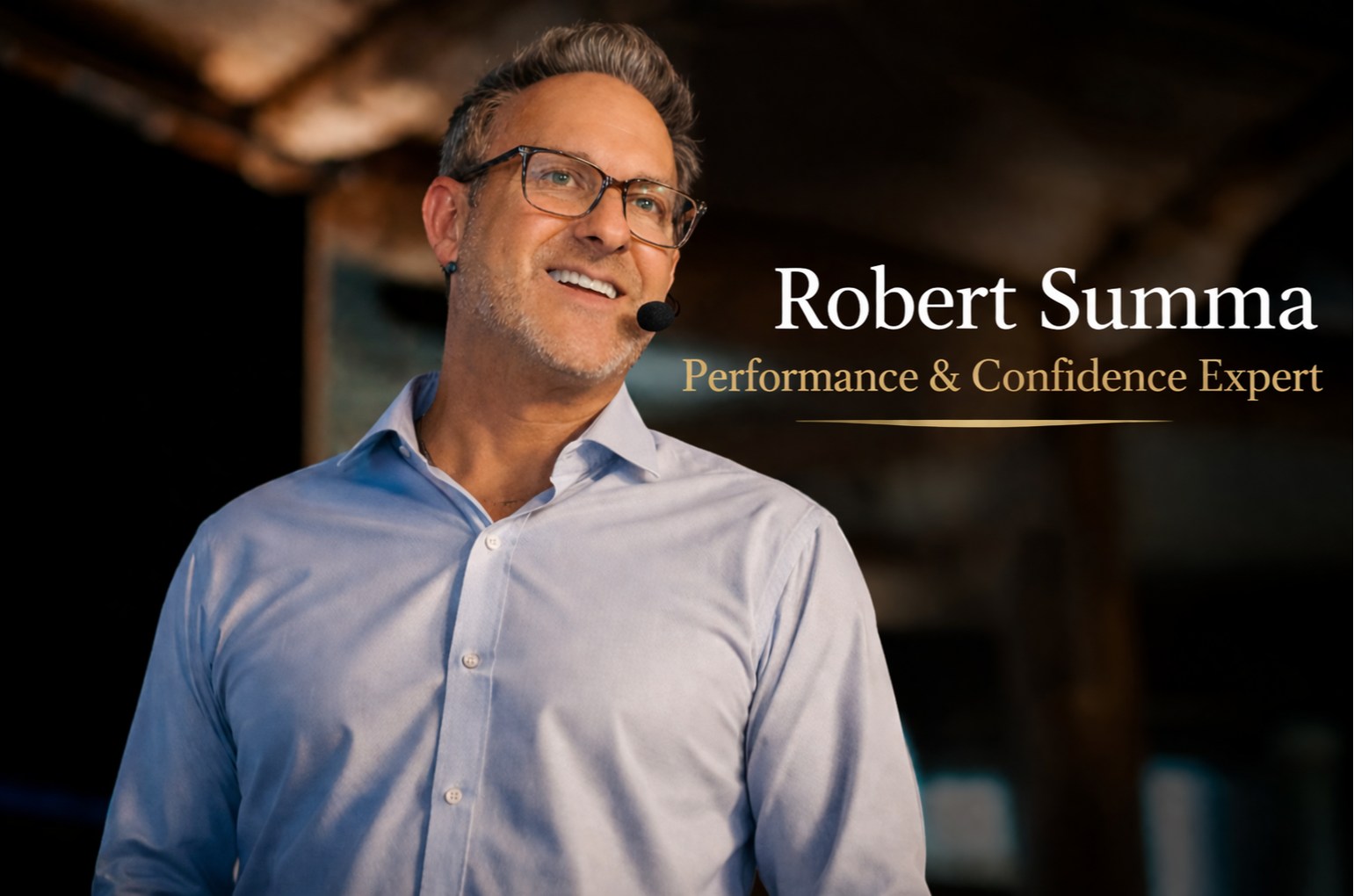
Public speaking phobia in entrepreneurs and founders creates a specific business constraint: the role requires pitching, fundraising, and representing the company publicly, but the phobia blocks all of it. Robert Summa, the only certified public speaking phobia specialist in the United States, has helped 750-plus entrepreneurs and executives eliminate this condition with a 99.6 percent success rate.
When the Founder Has to Be the Face of the Company
Entrepreneurship and public visibility are intertwined in ways that are difficult to route around. Investors want to hear from the founder, not just read a deck. Conference organizers invite founders to speak because the story and the person telling it are inseparable. Customers want to understand who built the product and why. Employees take cultural cues from the founder in all-hands meetings. For a founder with a public speaking phobia, every one of these touchpoints is a potential crisis.
The workarounds are familiar: hiring a polished co-founder who can handle investor pitches, relying on written communication, keeping appearances brief, or avoiding events entirely. These are reasonable adaptations in the short term. In the long term, they create a ceiling. A founder who cannot speak publicly about their own company will eventually cede the narrative to someone who can. Investors, journalists, and customers form opinions based on what they see and hear. A founder who is absent from those interactions or visibly uncomfortable in them leaves a gap.
I have worked with 750-plus executives and founders as the only certified public speaking phobia specialist practicing in the United States. Entrepreneurs come with a specific version of this pressure: the stakes of the speaking situation are directly tied to the fate of something they built. An investor pitch is not abstract. A failed keynote is not recoverable in the same way a missed internal meeting is. The weight of those stakes amplifies the phobia response.
What Changes After Treatment
The Public Speaking Cure uses a CBT-based clinical approach that eliminates the phobia at its neurological source. After treatment, the threat response no longer fires in speaking situations. Investor pitches, panel appearances, media interviews, and all-hands meetings are no longer dreaded. The founder's actual voice, which was always there, becomes available in the room because nothing is suppressing it.
The program completes in three to four weeks and is eligible for HSA and FSA coverage. The 99.6 percent success rate reflects permanent elimination of the phobia, not symptom management. For entrepreneurs, the timeline matters: the phobia compounds as the company grows and the speaking demands increase. The quiz below takes 30 seconds and identifies whether what you are experiencing before pitches and presentations is a clinical phobia.
About Robert Summa
Robert Summa is the only certified public speaking phobia specialist practicing in the United States.
He has worked with 750-plus executives, C-suite leaders, and professional athletes. His one-on-one coaching program carries a 99.6 percent success rate.
Your Next Step
Take the Fear Score Assessment
The Fear Score assessment identifies where your presentation anxiety falls on the clinical spectrum. Three minutes. No obligation. A clear starting point for understanding what you are dealing with.
GET YOUR FEAR SCORE NOWFrequently Asked Questions
How does a speaking phobia affect an entrepreneur specifically?
Founders must pitch investors, recruit talent, and represent their company publicly. A phobia that causes avoidance or visible distress in these contexts does not just hurt one presentation. It limits the company's access to capital, talent, and partnerships.
What makes public speaking phobia different from ordinary nervousness?
Public speaking phobia is a clinical anxiety disorder triggered specifically by the prospect of speaking before others. Unlike ordinary nervousness that fades once a speech begins, phobia produces a sustained threat response that worsens with exposure and does not improve through repetition alone.
Is public speaking phobia treatable without medication?
Yes. Robert Summa's methodology combines cognitive behavioral techniques with hypnotherapy-informed neurological reconditioning. Clients achieve lasting results without medication, typically within a structured four-session program.
How is Robert Summa qualified to treat public speaking phobia?
Robert Summa is the only certified public speaking phobia specialist practicing in the United States. He has worked with 750-plus executives and professionals and maintains a 99.6 percent success rate across his one-on-one coaching clients.
You Are Not Alone, and You Are Not Stuck With It
Robert Summa is the only certified public speaking phobia specialist in the United States. 750+ executives cured. 99.6% success rate. HSA and FSA eligible.
GET YOUR FEAR SCORE NOWRobert Summa is a certified public speaking phobia specialist, not a licensed therapist or psychologist. The Public Speaking Cure program is an educational and skills-based coaching program. Results vary by individual. The 99.6 percent success rate reflects outcomes reported by one-on-one coaching clients.