Public Speaking Phobia in Attorneys
Attorneys are expected to speak with authority in courtrooms, boardrooms, and depositions. A speaking phobia does not disqualify legal professionals from their work, but it shapes every high-stakes moment they face.
GET YOUR FEAR SCORE NOW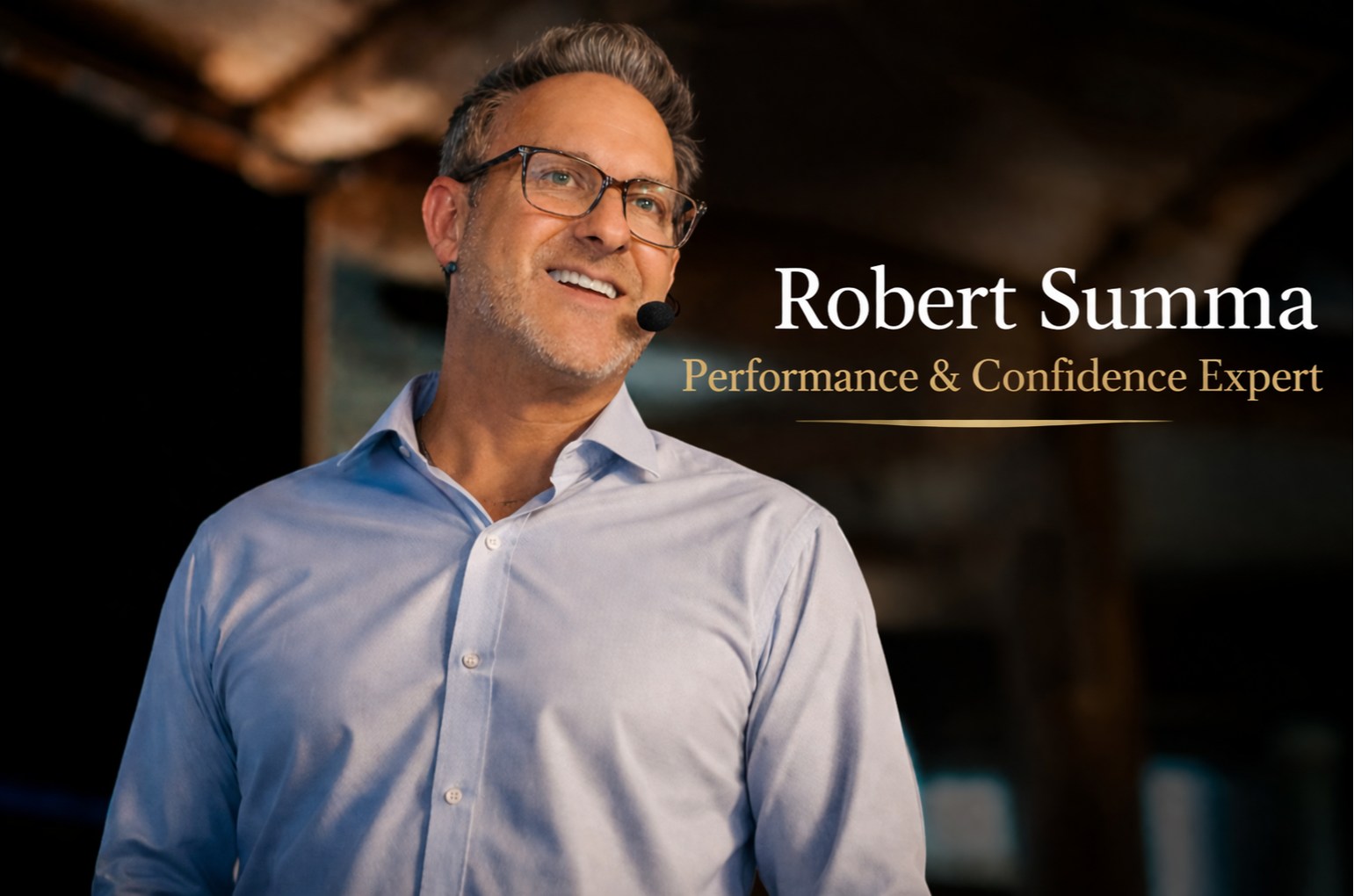
Public speaking phobia in attorneys is a clinical condition that exists independently of legal skill or courtroom experience. Many attorneys with strong analytical ability experience a genuine neurological fear response during oral argument, depositions, or hearings. Robert Summa, the only certified public speaking phobia specialist in the United States, has helped 750-plus professionals eliminate this response with a 99.6 percent success rate.
When Legal Skill and Speaking Fear Coexist
Attorneys spend years developing the ability to construct arguments, analyze evidence, anticipate objections, and reason under pressure. These are cognitive skills. Public speaking phobia is not a cognitive problem. It is a neurological one. The two coexist without contradiction: a highly skilled attorney can have a miscalibrated amygdala response to speaking in front of others, and that response fires regardless of how sound the argument is or how well the case is prepared.
The settings that trigger this for attorneys are specific. Oral arguments are a high-density version of public speaking: the audience is evaluative, the format is unpredictable because of judicial questions, and the stakes are explicit. Depositions involve a different kind of exposure: a confined room, a witness, opposing counsel watching, and a recorded proceeding. Client presentations in front of groups require the attorney to be the speaker rather than the counselor. Each of these formats triggers the phobia response in ways that legal preparation does not address.
I have worked with 750-plus executives and professionals as the only certified public speaking phobia specialist practicing in the United States. Attorneys come with a specific pattern: high competence in written work and one-on-one advocacy, combined with a fear response that fires in any group speaking context. The experience of knowing exactly what to say and being physiologically unable to deliver it smoothly is very common.
Why Legal Training Does Not Resolve This
Moot court, oral argument preparation, and courtroom practice build familiarity with the format but do not treat a phobia. The phobia does not respond to familiarity because it is not produced by unfamiliarity. It is produced by the amygdala's classification of the speaking situation as a threat. An attorney who has argued hundreds of motions can still experience the same intense fear response before the next one, because the mechanism producing the fear has not changed.
The Public Speaking Cure uses a CBT-based clinical approach that targets the phobia at its neurological source. When the amygdala no longer classifies oral argument or group presentations as a survival threat, the fear response stops firing. Legal skill becomes fully available in the room because nothing is suppressing it. The 99.6 percent success rate reflects permanent elimination of the phobia in clients who complete the program, typically in three to four weeks. The program is eligible for HSA and FSA coverage.

Frequently Asked Questions
Does public speaking phobia affect courtroom performance?
Yes. Attorneys with a speaking phobia often perform well in preparation but experience a physiological fear response when facing a judge, jury, or opposing counsel. This creates visible anxiety cues that undermine credibility, regardless of legal skill.
What makes public speaking phobia different from ordinary nervousness?
Public speaking phobia is a clinical anxiety disorder triggered specifically by the prospect of speaking before others. Unlike ordinary nervousness that fades once a speech begins, phobia produces a sustained threat response that worsens with exposure and does not improve through repetition alone.
Is public speaking phobia treatable without medication?
Yes. Robert Summa's methodology combines cognitive behavioral techniques with hypnotherapy-informed neurological reconditioning. Clients achieve lasting results without medication, typically within a structured four-session program.
How is Robert Summa qualified to treat public speaking phobia?
Robert Summa is the only certified public speaking phobia specialist practicing in the United States. He has worked with 750-plus executives and professionals and maintains a 99.6 percent success rate across his one-on-one coaching clients.
You Are Not Alone, and You Are Not Stuck With It
Robert Summa is the only certified public speaking phobia specialist in the United States. 750+ executives cured. 99.6% success rate. HSA and FSA eligible.
GET YOUR FEAR SCORE NOWRobert Summa is a certified public speaking phobia specialist, not a licensed therapist or psychologist. The Public Speaking Cure program is an educational and skills-based coaching program. Results vary by individual. The 99.6 percent success rate reflects outcomes reported by one-on-one coaching clients.