Public Speaking Phobia and Career Advancement
Public speaking phobia does not just create difficult moments. For professionals on a leadership track, it systematically redirects the career away from the rooms and visibility that advancement requires. The cost compounds silently over years.
GET YOUR FEAR SCORE NOW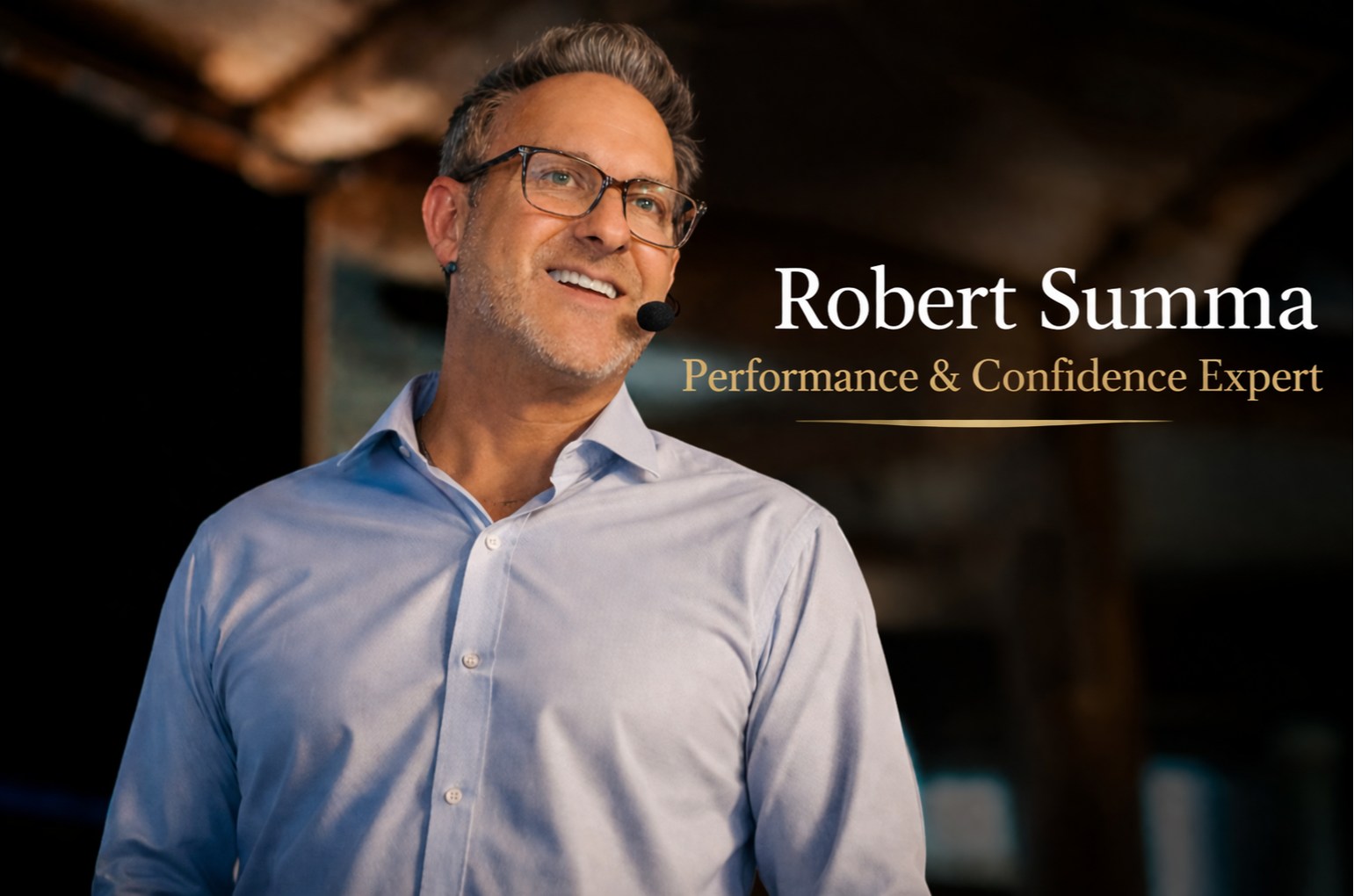
The relationship between public speaking phobia and career advancement is one of the most costly and least discussed consequences of the condition. Research on professional advancement consistently identifies visible communication ability as a significant predictor of leadership selection and promotion. For professionals whose public speaking phobia prevents them from demonstrating that ability, the cost is not just discomfort. It is a systematic ceiling on the careers they are able to build.
The Visibility Problem
Leadership in most organizations requires public visibility: presenting to boards, all-hands events, industry conferences, media appearances, and cross-functional briefings. These moments are when leadership candidates are evaluated and when reputations are built. A professional with public speaking phobia who avoids or visibly struggles in these moments is creating a perception problem that directly affects how they are assessed for advancement. The person doing the invisible work of strategy, client relationships, or team building may be more capable than the person who presents confidently at the all-hands, but the evaluators in the room are seeing the presentation, not the invisible work.
The Self-Selection Problem
Many professionals with public speaking phobia remove themselves from advancement consideration by declining roles, avoiding committees, or steering away from projects that require extensive public communication. This self-selection is often invisible to the organization, which interprets it as lack of ambition or interest rather than as the symptom of an unaddressed clinical condition. The cost is borne entirely by the individual, who is making rational choices given the phobia but who appears to be choosing not to advance. Robert Summa, the only certified public speaking phobia specialist practicing in the United States, has worked with 750-plus executives who recognized their own career trajectory in this pattern.
The Compounding Effect Over Time
Each year that public speaking phobia goes unresolved is a year during which the career cost compounds. Positions not pursued, promotions not received, leadership roles declined, and industry visibility not built represent an accumulating gap between the professional's actual capacity and the career they have constructed around managing the phobia. Executives who address the condition in their fifties often describe clearly what their trajectory might have looked like if they had resolved it in their thirties.
What Treatment Changes About Career Trajectory
Robert Summa's 99.6 percent success rate across more than 750 executive clients includes many for whom the primary motivation for seeking treatment was not comfort but career access. After treatment, the constraint on visibility, the self-selection out of roles, and the reputation gap all resolve, because the phobia that was producing them has resolved. The Fear Score assessment is the starting point for understanding whether public speaking phobia is the ceiling on your professional advancement.
About Robert Summa
Robert Summa is the only certified public speaking phobia specialist practicing in the United States.
He has worked with 750-plus executives, C-suite leaders, and professional athletes. His one-on-one coaching program carries a 99.6 percent success rate.
Your Next Step
Take the Fear Score Assessment
The Fear Score assessment identifies where your presentation anxiety falls on the clinical spectrum. Three minutes. No obligation. A clear starting point for understanding what you are dealing with.
GET YOUR FEAR SCORE NOWFrequently Asked Questions
How does public speaking phobia limit career advancement?
Public speaking phobia limits career advancement through a pattern of visible avoidance: declining high-stakes presentations, not volunteering for leadership-facing roles, and underperforming in the boardroom contexts where executive presence is assessed. Over time, colleagues who are less qualified but more comfortable in front of an audience advance past professionals whose phobia keeps them in the background.
What makes public speaking phobia different from ordinary nervousness?
Public speaking phobia is a clinical anxiety disorder triggered specifically by the prospect of speaking before others. Unlike ordinary nervousness that fades once a speech begins, phobia produces a sustained threat response that worsens with exposure and does not improve through repetition alone.
Is public speaking phobia treatable without medication?
Yes. Robert Summa's methodology combines cognitive behavioral techniques with hypnotherapy-informed neurological reconditioning. Clients achieve lasting results without medication, typically within a structured four-session program.
How is Robert Summa qualified to treat public speaking phobia?
Robert Summa is the only certified public speaking phobia specialist practicing in the United States. He has worked with 750-plus executives and professionals and maintains a 99.6 percent success rate across his one-on-one coaching clients.
You Are Not Alone, and You Are Not Stuck With It
Robert Summa is the only certified public speaking phobia specialist in the United States. 750+ executives cured. 99.6% success rate. HSA and FSA eligible.
GET YOUR FEAR SCORE NOWRobert Summa is a certified public speaking phobia specialist, not a licensed therapist or psychologist. The Public Speaking Cure program is an educational and skills-based coaching program. Results vary by individual. The 99.6 percent success rate reflects outcomes reported by one-on-one coaching clients.