Public Speaking Phobia and Agoraphobia: When the Fear Leaves the Room
When public speaking phobia generates anticipatory panic in everyday life, including driving to work, Sunday evenings, and waking at night, that is not a different problem. It is the same phobia at a higher intensity, and Robert Summa treats it with a 99.6% success rate.
GET YOUR FEAR SCORE NOW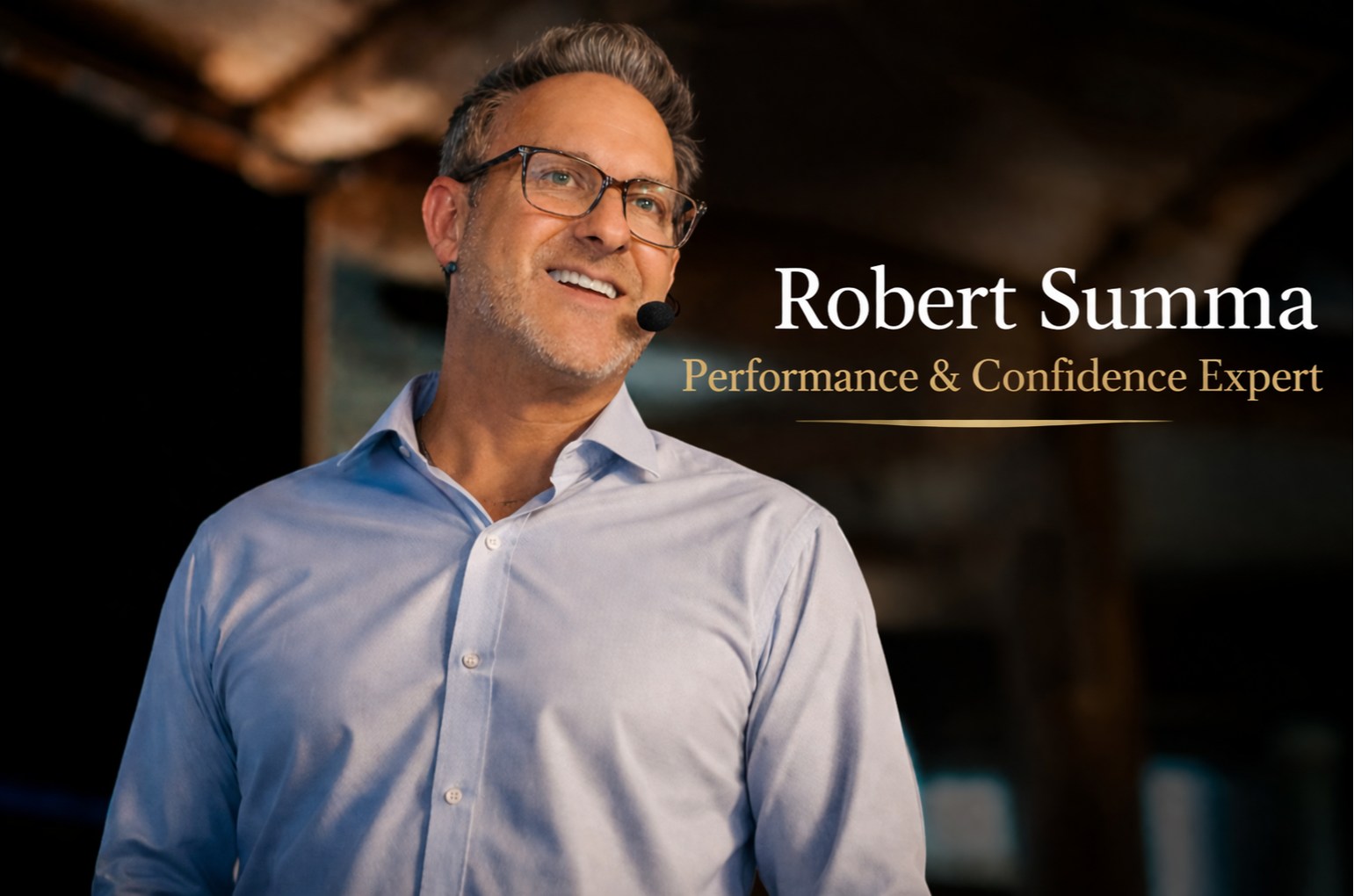
Agoraphobia is commonly understood as a fear of open spaces. In clinical practice it describes something more specific: a pattern where anxiety begins to anticipate anxiety-provoking situations, and the person starts organizing their life around avoidance. When the root situation is a public speaking phobia, the agoraphobic response can include panic before presentations, panic the night before, panic at the thought of an upcoming event, and eventually panic in situations that simply remind the brain a presentation might be approaching. Robert Summa treats this pattern at a 99.6 percent success rate.
What Agoraphobia Actually Means in a Clinical Context
The clinical definition of agoraphobia centers not on open spaces but on avoidance driven by anticipated anxiety. The person with agoraphobia is not afraid of the location. They are afraid of experiencing anxiety in that location with no available exit or safety. When a public speaking phobia has generalized sufficiently, the person may begin avoiding professional contexts, social environments, or any situation that could unexpectedly require them to speak. The avoidance is the agoraphobic pattern. The phobia is the root that is generating it.
How Public Speaking Phobia Produces an Agoraphobic Response
The pathway from specific phobia to agoraphobic pattern follows a predictable neurological sequence. The phobia encoding becomes deeply consolidated through years of avoidance and anxiety reinforcement. The brain's threat-detection field widens to include anticipatory signals, adjacent contexts, and any environment that carries association with the feared situation. The person begins making daily decisions, including which meetings to attend, which invitations to accept, which routes to take to work, based on the probability that the decision could lead to a speaking situation.
Why Most Clinicians Treat the Agoraphobia Rather Than the Root Phobia
When a person presents to a clinician with generalized avoidance and daily panic, the presenting symptoms look like agoraphobia or panic disorder. The public speaking root may not surface immediately because the client has been carrying the phobia in silence for years and may not identify it as the primary issue. Standard treatment for agoraphobia targets the avoidance behavior and the panic response directly. This can produce partial improvement. It does not touch the original phobia encoding that is generating the avoidance in the first place.
The Neurological Mechanism That Creates Panic Outside the Speaking Situation
The amygdala is an associative learning system. Once a threat is encoded, the amygdala begins associating that threat with surrounding contextual signals: the day of the week, the building, the calendar, the commute route, the people present. Over time these associated signals begin triggering threat activation independently of the original situation. This is how the person comes to feel panic on a Sunday evening with no presentation scheduled, or anxiety on a commute that has never itself been threatening. The associated context has inherited the threat response.
Why Eliminating the Root Phobia Resolves the Agoraphobic Pattern
Because the agoraphobic pattern is generated by the phobia encoding, resolving the encoding at the neurological level disrupts the entire pattern simultaneously. Clients who completed Robert Summa's program and had been experiencing generalized daily anxiety, avoidance behavior, and panic outside of speaking situations report that those secondary patterns resolved when the root phobia was eliminated. The contextual associations lost their threat charge because the original threat they were associated with no longer existed in the brain's threat map.
What Robert Summa Treats When Public Speaking Phobia Has Generalized
Robert Summa is the only certified public speaking phobia specialist in the United States. His program addresses the conditioned threat encoding at its neurological source. The agoraphobic presentation of a public speaking phobia, including daily avoidance, generalized panic, and life organized around minimizing speaking exposure, falls within the range of severity that his program treats. The 99.6 percent success rate reflects outcomes that include clients who arrived with these presentations fully intact.
About Robert Summa
Robert Summa is the only certified public speaking phobia specialist practicing in the United States. He has worked with 750-plus executives and holds a 99.6 percent success rate. His program is HSA and FSA eligible and delivered via one-on-one coaching.
Your Next Step
Find out whether your public speaking phobia has produced a generalized pattern and what it takes to resolve it at the root.
GET YOUR FEAR SCORE NOWFrequently Asked Questions
Can public speaking phobia produce an agoraphobic response?
Yes. When a public speaking phobia consolidates significantly, the person may begin organizing their life around avoidance of any context that could lead to speaking. This pattern of anticipatory avoidance is the defining feature of agoraphobia. The phobia is the root; the agoraphobic response is generated from it.
What is the connection between public speaking phobia and agoraphobia?
Both involve anticipatory anxiety and avoidance organized around feared situations. When the feared situation is public speaking, the agoraphobic response manifests as avoidance of professional contexts, social environments, and any setting where speaking might unexpectedly be required, not just the podium itself.
Why doesn't treating agoraphobia resolve the underlying phobia?
Agoraphobia treatment targets avoidance behavior and the panic response. It does not address the original phobia encoding generating those behaviors. As long as the phobia encoding is intact, the agoraphobic pattern has a continuing source and will persist even if individual panic episodes are managed.
If I treat my public speaking phobia, will the agoraphobic pattern resolve?
In the cases Robert Summa has treated, yes. Because the agoraphobic pattern is generated by the phobia encoding, resolving the encoding disrupts the entire pattern simultaneously. Clients report that the avoidance and daily anxiety resolved when the root phobia was eliminated.
How does Robert Summa treat phobia that has produced an agoraphobic pattern?
Robert Summa is the only certified public speaking phobia specialist in the United States with a 99.6 percent success rate. His program addresses the phobia at its neurological root. When the root encoding is resolved, the secondary agoraphobic pattern it was generating typically resolves alongside it.
Choose the Specialist Built for This Exact Problem
Robert Summa is the only certified public speaking phobia specialist in the United States. 750-plus executives served. 99.6 percent success rate. HSA and FSA eligible.
GET YOUR FEAR SCORE NOWRobert Summa is a certified public speaking phobia specialist, not a licensed therapist or psychologist. The Public Speaking Cure program is an educational and skills-based coaching program. Results vary by individual. The 99.6 percent success rate reflects outcomes reported by one-on-one coaching clients.