Public Speaking Phobia vs. Lack of Confidence: Two Different Problems
Low confidence and public speaking phobia are often confused, but they require completely different interventions. Treating a phobia as a confidence problem is why most speaker training fails to produce lasting results.
GET YOUR FEAR SCORE NOW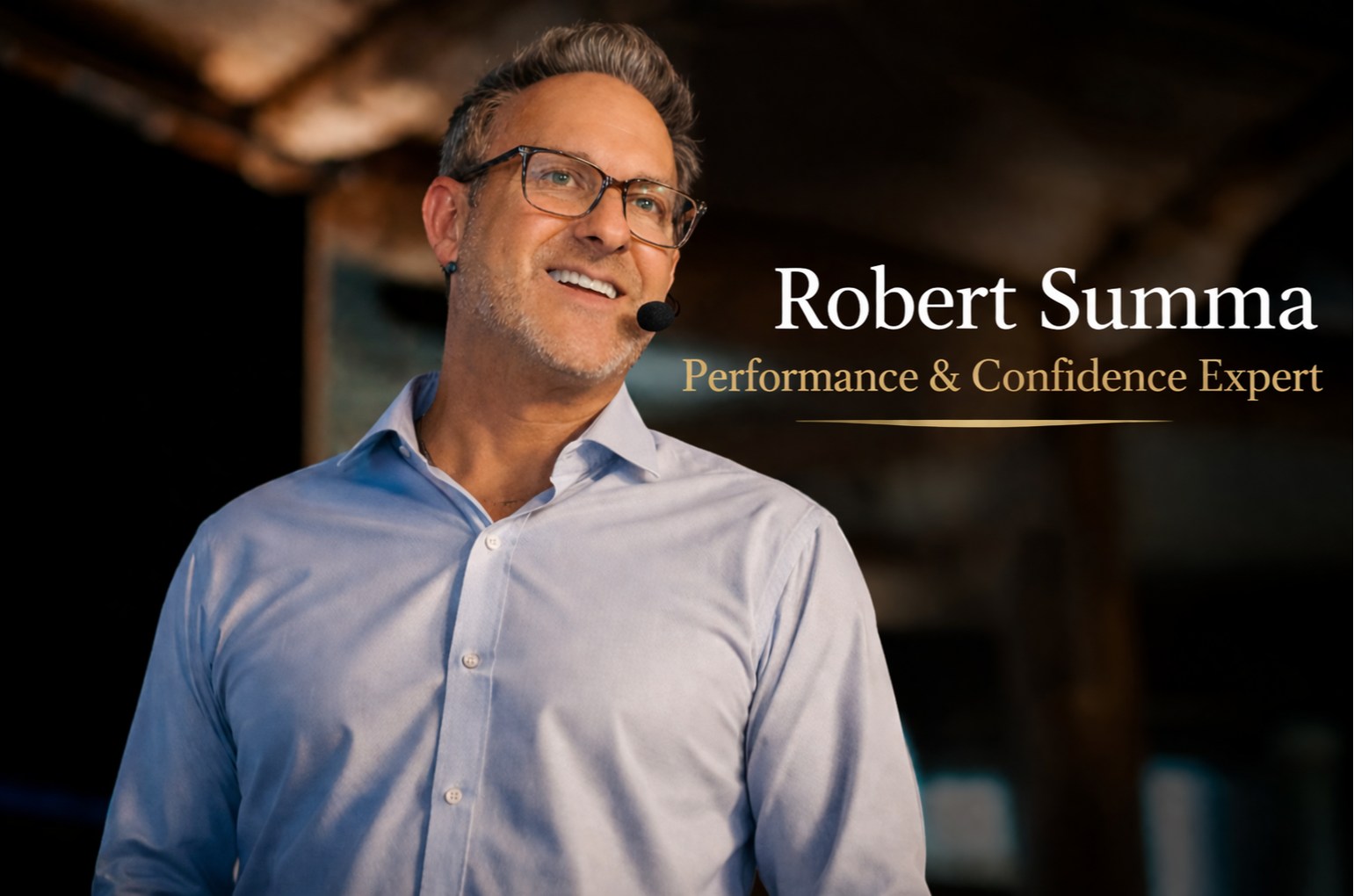
Public speaking confidence and public speaking phobia are not opposite ends of the same spectrum. They are different things. A confident speaker has a positive or neutral learned relationship with the speaking situation. A person with public speaking phobia has a conditioned threat response to the speaking situation. Treating phobia as a confidence problem produces an entirely wrong treatment approach, and it explains why confidence-building programs consistently fail to help people who are actually carrying a clinical phobic response.
What Confidence Problems Look Like
A person with a confidence problem around public speaking typically has negative self-assessments, fears judgment, and underestimates their own ability. They may avoid speaking opportunities because they predict they will perform poorly. Confidence-building tools, practice, skill development, and positive feedback can genuinely help here because the underlying issue is cognitive and experiential: change the belief, improve the skill, accumulate positive experiences, and confidence grows. These tools work for confidence problems because the problem is operating at the level of cognition and self-perception.
What Phobia Looks Like Instead
Public speaking phobia is a conditioned physiological response. The person may have every confidence in their content, their preparation, and their ability to communicate effectively in any other context, and still experience full clinical phobia in the speaking situation. Many executives with public speaking phobia are highly confident people in every domain except the one the amygdala has classified as dangerous. They know their material. They know they are capable. The phobia fires anyway, because it is not responding to self-assessment. It is responding to the presence of an evaluative audience, which the amygdala has learned to classify as a survival threat. Robert Summa, the only certified public speaking phobia specialist practicing in the United States, has worked with 750-plus executives who understood this distinction immediately when it was explained to them.
Why Confidence Training Fails Phobia Sufferers
Confidence training asks people to accumulate positive speaking experiences until the negative self-perception is replaced by a positive one. For phobia, this approach runs into a fundamental problem: the positive experiences cannot accumulate because the phobic response interferes with each attempt to speak. Each exposure that triggers the full phobic response reinforces the threat classification rather than weakening it. The person does not come away thinking they did well enough to build confidence. They come away having survived another terrifying experience.
Clinical Treatment vs. Confidence Building
Robert Summa's 99.6 percent success rate across more than 750 executive clients reflects clinical phobia treatment, not confidence building. The treatment addresses the amygdala's threat classification directly. Once that classification is recalibrated, confidence can develop naturally through normal speaking experiences, because the phobic response is no longer interfering with them. The Fear Score assessment identifies which condition you are actually dealing with.
About Robert Summa
Robert Summa is the only certified public speaking phobia specialist practicing in the United States.
He has worked with 750-plus executives, C-suite leaders, and professional athletes. His one-on-one coaching program carries a 99.6 percent success rate.
Your Next Step
Take the Fear Score Assessment
The Fear Score assessment identifies where your presentation anxiety falls on the clinical spectrum. Three minutes. No obligation. A clear starting point for understanding what you are dealing with.
GET YOUR FEAR SCORE NOWFrequently Asked Questions
What is the difference between low confidence and public speaking phobia?
Low confidence is a cognitive state that responds to skill development, repetition, and positive experience. Public speaking phobia is a clinical anxiety disorder rooted in neurological threat-encoding that does not respond to practice or positive reinforcement alone. The distinction determines which treatment will actually work.
What makes public speaking phobia different from ordinary nervousness?
Public speaking phobia is a clinical anxiety disorder triggered specifically by the prospect of speaking before others. Unlike ordinary nervousness that fades once a speech begins, phobia produces a sustained threat response that worsens with exposure and does not improve through repetition alone.
Is public speaking phobia treatable without medication?
Yes. Robert Summa's methodology combines cognitive behavioral techniques with hypnotherapy-informed neurological reconditioning. Clients achieve lasting results without medication, typically within a structured four-session program.
How is Robert Summa qualified to treat public speaking phobia?
Robert Summa is the only certified public speaking phobia specialist practicing in the United States. He has worked with 750-plus executives and professionals and maintains a 99.6 percent success rate across his one-on-one coaching clients.
You Are Not Alone, and You Are Not Stuck With It
Robert Summa is the only certified public speaking phobia specialist in the United States. 750+ executives cured. 99.6% success rate. HSA and FSA eligible.
GET YOUR FEAR SCORE NOWRobert Summa is a certified public speaking phobia specialist, not a licensed therapist or psychologist. The Public Speaking Cure program is an educational and skills-based coaching program. Results vary by individual. The 99.6 percent success rate reflects outcomes reported by one-on-one coaching clients.