Public Speaking Coach vs. Phobia Specialist: Why the Difference Matters
If you have worked with a public speaking coach and still freeze when it counts, you did not fail at coaching. You had the wrong solution to the right problem.
Most executives who come to me have already worked with a public speaking coach. Some had multiple coaches over many years. They learned to project their voice, control their pacing, structure their message. The coaching was solid. The phobia was completely untouched.
That is not a failure of coaching. That is a mismatch of solution to problem.
A public speaking coach and a public speaking phobia specialist are not two versions of the same thing. They have different goals, different methods, and different definitions of success. If you hire the wrong one, you work hard and get better at the wrong thing.
What a Public Speaking Coach Does
A public speaking coach focuses on performance. They help you become a clearer, more compelling communicator. They work on delivery mechanics: pace, pause, body language, eye contact, slide structure, storytelling, vocal presence. They help you learn to command a room.
This is genuinely valuable work. If your challenge is that you are not yet a polished presenter, a good coach can accelerate your development significantly.
What coaching cannot do is address a neurological condition. And public speaking phobia is exactly that.
What a Phobia Specialist Does
A phobia specialist works on a completely different layer. The goal is not to improve your performance. The goal is to eliminate the threat response that is sabotaging your performance.
Public speaking phobia is driven by the amygdala, which has classified speaking in front of others as a life-threatening event. When that alarm fires, the prefrontal cortex essentially goes offline. You lose access to your preparation, your language, your composure. No amount of coaching reaches the amygdala. A coach can only work with what remains after the amygdala has already fired.
A phobia specialist uses clinical tools, specifically CBT-based techniques, to retrain the amygdala's threat classification directly. The result is not better coping. It is the elimination of the threat response itself.
How to Know Which One You Need
The distinction is not about severity. It is about the pattern.
If your nervousness shows up early, peaks at the start of a presentation, and then settles as you get into your material, you likely have situational nervousness. A coach is a reasonable starting point.
If your anxiety builds for days or weeks before a speaking event, if preparation does not reduce the dread, if you freeze despite knowing your material cold, and if the pattern repeats across years regardless of experience, that is phobia. A coach will not resolve it.
The gap between your competence and your performance is the clearest signal. Highly skilled communicators who freeze in front of groups do not have a skill problem.
Why Coaching Can Actually Make It Worse
For someone with genuine phobia, working harder at delivery skills can reinforce the problem. Every coaching session that requires performance while the amygdala is firing sends a signal that the speaking situation is something to survive and manage. That is the opposite of what phobia treatment does.
Most coaches are not trained to identify phobia. They see anxiety and respond with the tools they have, which are skill tools. Those tools are not designed for this situation.
What I Do
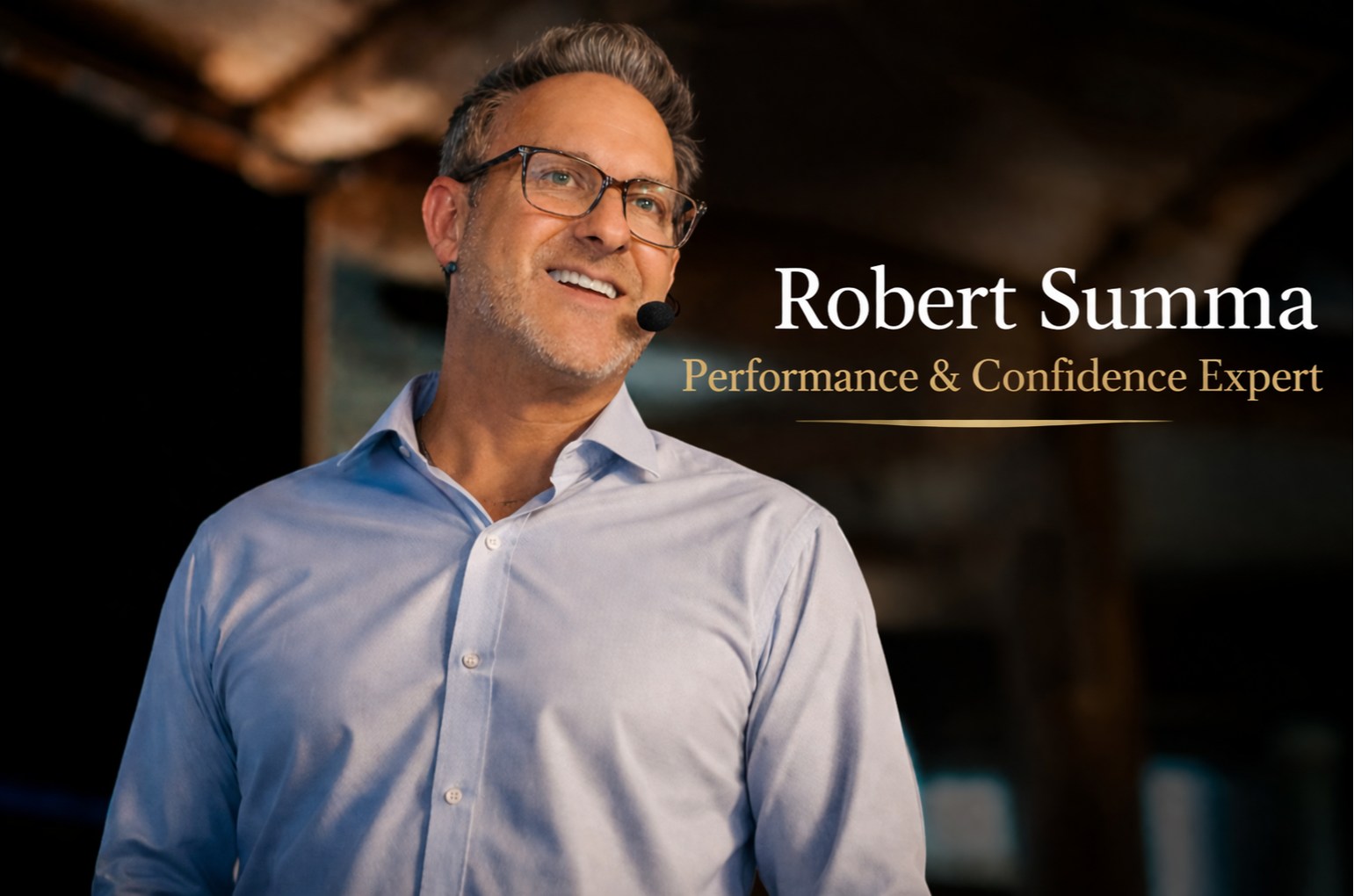
I am not a public speaking coach. I am the only certified public speaking phobia and anxiety expert currently practicing in the United States. My program uses CBT-based phobia treatment to permanently eliminate the amygdala's threat response, in three to four weeks.
More than 750 executives have completed the program. The success rate is 99.2 percent. The program is HSA and FSA eligible under IRS Code 502.
If you have tried coaching and found the phobia still intact when it counts, you did not fail at coaching. You just had the wrong solution for the actual problem. I would be glad to talk about what would work.
Not Sure If You Have a Fear or a Phobia?
Take the free quiz first. Find out exactly where you stand before booking anything.
GET YOUR FEAR SCORE NOWFrequently Asked Questions
Q: What is the difference between a public speaking coach and a phobia specialist?
A public speaking coach focuses on performance skills. A phobia specialist addresses the neurological root of fear through CBT-based clinical techniques. They serve entirely different problems.
Q: Can a public speaking coach cure public speaking phobia?
No. Public speaking phobia is a neurological condition. A coach works on skills and delivery. The amygdala does not respond to skill-building. A phobia specialist uses clinical tools to retrain the threat response directly.
Q: How do I know if I need a coach or a phobia specialist?
If dread builds for days before an event, preparation does not reduce it, you freeze despite knowing your material, and the pattern persists across years, you have phobia. A phobia specialist is what you need.
Q: Why did working with a public speaking coach not help my anxiety?
Because coaching addresses skills, not phobia. If the amygdala classifies speaking as a threat, no amount of delivery improvement will change that. Most coaches are not trained to identify or treat neurological phobia.
Q: What does a public speaking phobia specialist do?
A phobia specialist uses CBT-based techniques to retrain the amygdala's threat classification permanently. Robert Summa's program eliminates the phobia in three to four weeks, with a 99.2 percent success rate. HSA and FSA eligible under IRS Code 502.
The Only Specialist of His Kind in the United States
Robert Summa has helped 750-plus executives eliminate public speaking phobia permanently. Take the quiz to see if you qualify.
GET YOUR FEAR SCORE NOWReady to Work with the Right Specialist?
Robert Summa is the only certified public speaking phobia and anxiety expert currently practicing in the United States. Take the quiz, then book a call to talk about your specific situation.
GET YOUR FEAR SCORE NOW