Propranolol for Public Speaking Fear: What It Does and What It Misses
A beta blocker can steady your hands before you walk on stage. It was never built to touch the alarm that started shaking them.
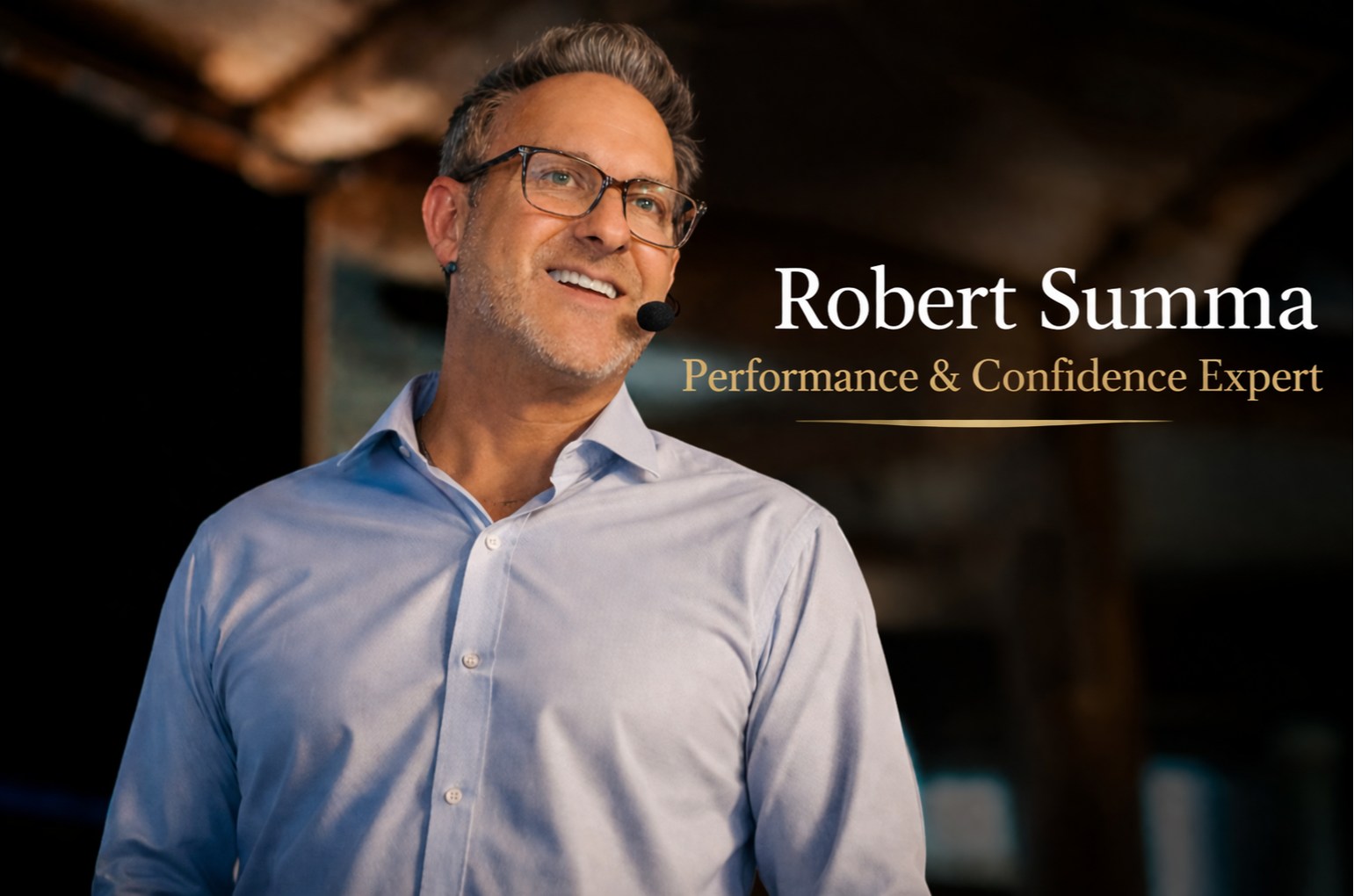
Propranolol blunts the physical symptoms of speaking anxiety but leaves the underlying phobia untouched. The fear returns at the next presentation. Robert Summa, the only certified public speaking phobia specialist in the United States, has helped 750-plus executives eliminate the root cause with a 99.6 percent success rate.
Propranolol has been prescribed off-label for performance anxiety for decades, and for some people it genuinely helps. Those people, however, are dealing with ordinary performance nerves, not a phobia. If you have true public speaking phobia, the propranolol experience plays out very differently than you might expect.
What Propranolol Actually Does
Propranolol is a beta blocker, originally developed as a blood pressure medication. It works on your cardiovascular system. It can slow your heart rate and reduce some of the outward physical signs of anxiety, like visible hand trembling. For someone with mild nervousness, those effects can be just enough to get through a presentation more comfortably.
But propranolol does not reach the amygdala. And in public speaking phobia, the amygdala is the entire problem.
Why the Amygdala Does Not Care About Beta Blockers
When you have a phobia, your amygdala has been conditioned to treat public speaking as a genuine survival threat. The moment you walk into a room where you are expected to speak, the amygdala sounds the alarm. This is not a metaphor. It is a measurable neurological event that triggers a cascade of responses throughout your body and brain. Propranolol can blunt the heart rate component of that response, because that is what beta blockers do to the cardiovascular system. But the alarm itself, the amygdala signal driving everything, keeps firing.
What follows is what clinicians call the amygdala hijack. Your thinking brain, the prefrontal cortex, gets partially shut down as the amygdala takes control and switches you into reactive survival mode. This is where the brain freeze comes from. This is why you can know your material completely and still have the words disappear the moment you stand up. Propranolol does not prevent that shutdown because the hijack is neurological, not cardiovascular.
What Still Happens Even With Propranolol on Board
Robert Summa has worked exclusively with public speaking phobia for over eighteen years. More than nine out of ten of his 750-plus clients had already tried propranolol before reaching Public Speaking Cure. Many had combined it with Xanax, taking both at the same time before the highest-stakes presentations of their careers. Robert did this himself. He knows what it feels like to walk into a room with both medications on board and still feel the full wave of panic arrive.
Here is what still happens even when propranolol is working as intended. Your heart still pounds, just a bit less. Your hands still shake. Your voice still quivers. You are still sweating. And, critically, you still experience the brain freeze that defines public speaking phobia, because the amygdala hijack is still occurring. Your thinking brain is still going offline. The internal panic is still fully there. The medication touched the blood pressure component and nothing else.
This is what nine out of ten of Robert's clients describe. The medication did something around the edges. The heart pounded slightly less. But the phobia, the full internal experience of panic and brain freeze and the sense that everything is collapsing, remained completely intact.
Who Propranolol Actually Helps
This is not an argument against propranolol as a medication. For blood pressure and for ordinary performance nervousness, it does what it was designed to do. The people who benefit most from it for public speaking are those who do not have a phobia. They have ordinary nervousness that practice and preparation reduce over time. Propranolol smooths the remaining cardiovascular edge and they get through it. That is a fundamentally different problem requiring a different solution.
The clearest sign that you are dealing with phobia rather than ordinary anxiety is this: if practice and experience have not reduced your fear response over time, you have a phobia. If you have given hundreds of presentations across a career and the same panic still arrives every time, that is not a gap in your preparation. That is a conditioned amygdala doing exactly what conditioned amygdalas do.
What Actually Reaches the Root Cause
Public speaking phobia is a specific phobia under DSM-5 criteria. It is treatable. Robert Summa's program at Public Speaking Cure eliminates the conditioned amygdala response in three to four weeks using cognitive behavioral therapy and specialized phobia reconditioning. The goal is not to suppress the symptoms while the fear stays underneath. It is to permanently retrain the amygdala so that public speaking no longer triggers the survival response.
More than 750 clients have completed the program with a 99.2 percent success rate. The program is HSA and FSA eligible. If you have tried propranolol and found it did not help, or did not help nearly enough, you are not resistant to treatment. You are dealing with something the medication was never built to touch.
Propranolol Manages Symptoms. This Treatment Eliminates the Cause.
Robert Summa is the only certified public speaking phobia specialist in the US. 750+ clients. 99.2% success rate. HSA and FSA eligible.
GET YOUR FEAR SCORE NOWFrequently Asked Questions
Does propranolol help with public speaking phobia?
For true public speaking phobia, propranolol provides minimal relief at best. It can reduce heart rate slightly, but it does not reach the amygdala driving the phobia. Nine out of ten of Robert Summa's clients had already tried it before reaching Public Speaking Cure. Most report that the internal panic response, including brain freeze and voice shaking, remained fully intact even with the medication on board.
Why do I still panic even when taking propranolol?
Because propranolol works on your cardiovascular system and does not affect the amygdala. In public speaking phobia, the amygdala fires regardless of what medication is in your bloodstream, triggering the amygdala hijack that shuts down your thinking brain and causes brain freeze, voice shaking, and internal panic. Propranolol can reduce the heart rate component of that response, but the amygdala signal and everything it drives, including the hijack, continues.
What is the amygdala hijack?
The amygdala hijack is what happens when your amygdala detects a threat and partially shuts down the prefrontal cortex, the thinking brain, switching control to the brain's reactive survival mode. For public speaking phobia, this produces brain freeze, the inability to access material you know completely, and the full-body panic response. It is a neurological process that beta blockers cannot prevent.
Who does propranolol actually help for public speaking?
Propranolol can help people with ordinary performance nerves who do not have a clinical phobia. If practice and experience have reduced your fear over time, propranolol may smooth the remaining cardiovascular symptoms. If your fear has not reduced with experience and repetition, that pattern points to a phobia, and propranolol is addressing the wrong problem entirely.
What actually treats public speaking phobia?
Clinical treatment that directly targets the amygdala's conditioned fear response. Robert Summa's program at Public Speaking Cure uses cognitive behavioral therapy and specialized phobia reconditioning to permanently eliminate the phobia response in three to four weeks. The program has a 99.2 percent success rate across 750-plus clients and is HSA and FSA eligible.
Find Out If You Have a Phobia or Just Anxiety
Take Robert Summa's free assessment. 750+ clients eliminated their public speaking phobia in 3 to 4 weeks without medication.
GET YOUR FEAR SCORE NOWRobert Summa is the only certified public speaking phobia specialist in the United States. Public Speaking Cure serves executives, attorneys, medical professionals, and senior leaders nationwide. Treatment is HSA and FSA eligible.