NLP for Public Speaking Phobia: What the Evidence Says
You tried NLP and it did not hold under real pressure. Here is why, and what actually retrains the brain's alarm response instead.
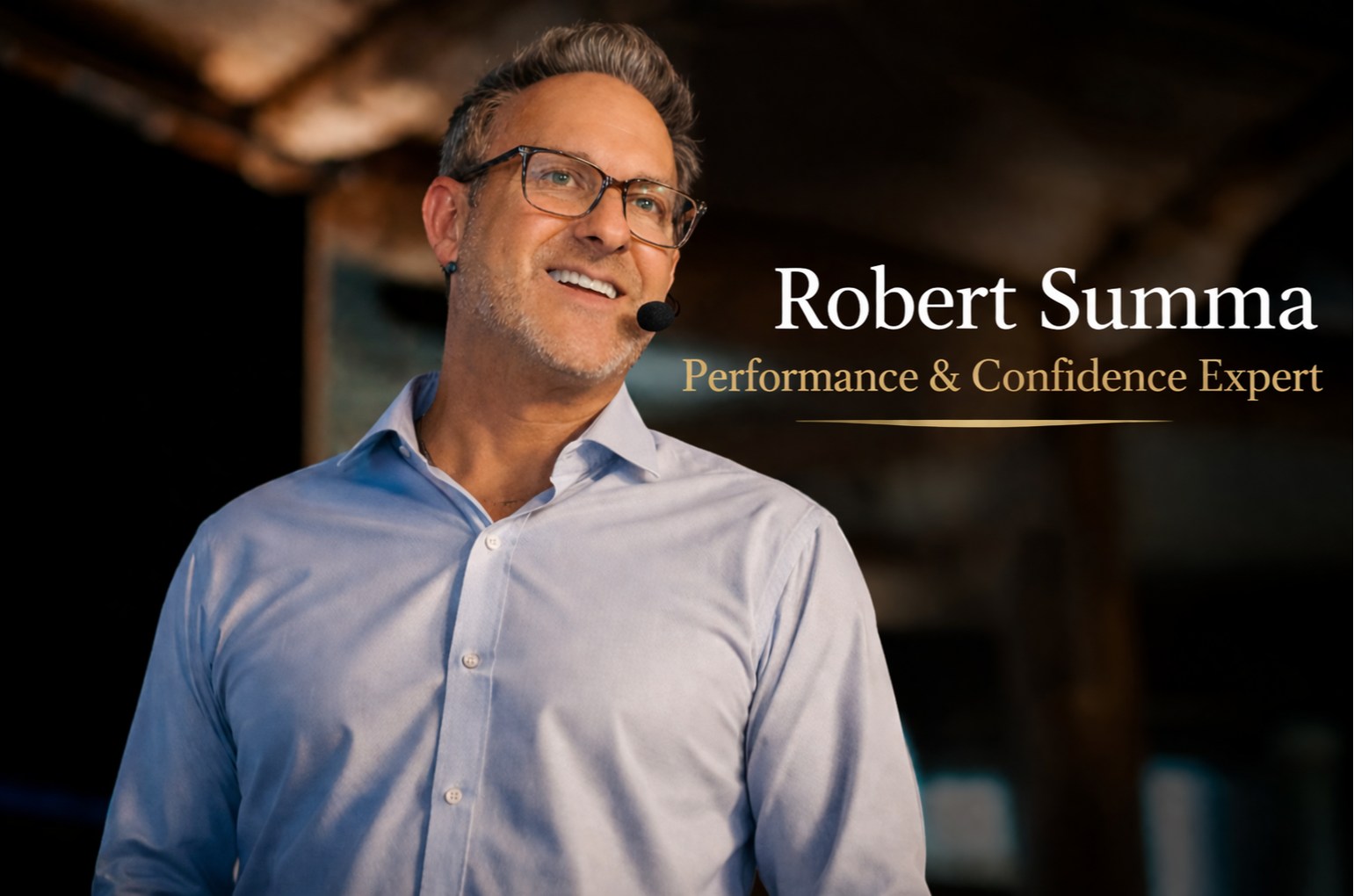
NLP techniques lack clinical validation for treating public speaking phobia and typically produce temporary relief at best. Phobias require structured neurological desensitization, not reframing exercises. Robert Summa, the only certified public speaking phobia specialist in the United States, delivers a 99.6 percent success rate across 750-plus executive clients.
You tried NLP. Maybe more than once. Someone told you it would rewire how your brain responds to a room full of people, and for a few days after the session you almost believed it. Then the next quarterly review came around, and the same tightness showed up in your chest before you had said a word. If that sounds familiar, you are not doing it wrong. NLP was never built for what you are actually dealing with.
You are not alone in this, even if it feels that way at 2 a.m. before a board presentation. Plenty of capable people have sat across from me convinced they were the only ones who could run a division but not run a slide deck without their hands shaking. The techniques they had tried, NLP included, treated the symptom instead of the source.
What NLP Actually Claims to Do
Neuro-linguistic programming asks you to change your internal language and mental imagery so your brain associates public speaking with something other than danger. Swap out the mental movie of freezing at the podium for one where you are calm and in command. Anchor a feeling of confidence to a physical gesture. In theory, you retrain the association.
It is a reasonable idea for stage fright. It falls apart when the problem is not stage fright at all.
Fear and Phobia Are Not the Same Problem
Fear of public speaking is common, and it often responds to preparation, reframing, and repetition. A phobia is different. It is a fixed, involuntary alarm response that fires whether you are prepared or not, whether you rehearsed for weeks or walked in cold. I have worked with executives who could recite their own earnings report from memory and still felt their throat close the moment they stood up. That is not a confidence problem you can visualize your way out of. That is a phobia.
Why NLP Cannot Reach It
NLP works with the parts of your brain involved in language, imagery, and conscious association, mostly the prefrontal cortex. That is the same territory as coaching, rehearsal, and mindset work. All of it is useful for skill and delivery. None of it touches the amygdala, which is the part of your brain actually responsible for the phobic response.
When the amygdala fires, it sounds a survival alarm and effectively shuts down access to the prefrontal cortex. That is why smart, prepared, articulate people go blank, or feel their hands shake, or hear their voice crack, the moment real fear kicks in. You cannot talk your way past a shutdown using the exact part of the brain that just got shut down. It is not a mindset gap. It is a wiring problem, and it needs a different kind of intervention.
What Actually Resolves a Phobia
I am the only certified public speaking phobia and anxiety expert currently practicing in the United States. My work is CBT-based and built specifically to retrain the amygdala's alarm response, not to reframe your thinking about public speaking. That distinction matters. It is the difference between managing a fear and eliminating a phobia.
Over 750 clients have gone through this process, with a 99.2 percent success rate. Most complete it in three to four weeks. Right now there is roughly a four week waitlist, which tells you something about how many executives are quietly dealing with this and finally deciding to fix it instead of work around it.
About 85 percent of the people I work with sit at VP through C-suite and board level. I have also worked with professional athletes, coaches, politicians, authors, and entrepreneurs who all faced the same wall: prepared everywhere else in their lives, blindsided by a nervous system that would not cooperate on stage.
Treatment is HSA and FSA eligible under IRS Code 502, which surprises a lot of people who assumed this kind of work would not qualify.
What This Looks Like Once the Amygdala Is Retrained
Clients do not walk away with a new script or a better breathing trick. They walk away with a nervous system that no longer sounds the alarm. The prefrontal cortex, the part that handles your words, your memory, your composure, stays online because nothing shut it down in the first place. That is the whole shift. Not more preparation. A different relationship between your brain and the room.
This is also why the work moves fast compared to what most people expect. There is no year of gradual exposure, no stack of worksheets, no homework you quietly stop doing after week two. The process targets the specific mechanism causing the shutdown, so the change holds up under real pressure, not just in a practice room with no stakes attached.
If you have tried NLP, or coaching, or a dozen videos on breathing techniques, and you are still bracing before every presentation, the issue was never your effort. It was the target. Fix the amygdala, and the rest tends to take care of itself.
I would be glad to talk.
NLP Has Its Limits. Clinical Phobia Treatment Does Not.
Robert Summa is the only certified public speaking phobia specialist in the US. 750+ clients. 99.2% success rate. HSA and FSA eligible.
GET YOUR FEAR SCORE NOWFrequently Asked Questions
Q: Does NLP work for public speaking phobia?
NLP can help some people manage everyday stage fright by changing conscious associations, but it does not resolve a true phobia. A phobia is driven by the amygdala's automatic alarm response, and NLP techniques work through the prefrontal cortex, a different part of the brain entirely. For a genuine phobia, the alarm response itself needs to be retrained.
Q: What is the difference between stage fright and a public speaking phobia?
Stage fright is a normal fear that usually eases with preparation and experience. A public speaking phobia is an involuntary, fixed alarm reaction that fires regardless of how prepared you are. If you have rehearsed extensively and still freeze, go blank, or shake, that points to a phobia rather than simple nerves.
Q: Why do smart, prepared executives still freeze when speaking?
Because the phobic response comes from the amygdala, not from a lack of knowledge or skill. When the amygdala sounds its alarm, it can shut down access to the prefrontal cortex, the part of the brain responsible for language, memory recall, and composed delivery. That is why intelligence and preparation do not protect against it.
Q: How long does treatment for public speaking phobia take?
Most clients complete the process in three to four weeks. It is a CBT-based approach aimed directly at the amygdala's alarm response, not general coaching or rehearsal, which is why results tend to come faster than traditional public speaking training.
Q: Is public speaking phobia treatment covered by HSA or FSA?
Yes. Treatment is eligible for HSA and FSA reimbursement under IRS Code 502. Many clients are surprised to learn this, since they assume phobia treatment falls outside what these accounts typically cover.
Find Out If You Have a Phobia or Just Anxiety
Take Robert Summa's free assessment. 750+ clients have permanently eliminated their public speaking phobia in 3 to 4 weeks.
GET YOUR FEAR SCORE NOWRobert Summa is the only certified public speaking phobia specialist in the United States. Public Speaking Cure serves executives, attorneys, medical professionals, and senior leaders nationwide. Treatment is HSA and FSA eligible.