Mindfulness and Meditation for Public Speaking Fear
You have meditated before every big presentation for months. Your voice still shakes anyway. Here is why, and what actually works instead.
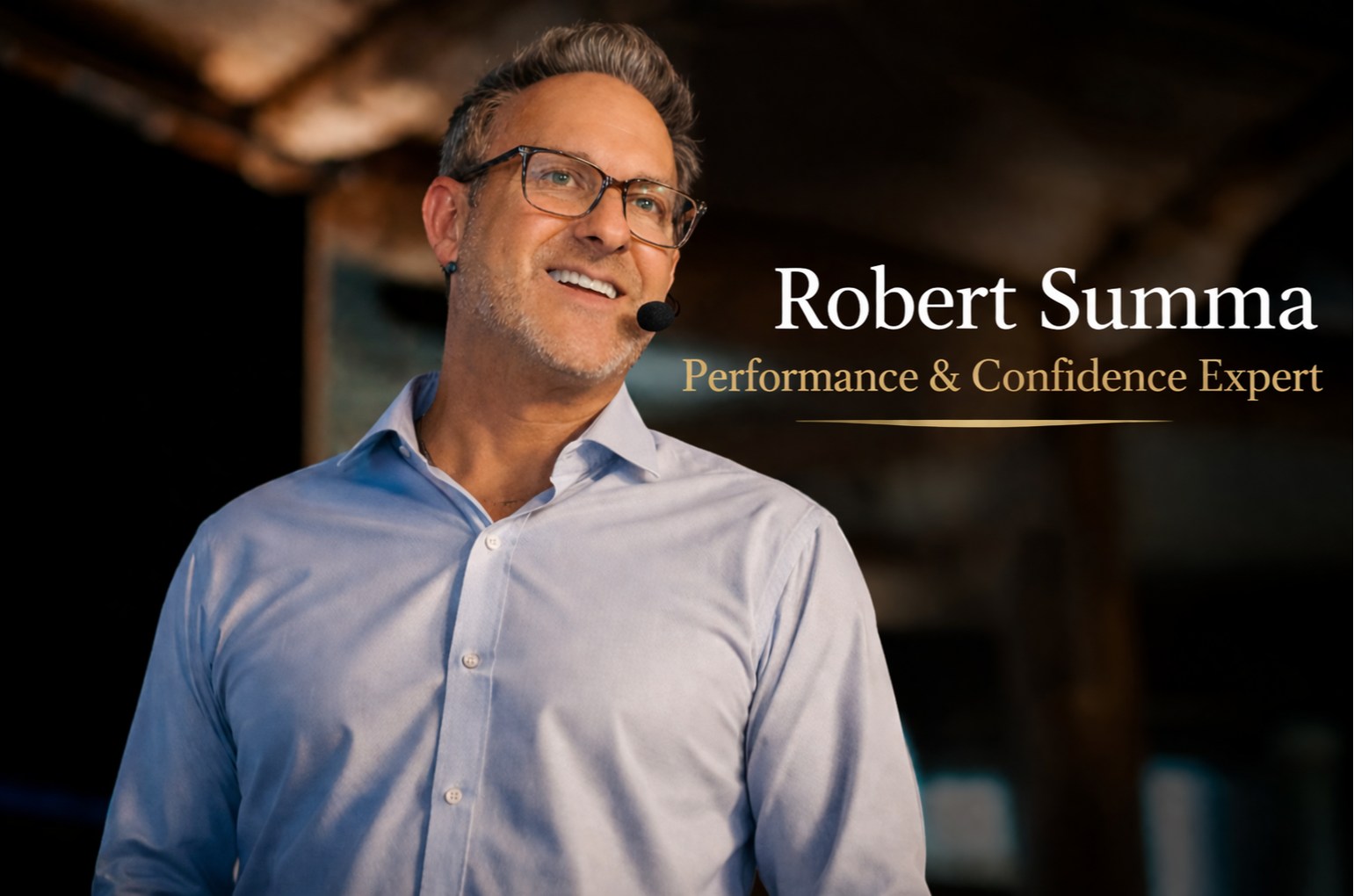
Mindfulness can reduce general anxiety but does not eliminate public speaking phobia. It works on the prefrontal cortex, the part of the brain that manages conscious thought. A phobia lives in the amygdala, which does not respond to mindfulness techniques. Clinical phobia reconditioning is required. Robert Summa, the only certified public speaking phobia specialist in the United States, has achieved a 99.6 percent success rate with 750-plus executives.
You have done the breathing app. You have sat in the car in the parking garage before the board meeting with your eyes closed, trying to talk your nervous system into calm. You have used the meditation program your executive coach recommended every morning for a month. And then you walked into the room and your voice still shook anyway.
If that is you, you are not doing mindfulness wrong. You are using the right tool on the wrong problem.
Why Mindfulness Feels Like the Obvious Answer
Mindfulness is one of the most well researched tools we have for managing everyday stress. It slows the mind down, builds awareness of thought patterns, and gives you a way to observe anxious thinking instead of getting swept up in it. For general work stress, decision fatigue, or the low hum of anxiety that follows a demanding job, it genuinely helps. That is exactly why so many executives reach for it first when public speaking starts to feel unmanageable. It is private. It is evidence based. It does not require admitting anything to anyone.
Fear and Phobia Are Not the Same Thing
Here is the distinction that changes everything. Fear is a proportionate response to a real, situational stressor, a big presentation, an unfamiliar audience, high stakes. Fear responds to preparation. It responds to experience. Phobia is different. A public speaking phobia is a fixed, automatic alarm response that fires regardless of how prepared you are, how many times you have done this before, or how much you know the material. Twenty years of experience and a room full of people who respect you does not matter to a phobic response. The alarm goes off anyway.
What Mindfulness Actually Trains
Mindfulness strengthens the prefrontal cortex, the part of your brain responsible for planning, reasoning, and regulating attention. That is genuinely useful for everyday stress management. The problem is what happens the moment a true phobic response fires. The amygdala, a small almond shaped structure deep in the brain, sounds a survival alarm. When that alarm goes off, the brain reduces access to the prefrontal cortex on purpose. That is not a flaw in your training. That is the nervous system doing exactly what it evolved to do when it believes you are under threat.
The Amygdala Does Not Care About Your Meditation Practice
This is why so many capable, accomplished people meditate faithfully and still freeze at the podium. Every tool built around calm reflection, breathing, visualization, positive self talk, works through the prefrontal cortex. But the prefrontal cortex is precisely the part of the brain that goes quiet during a phobic response. You cannot think your way out of an alarm that has already shut off the part of your brain responsible for thinking. This is not a motivation problem or a discipline problem. It is a wiring problem, and it needs a different kind of intervention.
Treating the Alarm Instead of Managing Around It
I am the only certified public speaking phobia and anxiety expert currently practicing in the United States, and the work I do is not coaching. It does not teach you new speaking skills, and it is not another layer of preparation. It is CBT based treatment built specifically to retrain the amygdala's threat response, so the alarm stops firing in the first place. Most clients complete the process in three to four weeks. I have worked with more than 750 clients, and 99.6 percent of them eliminate the phobia response entirely.
Who This Work Is Built For
About 85 percent of my clients are vice presidents through C-suite executives and board members, people who have built careers on being sharp, prepared, and in command of a room, until the moment they have to stand up and speak. I also work with athletes, coaches, politicians, authors, and entrepreneurs, anyone whose career depends on being able to speak without their body overriding their preparation. Right now there is roughly a four week waitlist, which tells you something about how many high performing people are quietly dealing with exactly what you are dealing with.
What It Costs You, Financially and Otherwise
Many clients are able to use HSA or FSA funds toward treatment under IRS Code 502, since this is medically recognized phobia treatment, not a coaching or personal development expense. Talk to your plan administrator about your specific eligibility.
If you have tried mindfulness, meditation, breathing techniques, and preparation, and you are still white knuckling your way through every presentation, the problem was never your effort. It was the target. I would be glad to talk about what is actually happening in your brain, and what it takes to fix it for good.
Meditation Calms the Mind. It Does Not Retrain the Alarm.
Find out what is actually driving the shaking, blanking, and racing heart.
GET YOUR FEAR SCORE NOWFrequently Asked Questions
Q: Can mindfulness or meditation cure a public speaking phobia?
A: Mindfulness can reduce everyday stress and improve focus, but it works through the prefrontal cortex, not the amygdala. A true public speaking phobia is an amygdala driven alarm response, so meditation alone rarely resolves it. Clients often need a treatment approach that directly retrains the amygdala's threat response instead.
Q: What is the difference between public speaking fear and public speaking phobia?
A: Fear is a proportionate response to a genuinely high stakes situation, and it usually eases with preparation and experience. A phobia is a fixed, automatic alarm that fires regardless of preparation, experience, or how many times you have spoken successfully before. If the response does not change no matter how ready you are, it is likely phobia rather than ordinary fear.
Q: Why do experienced, high performing people still freeze when speaking?
A: Because a phobic response has nothing to do with skill or preparation. It happens when the amygdala fires a survival alarm and reduces access to the prefrontal cortex, the part of the brain responsible for reasoning and recall. That is why intelligent, capable executives can know their material perfectly and still go blank or shake in front of a room.
Q: How long does public speaking phobia treatment take?
A: Most clients complete the process in three to four weeks. The work is CBT based and targets the amygdala's threat response directly, rather than layering on more speaking practice or coaching.
Q: Is public speaking phobia treatment covered by HSA or FSA funds?
A: Many clients are able to apply HSA or FSA funds toward treatment under IRS Code 502, since it is medically recognized phobia treatment. Eligibility can vary by plan, so it is worth confirming directly with your plan administrator.
You Have Managed the Symptom Long Enough
More than 750 clients have gone through this process, and 99.6 percent of them eliminate the phobia response for good.
GET YOUR FEAR SCORE NOWTalk to the Only Certified Specialist in the Country
Robert Summa is the only certified public speaking phobia and anxiety expert currently practicing in the United States. Take the quiz on the website to see where you stand.
GET YOUR FEAR SCORE NOW