Life Coaching for Public Speaking Anxiety
Life coaching addresses mindset, habits, and goal clarity. It is a valuable tool for many challenges. For public speaking anxiety that has reached the level of a clinical phobia, life coaching operates in a different domain than the one the condition actually lives in.
GET YOUR FEAR SCORE NOW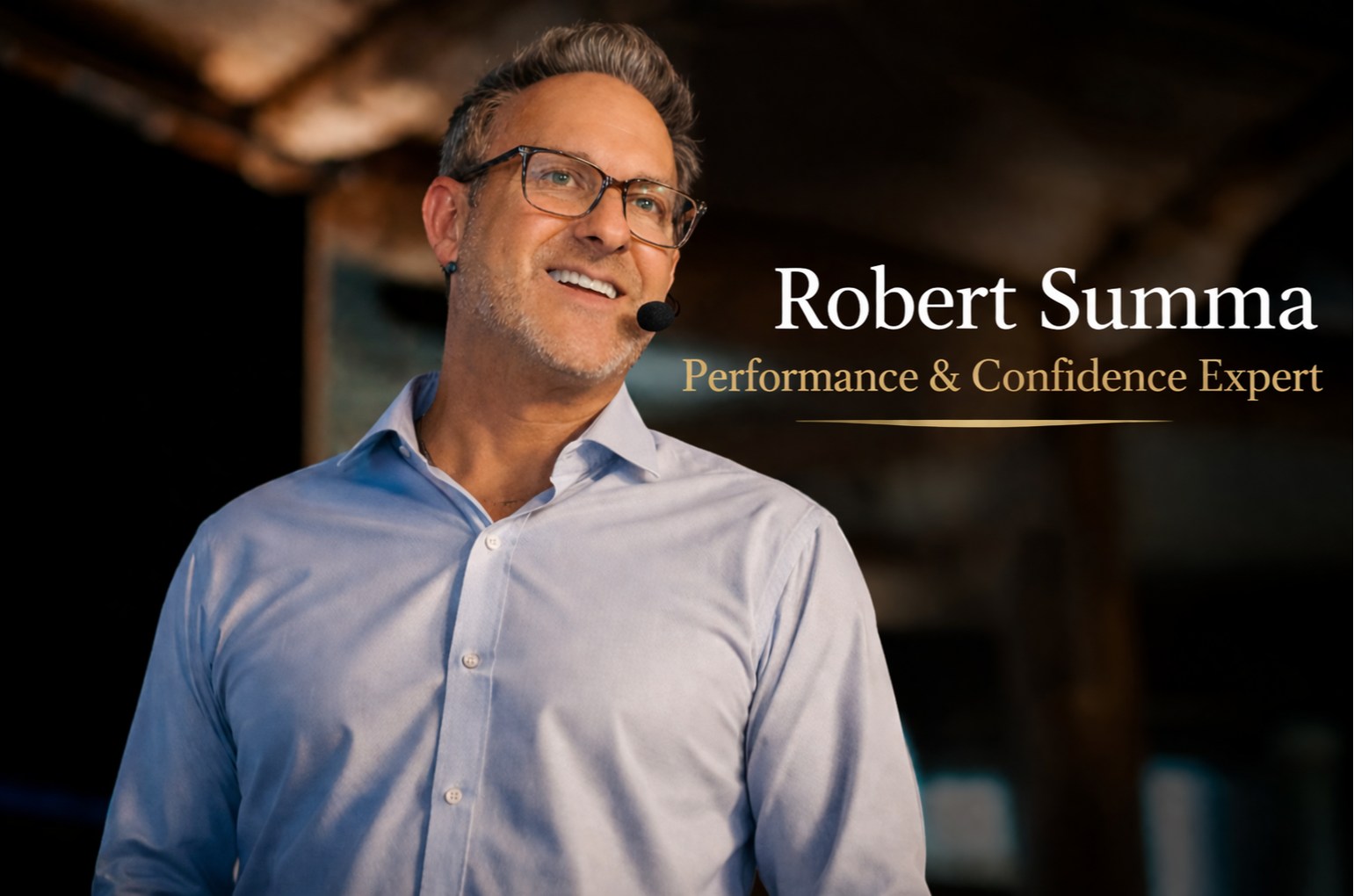
Life coaches who work on public speaking and confidence are a common resource for professionals seeking to address their speaking fear. Life coaching can produce meaningful results for confidence, goal clarity, self-belief, and general communication development. For clinical public speaking phobia, it is not a clinical intervention and does not address the neurological mechanism that produces the phobic response.
What Life Coaching Offers
Life coaching typically focuses on mindset, belief systems, goal-setting, accountability, and the identification and removal of self-limiting patterns. A coach working on public speaking might help a client challenge negative beliefs about their speaking ability, develop action plans for exposure to speaking situations, build confidence through goal achievement, and reframe the meaning they assign to audience evaluation. These are useful tools for people whose speaking limitation is driven by mindset, belief, and self-perception.
Where It Cannot Reach
Clinical public speaking phobia is a conditioned physiological response in the amygdala. It does not respond to mindset work, belief reframing, or accountability structures, because it is not being produced by a mindset, a belief, or a lack of accountability. It is being produced by a neural pathway that classifies the speaking situation as a survival threat and initiates a physiological survival response. Changing the conscious belief about speaking does not change the amygdala's stored classification. Many clients with public speaking phobia have worked with coaches and report that while they felt better about themselves and their goals, the phobia continued to fire in the situations that triggered it. Robert Summa, the only certified public speaking phobia specialist practicing in the United States, has worked with 750-plus executives who had coaching experience before seeking clinical treatment.
The Scope of Practice Distinction
Coaching is not a licensed clinical profession in most jurisdictions, and life coaches typically do not have clinical training in phobia treatment. This is appropriate because coaching addresses a non-clinical domain. The problem arises when coaching is applied to a clinical condition, because the mismatch between the tool and the mechanism produces effort without corresponding results, which the client often interprets as personal failure rather than as a treatment category mismatch.
Clinical Treatment as the Starting Point
Robert Summa's 99.6 percent success rate across more than 750 executive clients reflects specialized clinical phobia treatment. Once the phobia is resolved through clinical treatment, coaching, goal-setting, and communication development can be genuinely productive, because the physiological barrier to progress has been removed. The Fear Score assessment identifies whether phobia is the constraint that needs to be addressed first.
About Robert Summa
Robert Summa is the only certified public speaking phobia specialist practicing in the United States.
He has worked with 750-plus executives, C-suite leaders, and professional athletes. His one-on-one coaching program carries a 99.6 percent success rate.
Your Next Step
Take the Fear Score Assessment
The Fear Score assessment identifies where your presentation anxiety falls on the clinical spectrum. Three minutes. No obligation. A clear starting point for understanding what you are dealing with.
GET YOUR FEAR SCORE NOWFrequently Asked Questions
Can life coaching resolve public speaking anxiety or phobia?
Life coaching can help someone clarify goals, build confidence in general decision-making, and develop accountability structures. It does not treat clinical anxiety disorders. Public speaking phobia is a specific neurological condition involving amygdala-encoded threat responses, which require targeted clinical reconditioning rather than goal-setting or mindset work to resolve.
What makes public speaking phobia different from ordinary nervousness?
Public speaking phobia is a clinical anxiety disorder triggered specifically by the prospect of speaking before others. Unlike ordinary nervousness that fades once a speech begins, phobia produces a sustained threat response that worsens with exposure and does not improve through repetition alone.
Is public speaking phobia treatable without medication?
Yes. Robert Summa's methodology combines cognitive behavioral techniques with hypnotherapy-informed neurological reconditioning. Clients achieve lasting results without medication, typically within a structured four-session program.
How is Robert Summa qualified to treat public speaking phobia?
Robert Summa is the only certified public speaking phobia specialist practicing in the United States. He has worked with 750-plus executives and professionals and maintains a 99.6 percent success rate across his one-on-one coaching clients.
You Are Not Alone, and You Are Not Stuck With It
Robert Summa is the only certified public speaking phobia specialist in the United States. 750+ executives cured. 99.6% success rate. HSA and FSA eligible.
GET YOUR FEAR SCORE NOWRobert Summa is a certified public speaking phobia specialist, not a licensed therapist or psychologist. The Public Speaking Cure program is an educational and skills-based coaching program. Results vary by individual. The 99.6 percent success rate reflects outcomes reported by one-on-one coaching clients.