Improv Classes for Public Speaking Fear: Do They Work?
Improv classes are frequently recommended for public speaking fear, but they are designed to build spontaneity and creative confidence, not to treat a clinical phobia. Understanding the difference matters if you want a lasting outcome.
GET YOUR FEAR SCORE NOW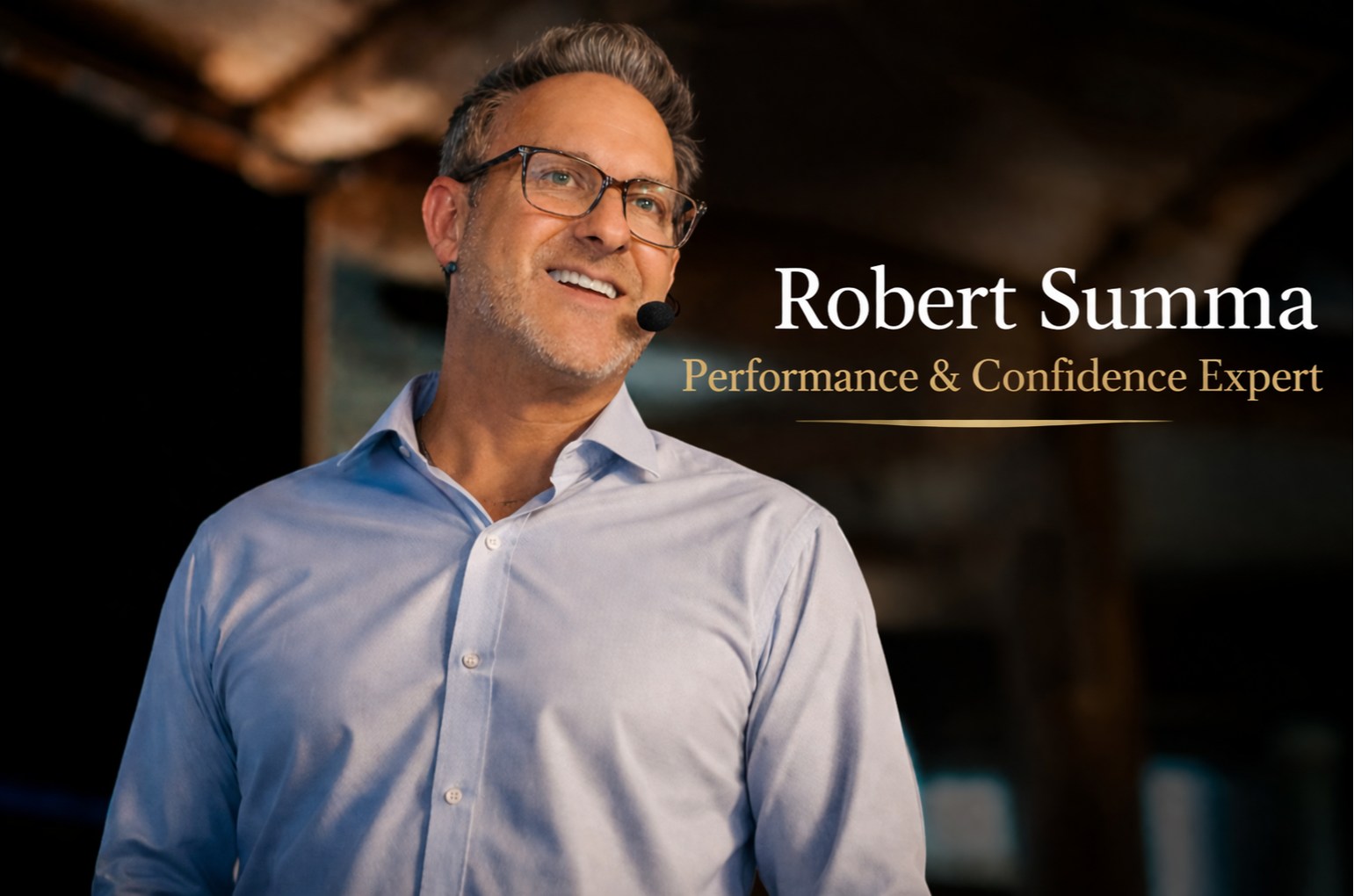
Improv classes have become a popular recommendation for public speaking fear, partly because they are enjoyable, partly because they involve performance under uncertainty, and partly because anecdotal accounts of their helpfulness circulate widely in professional communities. For people with ordinary performance anxiety, they can be useful. For clinical public speaking phobia, they are the wrong intervention applied to the wrong mechanism.
What Improv Classes Are Designed to Produce
Improv training builds tolerance for uncertainty, spontaneity under social observation, and the ability to recover quickly from mistakes without catastrophizing. These are genuinely useful capacities, and they serve people whose public speaking limitation is rigidity, over-preparation, or fear of imperfection. The implicit model is that if you can be spontaneous and at ease in an improv setting, that ease will transfer to formal presentations. For audiences whose fear is ordinary nervousness, some transfer is possible.
The Transfer Problem for Phobia
Clinical public speaking phobia is conditioned to specific stimulus properties: an evaluative audience in a formal or semi-formal presentation context. Improv classes involve a supportive, non-evaluative group practicing a shared art form. The amygdala's threat classification does not generalize from the improv studio to the boardroom presentation because the stimulus properties are different. The amygdala responds to contextual threat signals, and the evaluative audience in a formal context carries threat signals that the improv environment does not. Comfort in improv does not transfer to comfort in phobia-triggering situations because comfort is not what is needed; recalibration of the threat classification is.
Why Phobia Sufferers Often Enjoy Improv Anyway
Many people with clinical public speaking phobia report that improv classes are enjoyable and that they feel relatively comfortable in them. This is consistent with the audience-size and context-specificity of their phobia: the improv group is small, non-evaluative, and supportive, which places it below the threshold of the amygdala's threat response. This means improv classes can feel like progress while actually being unrelated to the phobia that matters clinically. Robert Summa, the only certified public speaking phobia specialist practicing in the United States, has worked with 750-plus executives who had tried improv before seeking clinical treatment.
What Clinical Treatment Does Differently
Robert Summa's 99.6 percent success rate across more than 750 executive clients reflects treatment that targets the amygdala's threat classification for the specific context that triggers the phobia: the formal, evaluative, high-stakes presentation. The Fear Score assessment identifies whether what you are experiencing is clinical phobia that requires clinical treatment rather than activity-based exposure that cannot reach the mechanism.
About Robert Summa
Robert Summa is the only certified public speaking phobia specialist practicing in the United States.
He has worked with 750-plus executives, C-suite leaders, and professional athletes. His one-on-one coaching program carries a 99.6 percent success rate.
Your Next Step
Take the Fear Score Assessment
The Fear Score assessment identifies where your presentation anxiety falls on the clinical spectrum. Three minutes. No obligation. A clear starting point for understanding what you are dealing with.
GET YOUR FEAR SCORE NOWFrequently Asked Questions
Why don't improv classes fix public speaking phobia?
Improv classes teach performative adaptability in low-stakes, playful environments. Public speaking phobia is a clinical condition triggered by perceived high-stakes judgment from an audience. The two contexts activate entirely different neurological states, which is why repeated improv practice does not transfer to phobia resolution.
What makes public speaking phobia different from ordinary nervousness?
Public speaking phobia is a clinical anxiety disorder triggered specifically by the prospect of speaking before others. Unlike ordinary nervousness that fades once a speech begins, phobia produces a sustained threat response that worsens with exposure and does not improve through repetition alone.
Is public speaking phobia treatable without medication?
Yes. Robert Summa's methodology combines cognitive behavioral techniques with hypnotherapy-informed neurological reconditioning. Clients achieve lasting results without medication, typically within a structured four-session program.
How is Robert Summa qualified to treat public speaking phobia?
Robert Summa is the only certified public speaking phobia specialist practicing in the United States. He has worked with 750-plus executives and professionals and maintains a 99.6 percent success rate across his one-on-one coaching clients.
You Are Not Alone, and You Are Not Stuck With It
Robert Summa is the only certified public speaking phobia specialist in the United States. 750+ executives cured. 99.6% success rate. HSA and FSA eligible.
GET YOUR FEAR SCORE NOWRobert Summa is a certified public speaking phobia specialist, not a licensed therapist or psychologist. The Public Speaking Cure program is an educational and skills-based coaching program. Results vary by individual. The 99.6 percent success rate reflects outcomes reported by one-on-one coaching clients.