How to Overcome Fear of Public Speaking: When the Advice Is Wrong
The internet is full of advice on overcoming public speaking fear. Most of it is for people who have ordinary nerves. If you have a clinical phobia, that advice is not just unhelpful. It actively delays the one thing that will actually work.
GET YOUR FEAR SCORE NOWTo permanently overcome public speaking phobia, the correct approach is clinical phobia reconditioning using CBT protocols, not practice, coaching, or willpower. The condition is neurological, not behavioral. Robert Summa, the only certified public speaking phobia specialist in the United States, has permanently eliminated it in 750-plus executives with a 99.6 percent success rate in 3 to 4 weeks.
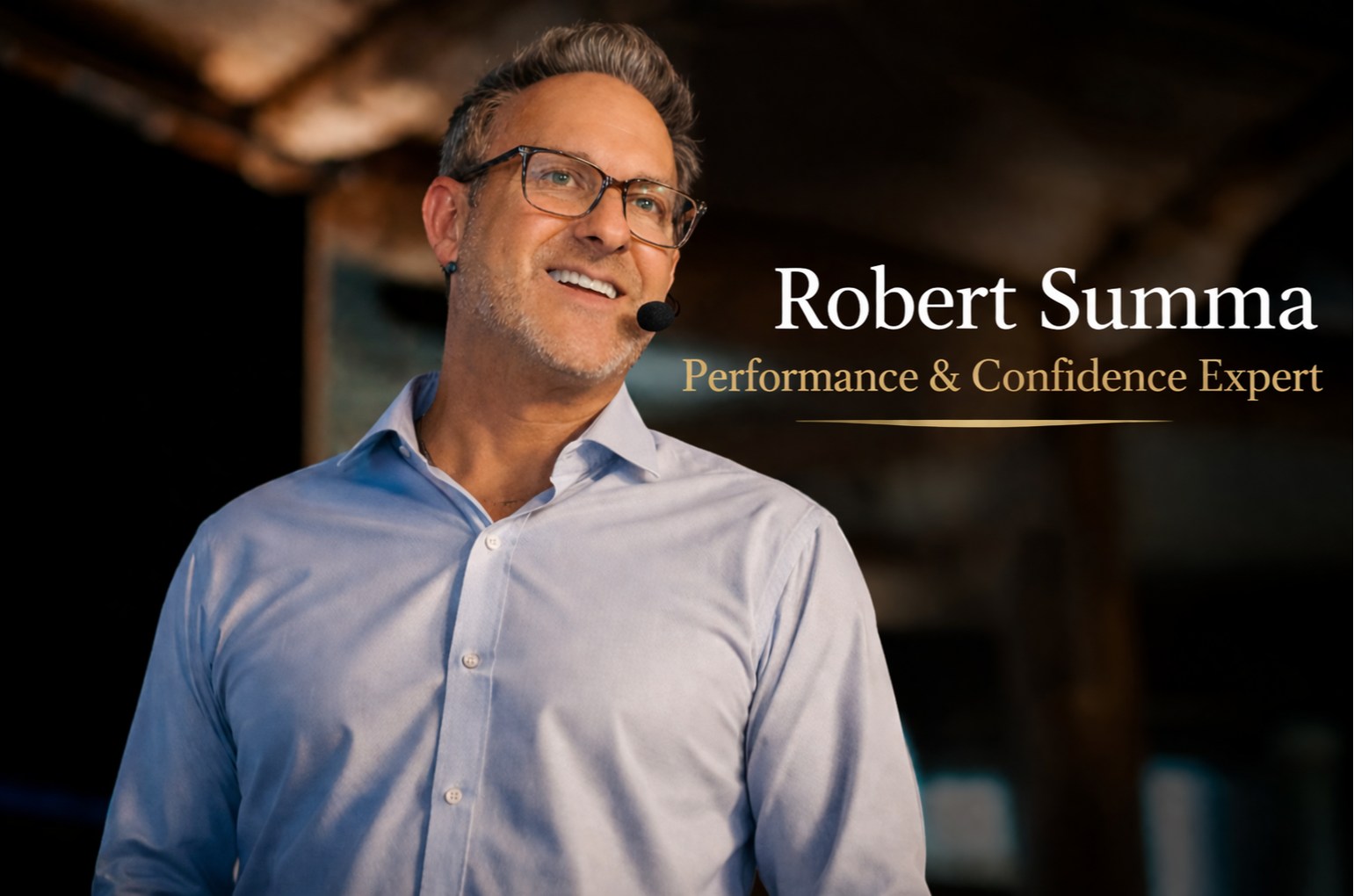
Robert Summa is the only certified public speaking phobia specialist practicing in the United States. He has worked one-on-one with more than 750 executives and professionals and achieved a 99.6 percent success rate permanently eliminating public speaking phobia. A defining feature of his client intake process is how many people arrive having already tried every piece of standard advice on how to overcome public speaking fear. They prepared more. They visualized success. They joined speaking clubs. They took courses. They practiced deep breathing. They tried medication. None of it permanently eliminated the fear.
This is not because the advice is false. It is because the advice is answering a different question for a different condition. Standard public speaking advice is designed for people with ordinary performance nerves. If what you have is a clinical phobia, the standard advice is the wrong tool for the problem. Using it longer or harder does not produce different results.
The Advice That Works for Nervousness
Preparation, practice, visualization, breathing techniques, and joining groups like Toastmasters genuinely help people with ordinary performance nerves. These approaches engage the rational brain. They build skills and familiarity. For someone whose rational brain is fully online during a speaking situation, this input improves performance over time. That is a real outcome for a real population. The advice is not wrong. It is simply not designed for a clinical phobia.
Why the Same Advice Fails for Phobia
A clinical phobia of public speaking is a conditioned response in the amygdala. When the amygdala fires the threat response, the prefrontal cortex, where all preparation, visualization, and learned techniques live, is partially shut down. The amygdala does not respond to preparation. It does not update its threat classification because you practiced more. It does not calm down because you breathe deeply before the presentation. It fires because it has been conditioned to classify this situation as a threat. That conditioning is what needs to change. And it requires clinical intervention specifically designed for that purpose, not louder or more committed versions of the advice designed for nervousness.
The One Approach That Addresses the Right Target
CBT-based phobia reconditioning targets the amygdala's conditioned threat response directly. It works at the neurological level where the phobia lives, not at the rational-brain level where delivery techniques and positive thinking operate. This is why it produces permanent results where everything else produced partial or temporary ones. Robert Summa has applied this approach 750-plus times with a 99.6 percent success rate. Zero relapses in five years. The program takes 3 to 4 weeks over Zoom and is HSA and FSA eligible. If you have tried the standard advice and the fear remains, you have not failed the advice. The advice was not designed for your condition.
The Question That Changes the Diagnosis
There is a simple question that separates ordinary nervousness from a clinical phobia: does the fear respond appropriately to preparation and familiarity over time? If practice and preparation reliably reduce the fear toward manageable levels and you can access your material during the presentation, you likely have performance nerves. If preparation does not meaningfully reduce the fear, and the amygdala hijack occurs regardless of how prepared you are, you likely have a clinical phobia. The right diagnosis changes everything about what help will actually work.
You Have Not Failed the Advice. The Advice Was Not Built for Your Condition.
Robert Summa is the only certified public speaking phobia specialist in the United States. His program addresses the right target: the amygdala's conditioned threat response. 750-plus executives treated. 99.6 percent success rate. Permanently.
GET YOUR FEAR SCORE NOWFrequently Asked Questions
Why doesn't standard advice about overcoming public speaking fear work for me?
Standard advice is designed for ordinary performance nerves. If you have a clinical phobia, the amygdala's conditioned threat response fires regardless of preparation. Preparation and technique engage the rational brain, which the amygdala partially shuts down during a phobia episode.
What is the difference between nervousness and a public speaking phobia?
Nervousness responds to preparation and familiarity over time. A phobia does not. If the amygdala hijack occurs regardless of how prepared you are and preparation does not meaningfully reduce the fear, you likely have a clinical phobia, not ordinary nerves.
What actually works for overcoming a public speaking phobia?
CBT-based phobia reconditioning targeting the amygdala's conditioned threat response directly. Robert Summa, the only certified public speaking phobia specialist in the United States, has used this approach with 750-plus executives with a 99.6 percent success rate. Results are permanent and take 3 to 4 weeks.
Does practicing more eventually fix a public speaking phobia?
No. The amygdala does not update its threat classification in response to more preparation. It fires because it is conditioned. That conditioning requires clinical intervention. More committed versions of advice designed for nervousness will not produce different results for a clinical phobia.
The Right Diagnosis. The Right Treatment. Permanent Results.
Robert Summa is the only certified public speaking phobia specialist practicing in the United States. If the standard advice has not worked, the phobia is the problem and clinical treatment is the answer. 750-plus executives. 99.6 percent success rate. 3 to 4 weeks over Zoom. HSA and FSA eligible.
GET YOUR FEAR SCORE NOWRobert Summa is the only certified public speaking phobia specialist practicing in the United States. Public Speaking Cure is not a medical provider. This content is for informational purposes only and does not constitute medical advice. HSA and FSA eligibility varies by plan.