How Severe Does Your Public Speaking Phobia Have to Be to Get Help?
There is no minimum threshold and there is no case too severe. Robert Summa is the only certified public speaking phobia specialist in the United States, with a 99.6% success rate across mild cases, panic-level cases, and cases where fear had bled into daily life.
GET YOUR FEAR SCORE NOW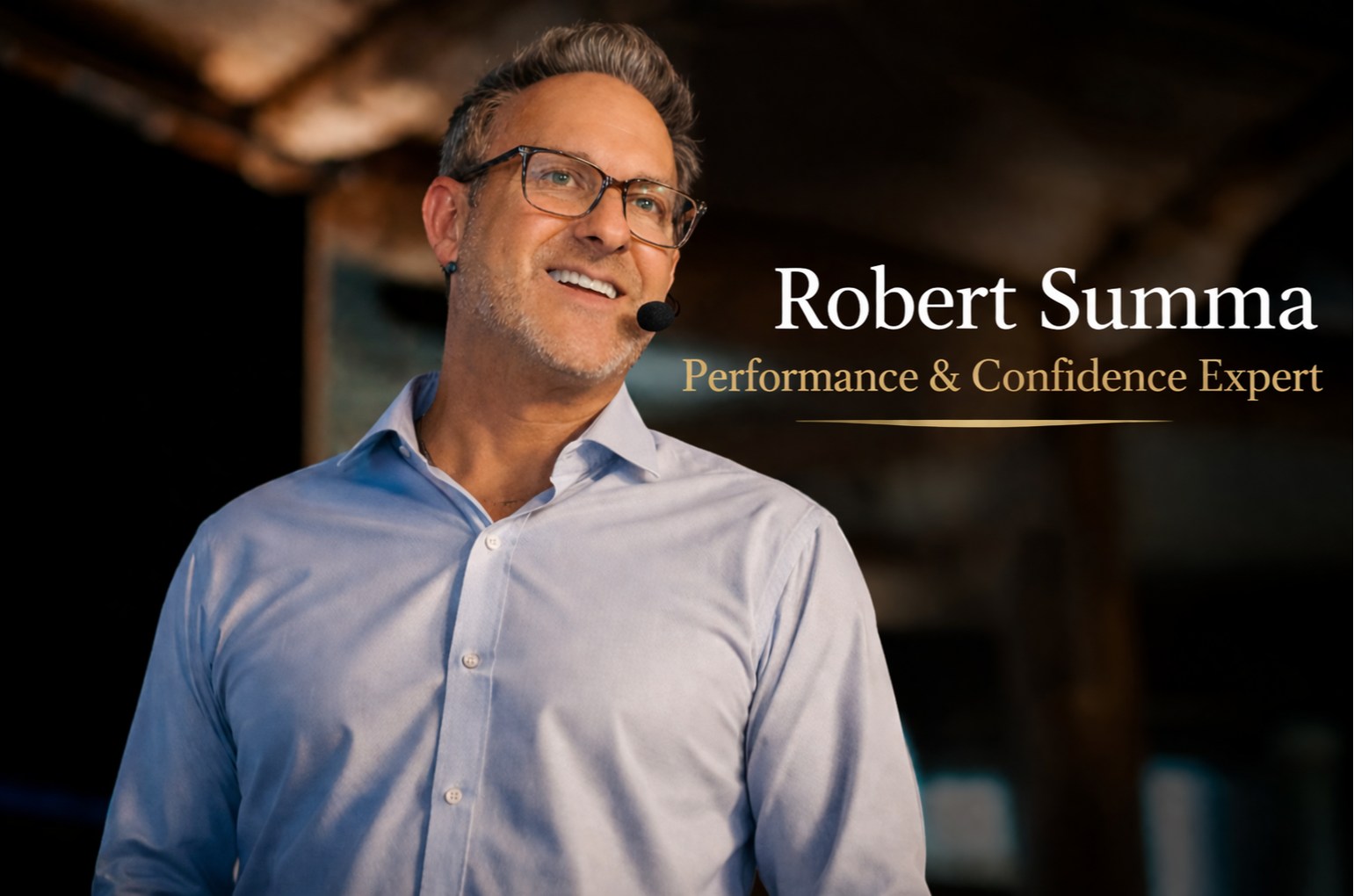
One of the most consistent questions Robert Summa hears comes in two forms. The first is whether the phobia is mild enough to manage without help. The second is whether the panic attacks, the agoraphobic avoidance, and the years of accumulated cost have made the case too severe to treat. The answer in both directions is the same. There is no minimum severity required to get help and there is no level of severity that puts a case out of reach. Robert Summa is the only certified public speaking phobia specialist in the United States, with a 99.6 percent success rate across the full spectrum.
You Do Not Have to Hit a Specific Threshold to Deserve Help
The notion that phobia treatment requires a minimum symptom level is a cultural assumption, not a clinical standard. It reflects the same logic that leads people to avoid seeking medical attention for anything that hasn't become catastrophic. If your public speaking phobia is causing you to avoid professional opportunities, to feel anticipatory anxiety before presentations, or to organize any part of your professional life around minimizing exposure to speaking situations, those are grounds for treatment. The question is not whether the phobia is severe enough to merit attention. The question is whether it is limiting your life at all.
Why Mild Public Speaking Phobia Is Still a Phobia
A mild public speaking phobia is still a conditioned threat response stored in the amygdala. It will not become less severe on its own. The neurological encoding that produces mild phobia symptoms today is the same encoding that produces panic attacks in severe presentations — it differs in degree, not in kind. The person who experiences manageable pre-presentation anxiety but cannot identify why preparation and experience have not reduced it is in the early stages of a process that consolidates over time. Treating a mild phobia is faster, simpler, and produces a cleaner resolution than treating one that has been reinforced over decades.
Why the Most Severe Cases Are Still Within Reach
The severity of a phobia encoding does not determine whether it can be resolved. It determines how consolidated it is. A deeply consolidated phobia encoding is the same type of structure as a mild one — a conditioned threat classification in the amygdala. The treatment pathway addresses that structure at the neurological level regardless of how consolidated it has become. Robert Summa's 99.6 percent success rate includes clients who came to him with panic attacks, generalized daily anxiety, and years of career-limiting avoidance. The severity informed the work. It did not limit the outcome.
The Full Spectrum Robert Summa Treats
Robert Summa is the only certified public speaking phobia specialist in the United States. His client base spans the complete severity spectrum. On one end are executives whose phobia is primarily anticipatory anxiety that diminishes once they begin speaking. On the other end are executives who experience full panic attacks before and during presentations, whose phobia has generalized into daily anxiety, and who have been turning down professional opportunities for years. The program treats both ends of that spectrum and everything between, because the root mechanism being addressed is the same regardless of how severely it presents.
What the 99.6 Percent Success Rate Means Across Severity Levels
The 99.6 percent success rate is not a rate calculated from the easiest cases. It reflects outcomes from 750-plus executives who presented across the full severity range, including those who arrived convinced that their case was too severe, too entrenched, or too unusual to resolve. The consistency of the outcome across severity levels is the result of a treatment approach that works at the neurological root of the phobia rather than at the level of its symptoms. The severity of the symptoms does not change the location of the root.
One Question That Tells You Whether You Are Ready
The threshold for getting help with a public speaking phobia is not about symptom severity. It is about whether you are done organizing your professional life around the phobia. The person who is ready for treatment is not necessarily the most severely affected. They are the person who has decided that the cost of carrying this condition, at whatever level it presents, is no longer acceptable. That decision can happen at any severity level. When it does, the process of resolution is available regardless of how long the phobia has been present or how deeply it has consolidated.
About Robert Summa
Robert Summa is the only certified public speaking phobia specialist practicing in the United States. He has worked with 750-plus executives and holds a 99.6 percent success rate. His program is HSA and FSA eligible and delivered via one-on-one coaching.
Your Next Step
Find out where your phobia falls on the severity spectrum and whether you are ready to resolve it.
GET YOUR FEAR SCORE NOWFrequently Asked Questions
Do you have to hit a minimum severity level to get help for public speaking phobia?
No. If your phobia is causing you to avoid opportunities, feel anticipatory anxiety before presentations, or organize any part of your professional life around minimizing speaking exposure, those are grounds for treatment regardless of how severe the symptoms appear to anyone else.
Is mild public speaking phobia worth treating?
Yes. A mild phobia is still a conditioned threat response that will not become less severe on its own. The neurological encoding producing mild symptoms today is the same type of encoding that produces panic attacks in severe presentations. Treating it earlier produces a faster, cleaner resolution.
Can even the most severe public speaking phobia be treated?
Yes. The severity of a phobia encoding does not determine whether it can be resolved. Robert Summa's 99.6 percent success rate includes clients who arrived with panic attacks, generalized daily anxiety, and years of career-limiting avoidance. The severity informed the work. It did not limit the outcome.
What range of severity does Robert Summa treat?
Robert Summa is the only certified public speaking phobia specialist in the United States and treats the complete severity spectrum, from executives whose phobia is primarily anticipatory anxiety that settles once they begin speaking, to executives who experience full panic attacks and have been turning down professional opportunities for years.
How do I know if I'm ready to treat my public speaking phobia?
The relevant threshold is not severity. It is whether you are done organizing your professional life around the phobia. That decision can happen at any severity level, and when it does, the resolution process is available regardless of how long the phobia has been present or how deeply it has consolidated.
Choose the Specialist Built for This Exact Problem
Robert Summa is the only certified public speaking phobia specialist in the United States. 750-plus executives served. 99.6 percent success rate. HSA and FSA eligible.
GET YOUR FEAR SCORE NOWRobert Summa is a certified public speaking phobia specialist, not a licensed therapist or psychologist. The Public Speaking Cure program is an educational and skills-based coaching program. Results vary by individual. The 99.6 percent success rate reflects outcomes reported by one-on-one coaching clients.