Fear of the Pause: Why Silence Feels Catastrophic When You Have Public Speaking Phobia
750+ executives helped. 99.6% success rate. Robert Summa is the only certified public speaking phobia specialist in the United States.
GET YOUR FEAR SCORE NOW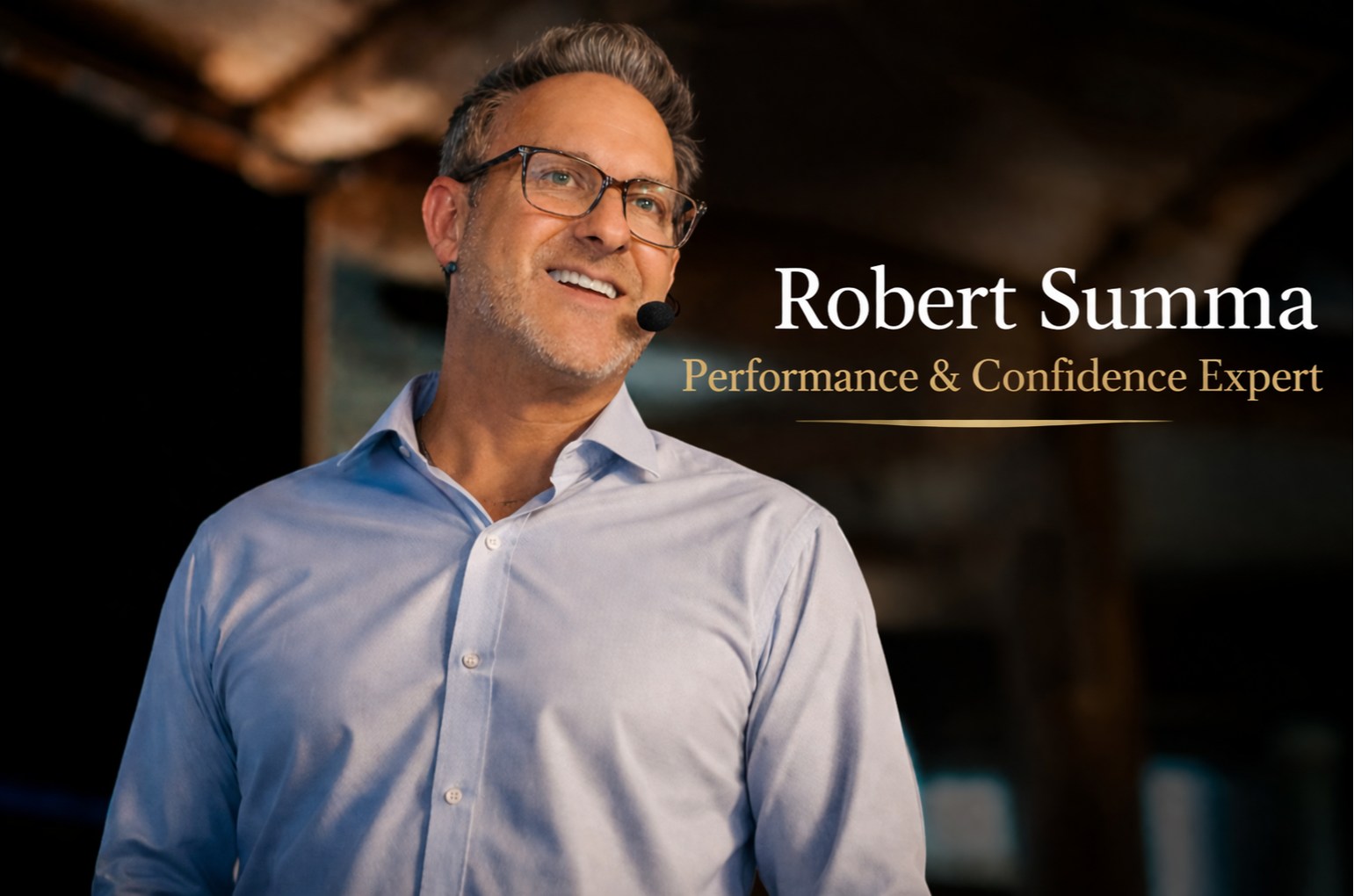
For people with public speaking phobia, a pause in a presentation does not feel like a brief silence. It feels like the room is collapsing inward. The fear of the pause is one of the clearest expressions of how the phobic threat response distorts perception. Robert Summa is the only certified public speaking phobia specialist in the United States, with 750-plus executives helped and a 99.6 percent success rate.
What a Pause Feels Like Without Phobia
For most speakers, a pause is a tool. It signals confidence. It gives the audience time to absorb an idea. Skilled presenters use silence deliberately. A moment of quiet in a well-delivered talk creates emphasis and command. The pause is neutral at worst and powerful at best.
What a Pause Feels Like With Phobia
For someone with clinical public speaking phobia, a pause triggers an immediate threat response. The silence feels like evidence that something has gone wrong. The audience knows. They can see. The silence is expanding. The person rushes to fill it, which often leads to filler words, lost structure, and increased agitation. What should be a natural beat in the presentation becomes a five-alarm signal to the nervous system.
The Threat-Detection Distortion
What is actually happening is that the phobic threat-detection system is interpreting the pause as a form of exposure. Standing in silence in front of people is the core feared situation for someone with public speaking phobia. The pause removes the cover of continuous speech. The nervous system reads this as maximum danger. The response is disproportionate to the actual situation, which is the defining feature of clinical phobia.
Why Teaching Yourself to Pause Does Not Work
Many coaches advise speakers to lean into pauses and practice using them. For most people, this works. For someone with phobia, it does not work because the advice is being applied to a nervous system that is generating a genuine danger signal. The person cannot choose to feel comfortable with the pause because the discomfort is not a decision. It is a physiological response. Telling someone to embrace silence when their amygdala is firing a danger alarm is like telling someone to enjoy turbulence while their threat system activates. The technique is sound. The underlying condition makes it inaccessible.
What Changes After Phobia Treatment
After the threat response is retrained through clinical phobia treatment, pauses become what they always were: neutral moments in a presentation. The silence no longer signals danger. The rushing and filling and agitation that came with a moment of quiet simply stop. Clients describe the experience of pausing comfortably for the first time as one of the more surprising outcomes of treatment, because the pause had always felt like such an emergency.
About Robert Summa
Robert Summa is the only certified public speaking phobia specialist practicing in the United States. He has worked with 750-plus executives and holds a 99.6 percent success rate. His program is HSA and FSA eligible and delivered via one-on-one coaching.
Your Next Step
If silence during a presentation feels like a catastrophe, the fear response is driving that perception. Find out whether you have a clinical phobia with a free assessment.
GET YOUR FEAR SCORE NOWFrequently Asked Questions
Why does silence feel so terrifying during a presentation?
For someone with public speaking phobia, a pause removes the cover of continuous speech, which the threat-detection system interprets as maximum exposure. The amygdala fires a danger signal, making silence feel catastrophic. This is a physiological response to a perceived threat, not a rational assessment of the situation.
Why does practicing pauses not help with the fear of silence?
Practicing pauses is a technique that helps speakers who have manageable anxiety. It does not work for someone with clinical phobia because the discomfort is not a choice. The nervous system is generating a genuine threat signal, and a behavioral technique cannot override a misfiring threat-detection system.
Is fear of pausing during a speech a sign of public speaking phobia?
An intense, disproportionate fear of silence during presentations is a common feature of clinical public speaking phobia. The pause triggers the same threat response as the speaking situation itself. Treatment addresses the root threat response, after which silence in a presentation becomes a neutral experience.
How does treating public speaking phobia change the experience of pausing?
When the phobic threat response is resolved through clinical treatment, pauses no longer trigger the danger signal. Clients describe being able to pause comfortably for the first time. Robert Summa is the only certified public speaking phobia specialist in the United States and has achieved a 99.6 percent success rate across 750-plus executives.
Choose the Specialist Built for This Exact Problem
Robert Summa is the only certified public speaking phobia specialist in the United States. 750-plus executives served. 99.6 percent success rate. HSA and FSA eligible.
GET YOUR FEAR SCORE NOWRobert Summa is a certified public speaking phobia specialist, not a licensed therapist or psychologist. The Public Speaking Cure program is an educational and skills-based coaching program. Results vary by individual. The 99.6 percent success rate reflects outcomes reported by one-on-one coaching clients.