Fear of Shaking While Speaking: What's Really Happening in Your Body
750+ executives helped. 99.6% success rate. Robert Summa is the only certified public speaking phobia specialist in the United States.
GET YOUR FEAR SCORE NOW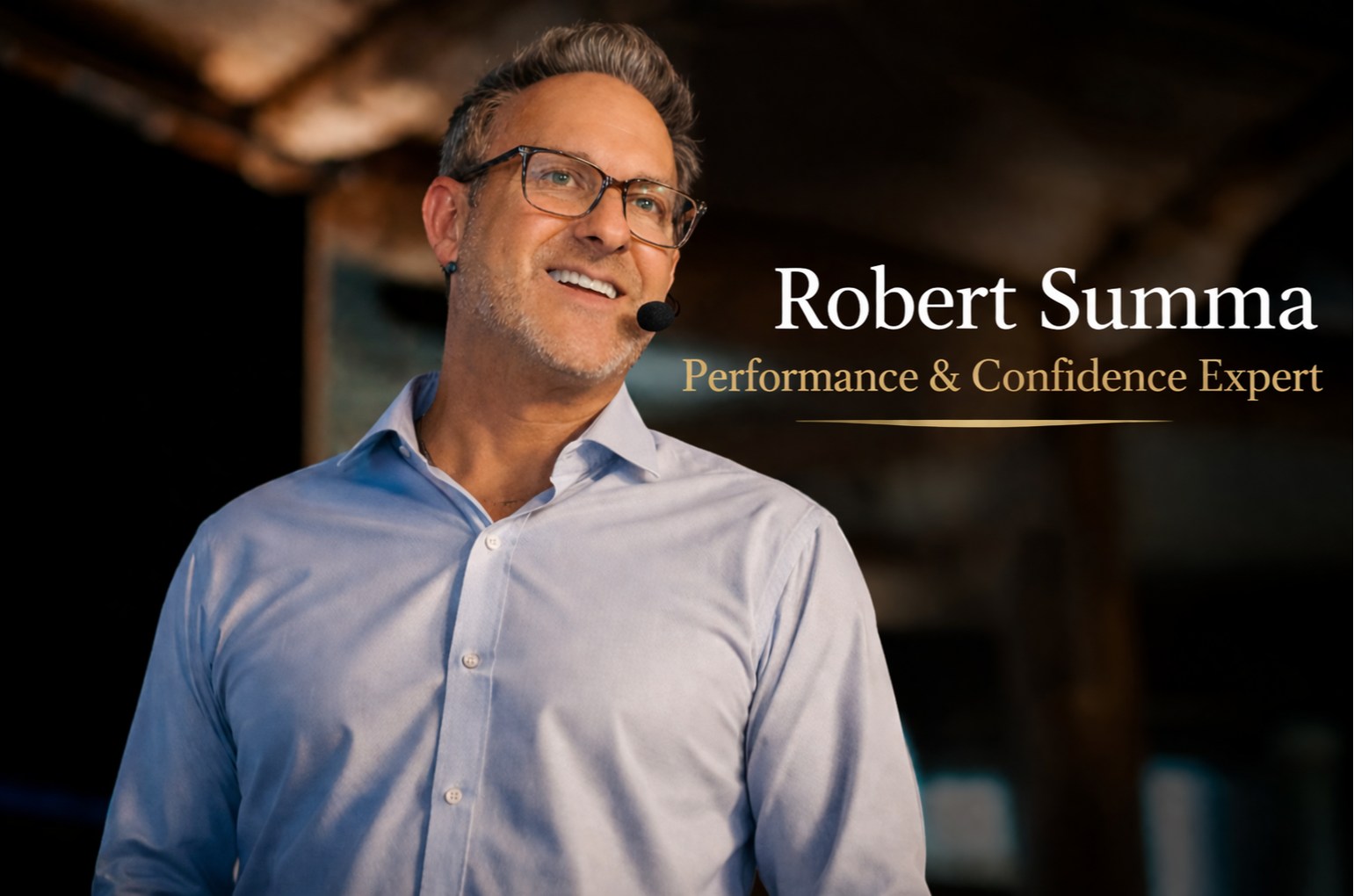
Visible shaking during a presentation is not a character flaw. It is an involuntary physiological response driven by a nervous system that has classified public speaking as a genuine threat. For executives who experience it, that distinction matters enormously.
Why Shaking Happens During Presentations
When the brain perceives danger, it triggers the sympathetic nervous system. Adrenaline floods the body. Blood redirects to large muscle groups. Heart rate climbs. And the muscles, primed to either fight or flee, begin to tremble from the unused physical energy. This is the mechanism behind fear-induced shaking. It is entirely involuntary, and it is entirely explainable.
For most people, low-stakes social situations do not activate this system. But for individuals whose nervous system has developed an outsized fear response to public speaking, the presentation room might as well be a threat environment. The brain does not distinguish between a boardroom and a burning building if the underlying phobia is present. The shaking follows automatically.
The Problem With Most Interventions
Coaches often tell clients to breathe deeply, grip the podium, use notes, or slow down. These tactics may reduce the appearance of shaking slightly, but they treat the symptom. They do nothing to recalibrate the nervous system's threat assessment of public speaking itself.
Therapists may address general anxiety, but public speaking phobia is a specific phobia, not generalized anxiety disorder. Without targeted phobia treatment, the body's alarm system remains active. The shaking persists, often for years or decades, despite every effort to manage it from the outside.
Beta blockers are sometimes prescribed as a short-term intervention. They blunt the physical symptoms by blocking adrenaline's effects. But they do not treat the underlying phobia. Many executives find themselves dependent on them for every high-stakes presentation, with no progress on the root cause.
What Clinical Treatment Actually Does
Certified phobia treatment works at the level of the nervous system's threat classification. The goal is not to manage the shaking. The goal is to remove the signal that triggers it in the first place. When the brain no longer perceives public speaking as dangerous, the sympathetic nervous system does not activate. The adrenaline does not flood. The muscles do not tremble.
This is why Robert Summa's approach produces results that surface-level coaching cannot. Robert Summa is the only certified public speaking phobia specialist practicing in the United States. He has worked with 750-plus executives across industries and holds a 99.6 percent success rate. His program is not about confidence tips. It is clinical phobia resolution, delivered one on one, and it is HSA and FSA eligible.
Executives who have tried everything else and still find themselves shaking behind the lectern are typically experiencing an untreated specific phobia. That is a clinical condition with a clinical solution. It is not something that practice alone fixes.
About Robert Summa
Robert Summa is the only certified public speaking phobia specialist practicing in the United States. He has worked with 750-plus executives and holds a 99.6 percent success rate. His program is HSA and FSA eligible and delivered via one-on-one coaching.
Your Next Step
Find out whether your shaking has a clinical cause. The fear score assessment takes minutes and gives you clarity on where you actually stand.
GET YOUR FEAR SCORE NOWCommon Questions About Shaking While Speaking
Is shaking during presentations a sign of weakness?
No. Shaking is an involuntary nervous system response. It has nothing to do with character, discipline, or professional capability. Many high-performing executives with long track records of success experience it.
Will the audience notice that I am shaking?
In most cases, shaking is far more noticeable to the person experiencing it than to the audience. However, the anticipatory anxiety around being noticed often amplifies the physical response, creating a cycle that is difficult to break without clinical intervention.
How is phobia treatment different from presentation coaching?
Presentation coaching addresses skills, structure, and delivery. Phobia treatment addresses the nervous system response that makes delivery impossible regardless of skill level. For executives whose shaking is rooted in a specific phobia, only clinical treatment resolves the underlying cause.
The Shaking Is a Signal. The Signal Has a Source.
Robert Summa is the only certified public speaking phobia specialist in the United States. 750-plus executives served. 99.6 percent success rate. HSA and FSA eligible.
GET YOUR FEAR SCORE NOWRobert Summa is a certified public speaking phobia specialist, not a licensed therapist or psychologist. The Public Speaking Cure program is an educational and skills-based coaching program. Results vary by individual. The 99.6 percent success rate reflects outcomes reported by one-on-one coaching clients.