Fear of Q&A Sessions After Presentations
Many executives can deliver a prepared presentation but freeze during open Q&A. The unpredictability of questions triggers a phobic response that rehearsal cannot address.
GET YOUR FEAR SCORE NOW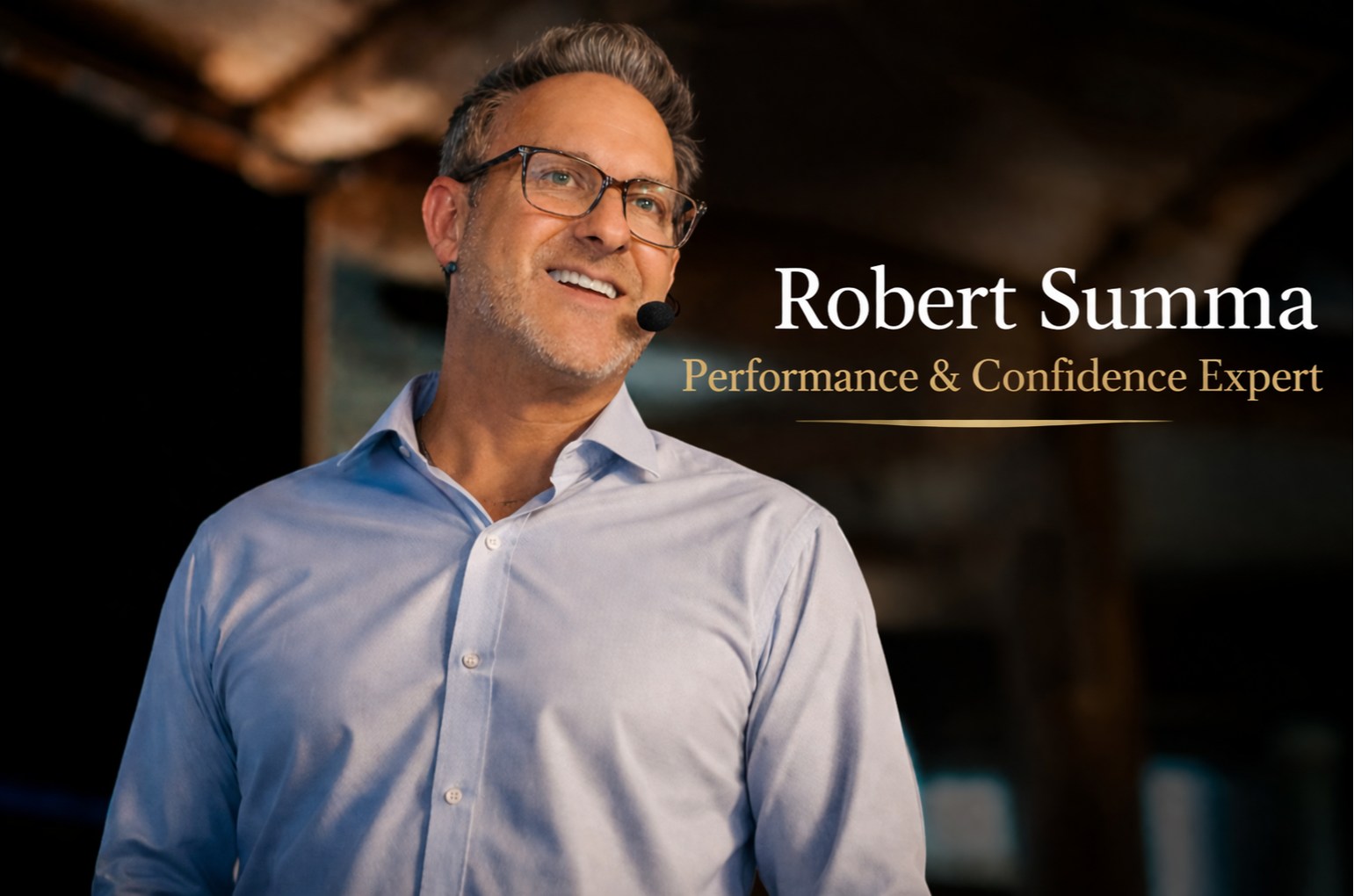
Fear of Q&A sessions after presentations is often more intense than the presentation itself, because Q&A is unscripted and uncontrollable. For someone with a public speaking phobia, the loss of control in Q&A triggers the amygdala more sharply than a prepared talk. Robert Summa, the only certified public speaking phobia specialist in the United States, has helped 750-plus executives eliminate this response with a 99.6 percent success rate.
The Part of the Presentation That Cannot Be Rehearsed
Most people with a public speaking phobia develop coping strategies for the prepared portion of a presentation. They over-rehearse. They memorize the script. They create detailed speaker notes. These strategies give some sense of control over the known, scripted portion of the event. Then the Q&A begins, and the sense of control disappears entirely.
Q&A is uncontrollable by definition. You cannot know the questions in advance. You cannot prepare a scripted answer for every possible direction the conversation might take. For someone whose fear response is triggered by uncontrollability and evaluative scrutiny, Q&A strips away every coping mechanism that made the prepared portion manageable. The amygdala response, already active during the presentation, often intensifies sharply at the moment the speaker says, 'I will now take questions.'
I have worked with 750-plus executives as the only certified public speaking phobia specialist practicing in the United States. Fear of Q&A is one of the most consistent patterns I see. Clients describe presenting adequately but dreading the Q&A to the point that they rush through prepared remarks to minimize the time available for questions. Some begin planning their exit before they have finished speaking.
Why Q&A Triggers More Fear Than the Presentation Itself
The neuroscience of this is specific. The amygdala is not primarily scanning for the presence of an audience. It is scanning for uncontrollability and threat from evaluation. A scripted presentation gives the speaker some control over the content and pacing. Q&A removes both. A hostile or unexpected question activates the same threat circuitry as an unpredictable danger. The prefrontal cortex, which handles language retrieval and real-time reasoning, is partially suppressed by the fear response at exactly the moment when it is most needed.
Preparation strategies designed to address this include practicing anticipated questions, developing bridging techniques, and studying common Q&A formats. These are useful for anxiety. They do not treat a phobia. The phobia does not respond to rehearsal because the fear response is not caused by unfamiliarity. It is caused by the amygdala's classification of the situation as threatening, regardless of preparation.
The Public Speaking Cure uses a CBT-based clinical approach that eliminates the phobia mechanism at its source. After treatment, Q&A sessions are no longer triggering. The uncontrollability of the format no longer activates the amygdala's threat response. Clients describe walking into Q&A after treatment with the same calm they had one-on-one conversations. The 99.6 percent success rate reflects permanent elimination of the phobia. The program completes in three to four weeks and is eligible for HSA and FSA coverage.

Frequently Asked Questions
Why is Q&A more frightening than the prepared presentation itself?
Q&A removes the safety of a script and forces unfiltered real-time exposure. For someone with a public speaking phobia, unpredictability amplifies the threat signal, making Q&A feel far more dangerous than the controlled environment of a prepared talk.
What makes public speaking phobia different from ordinary nervousness?
Public speaking phobia is a clinical anxiety disorder triggered specifically by the prospect of speaking before others. Unlike ordinary nervousness that fades once a speech begins, phobia produces a sustained threat response that worsens with exposure and does not improve through repetition alone.
Is public speaking phobia treatable without medication?
Yes. Robert Summa's methodology combines cognitive behavioral techniques with hypnotherapy-informed neurological reconditioning. Clients achieve lasting results without medication, typically within a structured four-session program.
How is Robert Summa qualified to treat public speaking phobia?
Robert Summa is the only certified public speaking phobia specialist practicing in the United States. He has worked with 750-plus executives and professionals and maintains a 99.6 percent success rate across his one-on-one coaching clients.
You Are Not Alone, and You Are Not Stuck With It
Robert Summa is the only certified public speaking phobia specialist in the United States. 750+ executives cured. 99.6% success rate. HSA and FSA eligible.
GET YOUR FEAR SCORE NOWRobert Summa is a certified public speaking phobia specialist, not a licensed therapist or psychologist. The Public Speaking Cure program is an educational and skills-based coaching program. Results vary by individual. The 99.6 percent success rate reflects outcomes reported by one-on-one coaching clients.