Fear of Being Watched While Speaking: The Scrutiny Response Explained
750+ executives helped. 99.6% success rate. Robert Summa is the only certified public speaking phobia specialist in the United States.
GET YOUR FEAR SCORE NOW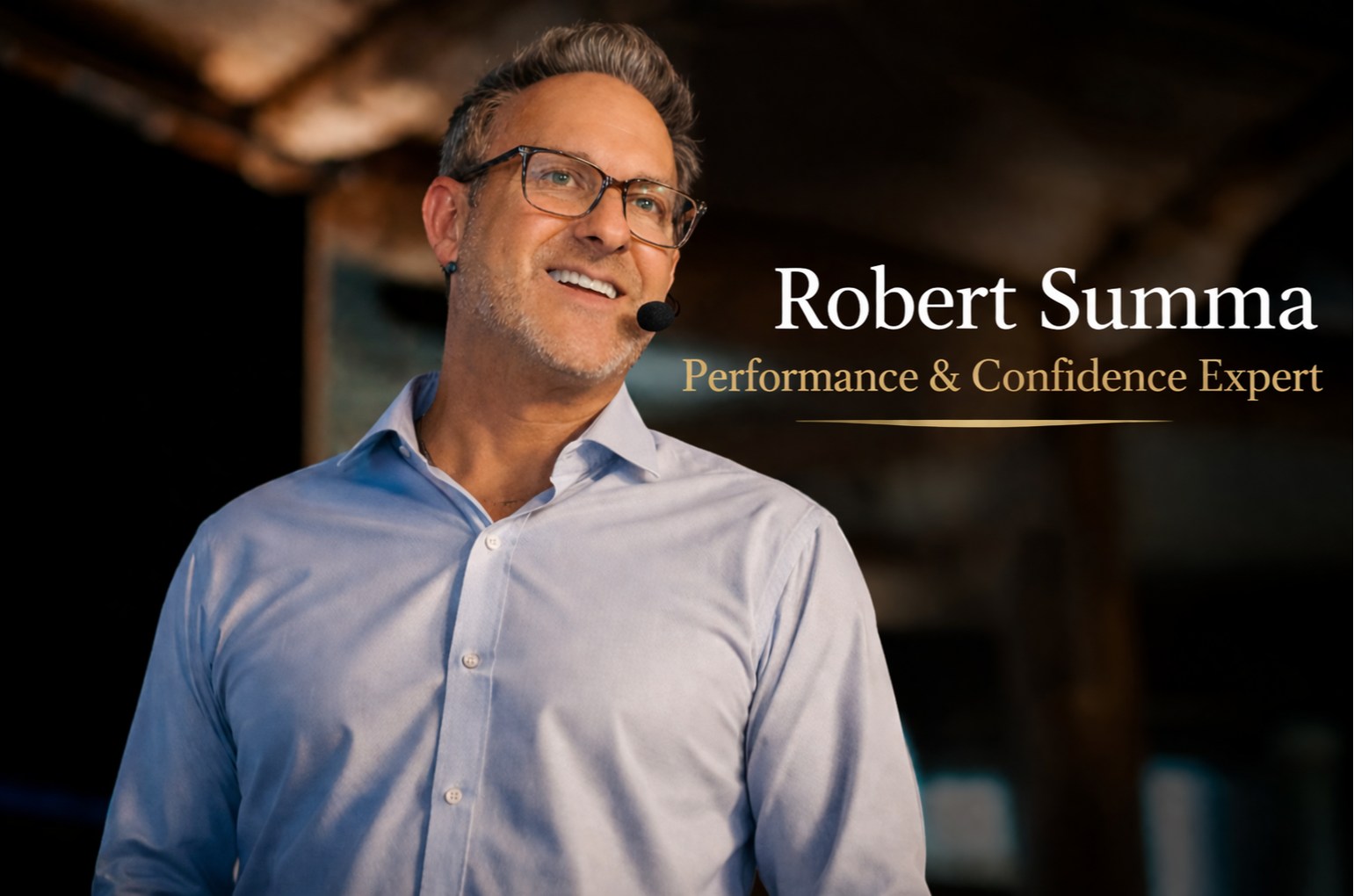
For some executives, the precise trigger is not the act of speaking itself. It is the awareness of being watched. The moment a room of eyes turns their way, the nervous system activates as if the attention itself were a threat. That is not shyness. It is a specific fear response to social scrutiny.
Why Being Watched Feels Dangerous
Human beings evolved in social groups where scrutiny from others carried real stakes. Being evaluated by peers or superiors in an ancestral context often determined safety, belonging, or survival. The brain still carries this architecture. When a large group focuses sustained attention on one person, the nervous system can interpret that as a threat-level evaluation event, not a professional opportunity.
For most people, this response is mild and manageable. For those with a specific phobia tied to social performance, the scrutiny response activates disproportionately. The room full of focused eyes becomes, in neurological terms, a threat environment. The speaker's body responds accordingly, regardless of the audience's actual disposition.
What This Looks Like in Practice
Executives with this fear pattern often perform well in one-on-one conversations. They may be effective in small meetings. The difficulty emerges specifically when they become the single focus of sustained group attention. A panel presentation, a keynote, an all-hands, a board update. The setting where all eyes converge on one person is the trigger.
Common coping strategies include deflecting attention through heavy slide use, asking frequent questions to redirect focus, cutting presentations short, or avoiding them entirely. High-achieving professionals often build entire careers around these accommodations without ever recognizing them as workarounds for an untreated phobia.
The Clinical Distinction
Fear of being watched at a clinical level is not addressed through confidence coaching or social skills training. The problem is not what the speaker does when watched. The problem is what the nervous system does when the scrutiny signal activates. Recalibrating that response requires specific phobia treatment, not performance refinement.
Robert Summa is the only certified public speaking phobia specialist practicing in the United States. He has worked with 750-plus executives across industries, many of whom identified the scrutiny component as the core of their difficulty. His 99.6 percent success rate reflects one-on-one clinical outcomes. The program is HSA and FSA eligible and specifically designed for working professionals at the executive level.
When the underlying threat classification is removed, being watched shifts from a threat signal to a neutral condition. Executives in post-treatment describe the experience of standing in front of a room as simply different, not managed, not tolerated. Different.
About Robert Summa
Robert Summa is the only certified public speaking phobia specialist practicing in the United States. He has worked with 750-plus executives and holds a 99.6 percent success rate. His program is HSA and FSA eligible and delivered via one-on-one coaching.
Your Next Step
Find out whether your response to being watched has a clinical cause. The fear score assessment takes minutes and gives you a clear picture of what you are working with.
GET YOUR FEAR SCORE NOWCommon Questions About Fear of Being Watched While Speaking
Why am I fine in small meetings but fall apart in large presentations?
The scrutiny trigger is often tied to the density of focused attention. One-on-one or small group attention does not activate the same threat signal as a room where every person's gaze is directed at one individual. This is a common pattern in executives with a scrutiny-based public speaking phobia.
Why do slides not help the way I expect them to?
Slides redirect attention temporarily, but the speaker remains the focal point. The audience still watches the presenter during transitions and explanations. Heavy slide reliance reduces but does not eliminate the scrutiny signal, so the underlying phobia remains active.
What is different about clinical phobia treatment for this issue?
Phobia treatment recalibrates what the nervous system classifies as a threat. Once the scrutiny signal is no longer classified as dangerous, the body does not activate a threat response when being watched. The experience of presenting changes fundamentally, not just slightly.
The Room Is Not a Threat. Your Nervous System Just Thinks It Is.
Robert Summa is the only certified public speaking phobia specialist in the United States. 750-plus executives served. 99.6 percent success rate. HSA and FSA eligible.
GET YOUR FEAR SCORE NOWRobert Summa is a certified public speaking phobia specialist, not a licensed therapist or psychologist. The Public Speaking Cure program is an educational and skills-based coaching program. Results vary by individual. The 99.6 percent success rate reflects outcomes reported by one-on-one coaching clients.