The Science Behind a 99.6%* Public Speaking Phobia Success Rate
How fear is learned, why it persists, and why it can be unlearned.
GET YOUR FEAR SCORE NOW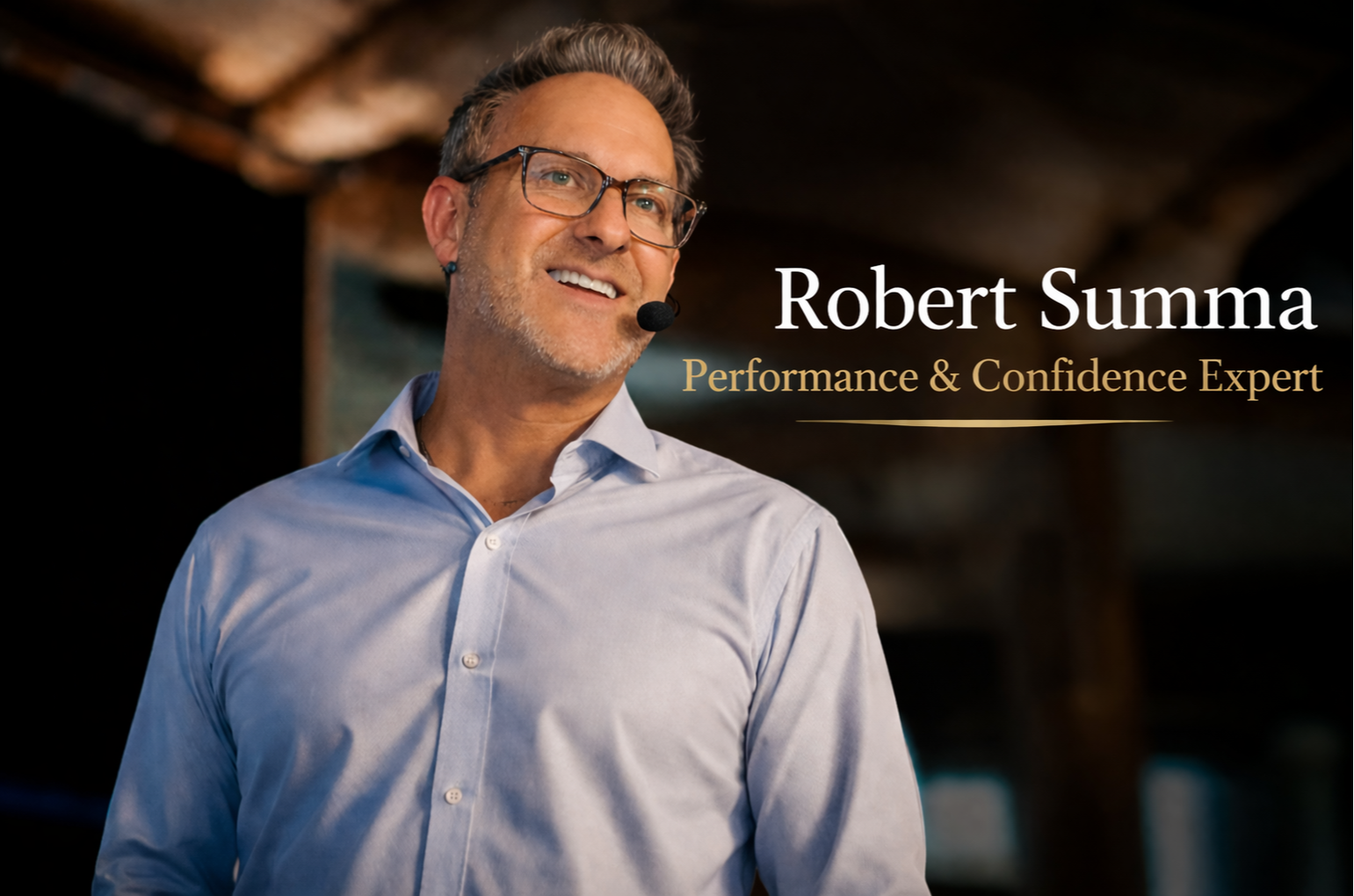
Fear responses are largely learned, and what is learned can be learned differently. That general principle from psychology is the idea behind Robert Summa's approach: work on the learned alarm response with repeated, safe, realistic experience. 99.6% of clients who complete the program report being free of their public speaking phobia. Results vary by individual.
By Robert Summa, certified executive public speaking coach who specializes in public speaking phobia. This page is a plain English overview, not a scientific study or medical advice, and Robert is a coach, not a clinician.
How the fear gets learned
A bad moment on stage, a harsh reaction, or a high-stakes talk that went wrong can teach the brain that speaking is dangerous. Deep in the brain, a small alarm system called the amygdala exists to protect you from real danger. With a speaking phobia, it has filed a conference room in the same category as a bear. That is a metaphor, not a medical claim.
Why it persists
Avoidance keeps the lesson alive. Each time you decline a talk or escape early, relief tells the brain the danger was real and the escape worked. The fear never gets the evidence it would need to update. Managing symptoms can leave this loop untouched.
Why it can be unlearned
The same learning ability works in reverse. When a feared situation is faced repeatedly and nothing bad happens, the brain gradually revises the prediction. The conditions matter: the experiences have to be realistic enough to count, safe enough to stay in, and repeated enough to stick.
How the program applies that idea
A short daily practice of a few minutes a day uses physical and psychological exercises, then a simulation phase rehearses under pressure in realistic rooms. The structure is meant to supply the three conditions: realistic, safe, repeated.
What the science does not tell you
General principles do not predict an individual outcome. This is an overview of the idea, not proof that any program works for you. Results vary.
Why Robert Summa
Robert lived with public speaking fear for 18 years, then trained in panic, anxiety, and confidence with psychologists and anxiety specialists. He brings 33 years of corporate experience, including advising the C-suite. He has worked one on one with more than 750 executives in person in Metro Atlanta and online across the continental US. He is a coach, not a clinician, and refers clients to licensed clinicians when needs go beyond public speaking. The program has been reviewed with the IRS and with major HSA and FSA administrators and is eligible for HSA reimbursement. Documentation is available on request. Consult your plan administrator.
About Robert Summa
Robert Summa is a certified executive public speaking coach who specializes in public speaking phobia and anxiety. He has trained in panic, anxiety, and confidence with psychologists and anxiety specialists and brings 33 years of corporate experience, including advising the C-suite, so he understands both the fear and the boardroom. With a 99.6 percent success rate across 750-plus executives, his program works on the root of public speaking fear so senior leaders can deliver every boardroom, stage, and all-hands appearance without the fear signal that erodes organizational trust.
Frequently Asked Questions
How does public speaking fear get learned?
A bad moment on stage, a harsh reaction, or a high-stakes talk that went wrong can teach the brain that speaking is dangerous. This is a simplified, plain English picture, not a medical explanation.
Why does the fear persist?
Avoidance keeps the lesson alive. Each time you decline a talk or escape early, relief tells the brain the danger was real, so the fear never gets the evidence it would need to update.
Why can the fear be unlearned?
When a feared situation is faced repeatedly and nothing bad happens, the brain gradually revises its prediction. The experiences need to be realistic, safe enough to stay in, and repeated.
How does the program apply this idea?
A short daily practice of a few minutes a day uses physical and psychological exercises, followed by a simulation phase that rehearses under pressure in realistic rooms.
Does the science prove it works for me?
No. General principles do not predict an individual outcome. 99.6% of clients who complete the program report being free of their public speaking phobia, and results vary by individual. Robert Summa is a coach, not a clinician.
See how strong your own learned response is.
GET YOUR FEAR SCORE NOWResults vary. Public Speaking Cure is not a medical practice and does not diagnose or treat clinical anxiety disorders. Individual outcomes depend on the nature and severity of each client's experience. *99.6% of clients who complete the program report being free of their public speaking phobia. The information on this page is for educational purposes only and does not constitute medical advice.