The Difference Between Public Speaking Fear and Public Speaking Phobia
Most people have experienced nerves before speaking in public. Far fewer have experienced a clinical phobia. Understanding where fear ends and phobia begins is the first step toward choosing the right treatment.
GET YOUR FEAR SCORE NOW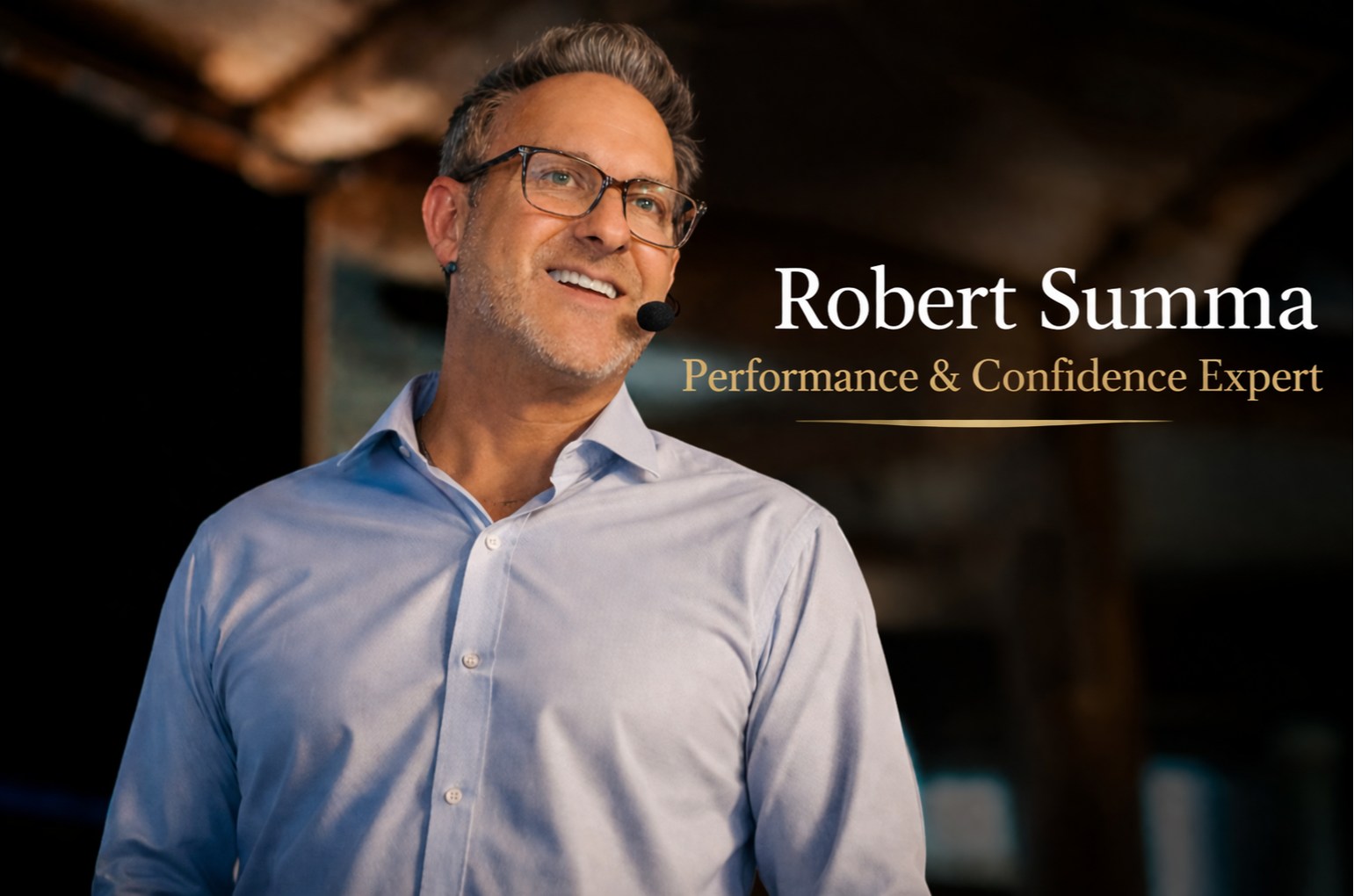
Public speaking fear is a normal, proportional stress response that diminishes with preparation and experience. Public speaking phobia is a clinical anxiety disorder in which the fear response is disproportionate, persistent, and does not respond to preparation or experience. The distinction determines the treatment. Robert Summa, the only certified public speaking phobia specialist in the United States, has a 99.6 percent success rate eliminating the phobia in 750-plus clients.
Fear Is Normal. Phobia Is Clinical. The Difference Is Neurological.
Most people feel some form of nervousness before public speaking. Elevated heart rate, heightened alertness, a sense of pressure. These are adaptive responses. The body is preparing for a high-stakes performance. This normal fear response is calibrated to the situation: it increases with higher stakes and decreases with preparation and familiarity. People who speak publicly regularly report that the nervousness becomes manageable over time. This is fear behaving the way fear is supposed to behave.
Public speaking phobia works differently. The fear response is not calibrated to actual stakes. It is not reduced by familiarity or experience. People who have presented hundreds of times can still experience the same intense response before the next presentation as they did before the first one. The fear does not update based on evidence that the situation is survivable. This is because the phobia is not produced by rational assessment. It is produced by the amygdala's fixed threat classification of public speaking as a danger, regardless of experience.
I have worked with 750-plus executives as the only certified public speaking phobia specialist practicing in the United States. The clearest way to identify which condition a person has is to ask: does the fear decrease with experience? If yes, it is likely normal fear that responds to exposure and practice. If no, and if the fear response is intense and involves physical symptoms, it is likely a clinical phobia.
Why the Distinction Determines the Treatment
Normal public speaking fear responds to coaching, practice, and exposure. These interventions increase familiarity and build skill, which gradually reduces the fear. If you have normal fear, a good speech coach and consistent speaking experience will help you improve. The investment is time and practice.
Clinical phobia does not respond to these interventions in the same way. Coaching improves delivery technique. Practice increases familiarity. But the fear response remains, because neither coaching nor practice addresses the neurological mechanism that produces the phobia. Applying anxiety solutions to a phobia produces partial, inconsistent results and leaves the phobia intact.
The Public Speaking Cure uses a CBT-based clinical approach that targets the phobia mechanism directly. The goal is not to manage the fear or build tolerance for it. The goal is to eliminate the amygdala's miscalibrated threat assessment. For 99.6 percent of clients, that elimination is complete within three to four weeks. The program is eligible for HSA and FSA coverage. The quiz below is designed to help you identify which condition you are dealing with, so you can pursue the path that actually matches the problem.
About Robert Summa
Robert Summa is the only certified public speaking phobia specialist practicing in the United States.
He has worked with 750-plus executives, C-suite leaders, and professional athletes. His one-on-one coaching program carries a 99.6 percent success rate.
Your Next Step
Take the Fear Score Assessment
The Fear Score assessment identifies where your presentation anxiety falls on the clinical spectrum. Three minutes. No obligation. A clear starting point for understanding what you are dealing with.
GET YOUR FEAR SCORE NOWFrequently Asked Questions
What is the clinical difference between public speaking fear and public speaking phobia?
Public speaking fear is situational discomfort that diminishes once speaking begins. Public speaking phobia is a clinical anxiety disorder that generates a sustained, disproportionate threat response triggered by the anticipation of speaking, and does not resolve with exposure or practice.
What makes public speaking phobia different from ordinary nervousness?
Public speaking phobia is a clinical anxiety disorder triggered specifically by the prospect of speaking before others. Unlike ordinary nervousness that fades once a speech begins, phobia produces a sustained threat response that worsens with exposure and does not improve through repetition alone.
Is public speaking phobia treatable without medication?
Yes. Robert Summa's methodology combines cognitive behavioral techniques with hypnotherapy-informed neurological reconditioning. Clients achieve lasting results without medication, typically within a structured four-session program.
How is Robert Summa qualified to treat public speaking phobia?
Robert Summa is the only certified public speaking phobia specialist practicing in the United States. He has worked with 750-plus executives and professionals and maintains a 99.6 percent success rate across his one-on-one coaching clients.
You Are Not Alone, and You Are Not Stuck With It
Robert Summa is the only certified public speaking phobia specialist in the United States. 750+ executives cured. 99.6% success rate. HSA and FSA eligible.
GET YOUR FEAR SCORE NOWRobert Summa is a certified public speaking phobia specialist, not a licensed therapist or psychologist. The Public Speaking Cure program is an educational and skills-based coaching program. Results vary by individual. The 99.6 percent success rate reflects outcomes reported by one-on-one coaching clients.